

Why Website Speed Is Make-or-Break for Your Business
Website performance optimization services are professional solutions that analyze, improve, and maintain your website’s loading speed through techniques like image compression, code minification, caching, and Content Delivery Networks (CDNs). These services typically include:
- Comprehensive site audits to identify performance bottlenecks
- Image and code optimization to reduce file sizes
- Caching and CDN setup to deliver content faster
- Server configuration and hosting recommendations
- Ongoing monitoring to maintain speed improvements
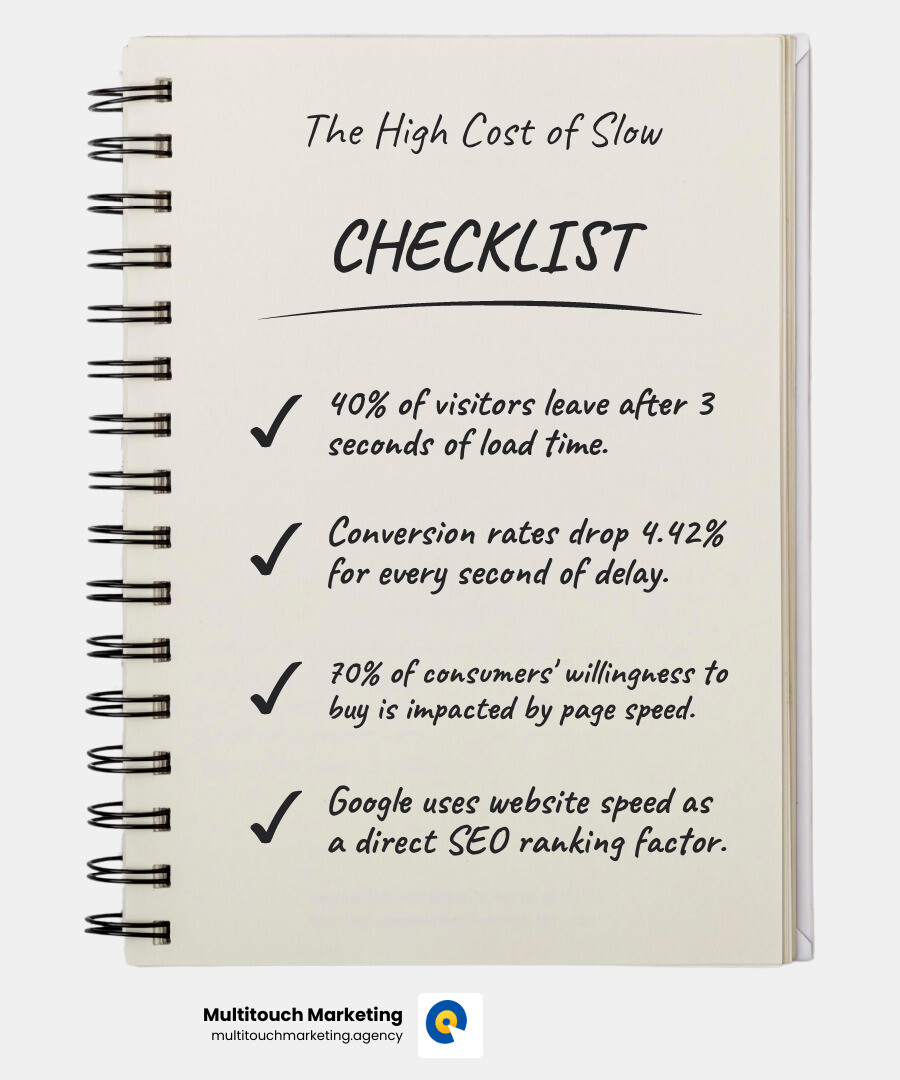
If your website takes more than 3 seconds to load, you’re potentially losing 40% of your visitors to your competitors. That’s not just a user experience problem—it’s a revenue problem.
Website speed affects everything that matters to your business. Google has made it a direct ranking factor for SEO Search Engine Optimization since 2018. Slow pages push you down in search results. But the impact goes deeper than rankings. Nearly 70% of consumers admit that page speed impacts their willingness to buy from an online retailer. And for every additional second of lag, your conversion rates drop by an average of 4.42%.
The first three seconds matter most. Visitors want quick answers to their queries, and when your website takes time to load, they eventually move to another website to find the information they’re looking for.
Think about your own browsing habits. When was the last time you patiently waited for a slow website to load? Most people don’t wait. They bounce. And every bounce is a lost opportunity—a potential customer who might never come back.
The good news? Website speed is fixable. Unlike many aspects of digital marketing that take months to show results, performance optimization can deliver measurable improvements in days. Better yet, those improvements compound over time, affecting your search rankings, user experience, and bottom line simultaneously.
I’m Milton Brown, and I’ve managed digital marketing campaigns ranging from $20,000 to $5 million since 2008, working across e-commerce, healthcare, and education sectors where Website performance optimization services directly impact conversion rates and ad spend efficiency. Throughout my career, I’ve seen how website speed can make or break even the best-funded marketing campaigns—a fast site amplifies your marketing investment, while a slow one wastes it.
Key Website performance optimization services vocabulary:
What Are Website Performance Optimization Services and Why Do They Matter?
Website performance optimization services are more than just a technical tweak; they’re a strategic investment for any business operating online, especially for those serving customers in Raleigh, Durham, Chapel Hill, and across North Carolina. These services focus on enhancing your website’s speed and responsiveness, which directly translates to improved user experience, higher search engine rankings, and ultimately, better business outcomes.
Why are these services so crucial for online success? Because website speed is now a direct ranking factor for Google, especially since the Google Algorithm Speed Update. This means that a slow website can directly hinder your visibility in search results, even if your content is top-notch. Beyond SEO, speed profoundly impacts revenue and customer satisfaction. A fast site keeps visitors engaged, reducing bounce rates and encouraging longer browsing sessions. This positive user experience fosters trust and loyalty, driving repeat business and increasing conversion rates.
With Google’s mobile-first indexing, the speed of your mobile site is particularly critical. If your mobile pages are sluggish, you’re not just frustrating users; you’re actively hurting your search performance. This is where Responsive Web Design SEO becomes paramount – ensuring your site is fast and accessible on all devices. Website performance optimization services contribute significantly to overall business goals, including increased revenue and customer satisfaction, and play a vital role in How SEO Pushes Business Growth.
The High Cost of a Slow Website
The statistics paint a stark picture: if your website takes more than 3 seconds to load, you’re potentially losing 40% of your visitors. This isn’t just an abstract number; for businesses in North Carolina, it means potential customers clicking away to a competitor down the street or across the state. This immediate abandonment leads to a higher bounce rate, signaling to search engines that your site might not be providing a good user experience, which can further depress your SEO rankings.
The financial repercussions are equally significant. Website conversion rates drop by an average of 4.42% with each additional second of lag. For e-commerce sites, this translates directly to lost sales. For content publishers, it means lower ad revenue; Google found that publishers whose mobile sites load in 5 seconds earn up to 2x more mobile ad revenue than those that load in 19 seconds. This isn’t just about losing a single transaction; it’s about a negative brand perception that can deter future business. A slow website is a silent killer of your online presence, undermining all your other marketing efforts. It sabotages your carefully crafted Data Driven Marketing Strategies by creating a bottleneck at the most critical point: the user’s interaction with your site.
The Triple-Threat Benefits of Speed: SEO, UX, and Conversions
Investing in Website performance optimization services delivers a powerful trifecta of benefits that are essential for online success.
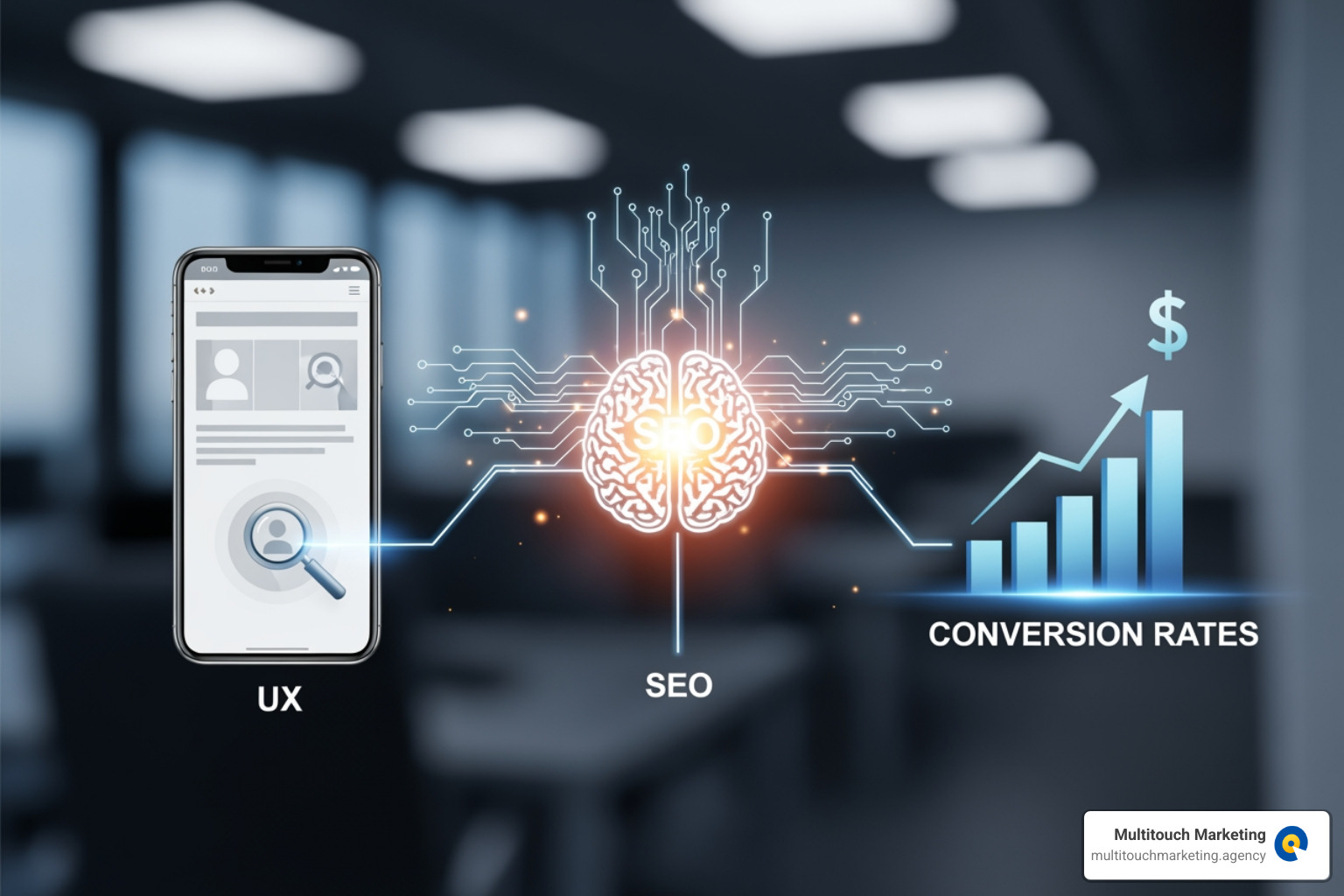
- Improved Search Engine Rankings (SEO): As we’ve discussed, speed is a direct ranking factor for Google. A faster website is more likely to rank higher in search results, increasing organic traffic and visibility for your business. This is particularly important in competitive markets like Raleigh and Durham.
- Improved User Experience (UX): Users expect instant gratification. A fast-loading website provides a seamless and enjoyable experience, making visitors more likely to stay longer, explore more pages, and return in the future. This positive interaction builds trust and strengthens your brand’s reputation.
- Increased Conversion Rates: This is where the rubber meets the road. A smooth, fast website reduces frustration and friction in the user journey, making it easier for visitors to complete desired actions—whether that’s making a purchase, filling out a form, or signing up for a newsletter. Nearly 70% of consumers admit that page speed impacts their willingness to buy from an online retailer. A fast site directly contributes to your bottom line, enhancing your AI Enhanced Customer Experience.
These three benefits are interconnected, creating a virtuous cycle: better speed leads to better UX, which leads to better SEO and higher conversions, all contributing to a more successful online business.
Diagnosing the Drag: Common Causes of a Slow Website
Before we can fix a slow website, we need to understand what’s making it sluggish. Many factors can contribute to slow loading times, ranging from technical misconfigurations to content choices. Identifying these bottlenecks is the first critical step in any effective Website performance optimization services strategy. Common culprits include unoptimized images, bloated code, too many redirects, inadequate server performance, and an overload of third-party scripts and plugins. Addressing these issues is part of sound Website Maintenance Best Practices.
Unoptimized Visuals and Media
One of the most frequent offenders for slow website speeds is unoptimized images and media. High-resolution graphics, while visually appealing, can have massive file sizes if not properly prepared for web use. For example, using formats like TIFF or BMP, which are meant for print, can significantly weigh down a page compared to web-friendly JPG or PNG files.

Imagine a beautiful, high-definition photo of your business in Chapel Hill. If that image is uploaded directly from a high-end camera without compression, it could be several megabytes in size. A user’s browser then has to download this large file, slowing down the entire page load. We often see clients with dozens of such images on a single page! The solution isn’t to sacrifice quality, but to optimize. Tools like Kraken.io to condense your image files can significantly reduce file size without a noticeable drop in visual quality. Similarly, video files, if not properly embedded or hosted, can be huge bandwidth hogs.
Bloated Code and Excessive Plugins
The underlying code of your website can also be a major source of slowdowns. “Sloppy HTML” with unnecessary tags or improper referencing makes it harder and slower for the server to read and render the page. Similarly, unminified CSS and JavaScript files contain extra characters (like spaces, comments, and line breaks) that are ignored by browsers but still add to the file size that needs to be downloaded. These “render-blocking resources” force the browser to wait before displaying content, creating frustrating delays.
Beyond the core code, an excessive number of plugins, especially on platforms like WordPress, can severely impact performance. Each plugin adds its own code, scripts, and database queries, creating overhead and potential conflicts. While plugins offer great functionality, a bloated plugin ecosystem can turn your website into a crawl. This is why careful review and optimization of your website’s codebase and plugin usage are crucial components of effective Website Maintenance and Support and overall performance strategy.
Server and Hosting Issues
Even with perfectly optimized images and lean code, a website can still be slow if its foundation—the server and hosting—isn’t up to par. The server response time, often measured as Time to First Byte (TTFB), indicates how long it takes for your browser to receive the first byte of information from the server after making a request. A high TTFB means your server is taking too long to process the request, regardless of how quickly the page content then loads.
Another critical factor is server location. If your primary audience is in North Carolina, but your server is located on the West Coast, the physical distance data has to travel will add latency. Choosing a server geographically closer to your target audience can significantly reduce load times.
Finally, the type of hosting you choose plays a massive role.
| Hosting Type | Speed Impact | Cost | Resources |
|---|---|---|---|
| Shared Hosting | Slower (shared resources) | Low | Limited |
| VPS Hosting | Moderate (dedicated virtual resources) | Medium | Scalable |
| Dedicated Hosting | Fastest (exclusive server) | High | Full control |
Shared hosting, while cost-effective, means your website is sharing server resources and traffic with many other sites. If one site experiences a traffic surge, it can slow down all others on the same server. Dedicated servers, on the other hand, provide exclusive resources, ensuring consistent and faster loading times. Choosing the right hosting plan and provider is a key decision for your website’s performance and is often a recommendation from Website performance optimization services. This is a vital consideration for businesses looking into Website Management Companies.
Your Roadmap to a Faster Website: Key Optimization Techniques
Now that we’ve diagnosed the common problems, let’s explore the solutions. Implementing a robust set of optimization techniques is how we transform a sluggish site into a speed demon. This roadmap covers both on-page elements and server-side configurations, all designed to deliver a snappy experience for your users and a boost for your SEO. These techniques are central to effective SEO Optimization Tips and should be part of comprehensive Website Maintenance Services Includes.
On-Page and Asset Optimization
The biggest gains often come from optimizing the elements directly on your web pages:
- Image Compression and Resizing: This is fundamental. We compress images to reduce file size without sacrificing visual quality and ensure they are appropriately sized for their display area (e.g., a 1920px image shouldn’t be used where a 800px image will suffice).
- Lazy Loading: This technique defers the loading of images and videos until they are about to enter the user’s viewport. This means the browser only loads what’s immediately visible, speeding up initial page load times.
- CSS & JS Minification and Combination: We remove unnecessary characters (spaces, comments, line breaks) from your CSS and JavaScript files to reduce their size. Where appropriate, we combine multiple small files into larger ones to reduce the number of HTTP requests the browser has to make.
- Gzip Compression: This server-side technique compresses web pages, stylesheets, and scripts before sending them to the browser. The browser then uncompresses them, resulting in significantly faster download times.
- Font Optimization: Custom fonts can be beautiful but heavy. We optimize font loading by preloading critical fonts, subsetting them (only including the characters you need), and ensuring they are delivered efficiently.
- Code Cleanup: Just like decluttering a room, cleaning up sloppy or redundant HTML code can make a surprising difference in how quickly a browser can parse and render your page.
These techniques are crucial for implementing effective Responsive Web Design Techniques, ensuring that your site loads quickly and smoothly across all devices.
Server-Side and Network Improvements
Beyond what’s on the page, optimizing your server and network infrastructure is key:
- Leveraging Browser Caching: When a user visits your site, their browser can store certain resources (like images, CSS, and JavaScript) locally. The next time they visit, these resources load instantly from their cache, significantly speeding up repeat visits. We configure your server to tell browsers what to cache and for how long.
- Implementing a Content Delivery Network (CDN): A CDN is a network of servers distributed globally. When a user in Raleigh, NC, requests a page from your website, the CDN delivers the content from the closest server, dramatically reducing latency and speeding up delivery. For businesses with a national or international audience, a CDN is indispensable. This helps Optimize your website for a better UX by serving content faster.
- Choosing the Right Hosting: As discussed, your hosting provider and plan are fundamental. We help you assess your current hosting and recommend upgrades or alternatives if your current setup is a bottleneck. For many growing businesses, moving from shared hosting to a VPS or dedicated server can open up significant performance improvements.
- Reducing Server Response Time: This involves optimizing your server’s configuration, database queries, and backend code. A well-tuned server can process requests much faster, leading to a lower Time to First Byte (TTFB).
What’s Included in Website Performance Optimization Services?
When you engage with professional Website performance optimization services, you’re not just getting a quick fix; you’re investing in a comprehensive strategy designed for lasting results. Here’s what we typically include:
- Comprehensive Site Audit: We begin with an in-depth analysis of your entire website, identifying every factor contributing to slow loading times. This includes code review, image analysis, server diagnostics, and third-party script evaluations.
- Image and Code Optimization: This involves the practical application of techniques like image compression, lazy loading, CSS/JS minification, and Gzip compression.
- Caching Setup: We implement robust caching mechanisms at both the server and browser levels to ensure your content is delivered as quickly as possible.
- CDN Implementation: If appropriate for your audience and budget, we will set up and configure a Content Delivery Network to speed up content delivery globally, or regionally for your North Carolina customers.
- Performance Monitoring: Optimization is an ongoing process. We set up tools to continuously monitor your website’s speed and performance metrics, ensuring that improvements are sustained and any new issues are quickly identified.
- Detailed Reporting: We provide clear, actionable reports on the work performed, the improvements achieved, and ongoing recommendations. This includes metrics, before-and-after comparisons, and a roadmap for continued maintenance. This is often part of an SEO Maintenance Package.
Measuring What Matters: Key Performance Metrics and Tools
How do we know if our optimization efforts are working? By measuring the right metrics. It’s not enough to feel like your website is faster; we need concrete data to track progress and identify areas for further improvement.
First, let’s clarify a common distinction:
- Page Speed refers to how rapidly a specific page on your website opens. This is measured by metrics like page load time (when all content is fully displayed) and Time to First Byte (TTFB – how quickly the browser gets the first byte of information from the server).
- Site Speed, often used interchangeably with website speed, refers to how quickly your entire website opens. It’s generally calculated based on the average page speed of a sample of your site’s page views, and increasingly, by holistic metrics like Core Web Vitals.
Understanding both is crucial for a complete picture of your site’s health. Regular monitoring is often part of a Free SEO Audit we might offer.
Understanding Key Performance Metrics
Google, in particular, emphasizes a set of metrics called Core Web Vitals, which focus on the user experience. These, along with others, give us a comprehensive view:
- Largest Contentful Paint (LCP): This measures how long it takes for the largest content element (like a hero image or large text block) on your page to become visible. It’s a key indicator of perceived loading speed.
- First Input Delay (FID): This metric quantifies the time from when a user first interacts with a page (e.g., clicks a button or link) to when the browser is actually able to respond to that interaction. It measures responsiveness. Note: FID is being replaced by Interaction to Next Paint (INP).
- Cumulative Layout Shift (CLS): This measures the visual stability of a page. If elements on your page unexpectedly shift around while loading, it’s a poor user experience. CLS quantifies this instability.
- Interaction to Next Paint (INP): This is the new Core Web Vital that will replace FID. It assesses a page’s overall responsiveness to user interactions by measuring the latency of all click, tap, and keyboard interactions throughout the page’s lifecycle.
- Time to First Byte (TTFB): As mentioned, this is the time it takes for a browser to receive the first byte of content from the server. A high TTFB often points to server-side issues.
- Fully Loaded Time: The total time it takes for a page to completely load all its resources (images, scripts, etc.) and become fully interactive.
- Number of Requests: Every image, script, and stylesheet on your page requires a separate request to the server. Reducing the number of requests can significantly speed up loading.
These metrics provide critical insights, often analyzed using AI In Marketing Analytics.
Essential Tools for Performance Analysis
To measure these metrics and diagnose issues, we rely on a suite of powerful tools:
- Google Lighthouse: Built into Chrome DevTools, Lighthouse is an open-source, automated tool for improving the quality of web pages. You can Use Lighthouse to run a comprehensive audit of your website across performance, accessibility, best practices, SEO, and Progressive Web Apps. It provides scores and actionable suggestions.
- Google PageSpeed Insights: This tool uses Lighthouse to analyze your page and provides both lab data (simulated performance) and field data (real-user performance) for mobile and desktop. Google PageSpeed Insights is invaluable for understanding how Google views your site’s performance.
- GTmetrix: A popular tool that analyzes your page’s speed performance and provides a detailed report on key metrics, along with actionable recommendations.
- Pingdom: Offers performance reports, history, analysis, and recommendations, with measurement from various global locations, allowing us to see how your site performs for users across different regions.
- Browser DevTools: The developer tools built into browsers like Chrome, Firefox, and Edge offer a wealth of information for detailed debugging, including network waterfalls, performance timelines, and console errors.
Frequently Asked Questions about Website Speed
We often encounter similar questions from businesses in Raleigh, Durham, and Chapel Hill about website speed. Let’s address some of the most common ones.
How fast should my website be?
The golden rule for website speed is the “3-second rule”: if your website takes more than 3 seconds to load, you’re likely losing a significant portion of your audience. However, in today’s competitive landscape, we often aim for even faster—ideally under 2 seconds for the largest content to appear (LCP).
Beyond a general time, your website should ideally pass Google’s Core Web Vitals assessments. This means achieving “Good” scores for LCP, FID (soon INP), and CLS. We also look at competitor benchmarks in your industry. If your competitors’ sites load in 1.5 seconds, and yours takes 2.5 seconds, you’re at a disadvantage, even if you’re technically under the 3-second mark. User expectations are constantly rising, so continuous improvement is key.
Will optimizing my website break its design or functionality?
This is a common and understandable concern. The short answer is: no, not when handled by professionals. Our Website performance optimization services prioritize maintaining your website’s existing design and functionality. We implement changes carefully, often in a staging environment first, which is a clone of your live site. This allows for thorough testing of all optimizations to ensure everything works as intended before deploying changes to your live site. We also take comprehensive backups before any major work. Our goal is to make your website faster and better, not to compromise its integrity.
Is website speed a one-time fix?
Unfortunately, no. Website speed optimization is not a one-and-done task; it’s an ongoing process. The web is constantly evolving:
- You’ll add new content, images, and features.
- Your software (CMS, themes, plugins) will have updates.
- New web standards and technologies emerge (like INP replacing FID).
- Your audience and their devices change.
Therefore, maintaining optimal website performance requires continuous effort and monitoring. We recommend regular performance audits and ongoing maintenance plans to ensure your website remains fast and competitive. Think of it like car maintenance: you don’t just change the oil once and expect it to run perfectly forever. Regular check-ups and tune-ups are essential. This is why services like Website Maintenance are so important.
Conclusion: Partnering for Peak Performance
In today’s digital world, your website’s speed is no longer a luxury—it’s a necessity. We’ve seen how crucial Website performance optimization services are for everything from keeping visitors engaged and improving their experience to boosting your search engine rankings and, most importantly, driving your conversion rates and revenue. From the lost visitors due to slow loading times to the direct impact on ad revenue, the cost of a sluggish website is simply too high for any business in North Carolina to bear.
Optimizing your website is a long-term commitment that yields significant, measurable returns. It’s about providing the best possible experience for your customers, ensuring your marketing efforts aren’t wasted, and ultimately achieving your business goals. A fast website amplifies your digital marketing strategies, including how performance impacts your PPC Campaign Strategies. It ensures that when potential customers in Raleigh, Durham, or Chapel Hill click on your ads, they land on a site that’s ready to convert them.
At Multitouch Marketing, we understand the intricate relationship between website performance and overall business success. Our holistic approach to Website performance optimization services ensures that your site is not just fast, but also robust, user-friendly, and optimized for growth.
Don’t let a slow website hold your business back. Take the next step towards a faster, more successful online presence. Partner with us for ongoing website maintenance and optimization and let’s open up your website’s full potential.