

Why Future Proof Web Design Matters More Than Ever
Future proof web design is a strategic approach to building websites that remain adaptable and relevant as technology evolves. Instead of facing costly redesigns every few years—often ranging from $15,000 to $100,000—future-proof sites are built with architectural flexibility, allowing them to grow with minimal disruption.
An outdated website is a digital liability. It damages credibility, loses conversions, and wastes marketing dollars, especially in paid campaigns where every click counts. A poor landing page experience can tank your PPC results, no matter how well-targeted your ads are.
Future-proofing isn’t about predicting the future; it’s about building a resilient foundation that can adapt to new devices, user expectations, and search algorithms. Key elements include mobile-first design, accessibility, modular architecture, performance optimization, and robust security. A well-built site should age gracefully, handle traffic spikes, and work perfectly on any device.
Prioritizing adaptability doesn’t mean sacrificing innovation. It means creating a solid core that allows you to experiment with new features securely. As a digital strategist, I’ve seen how this approach separates websites built to last from those destined for premature, expensive overhauls. This guide will share the principles that ensure your digital platform delivers measurable business outcomes and a strong return on your marketing investment.
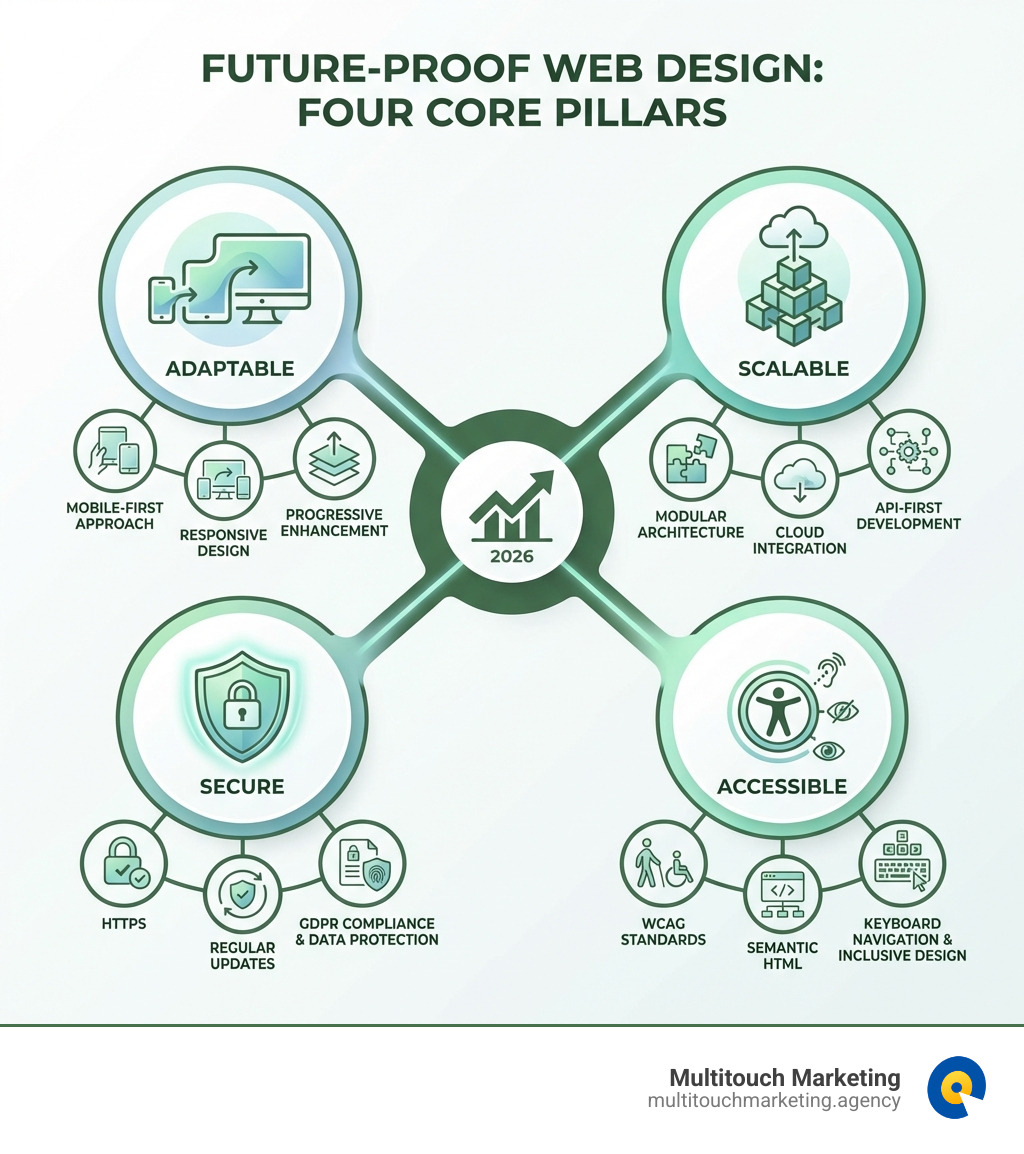
Learn more about Future proof web design:
The Unshakeable Foundation: Core Principles of Longevity
Building a website to last starts with principles that prioritize the user and long-term viability. A great user experience (UX) is the bedrock, ensuring a visitor’s journey is intuitive and efficient. This is complemented by a clear user interface (UI) that focuses on visual design, readability, and accessibility. These principles align with Resilient web design, which advocates for building sites that adapt gracefully to any user’s environment.
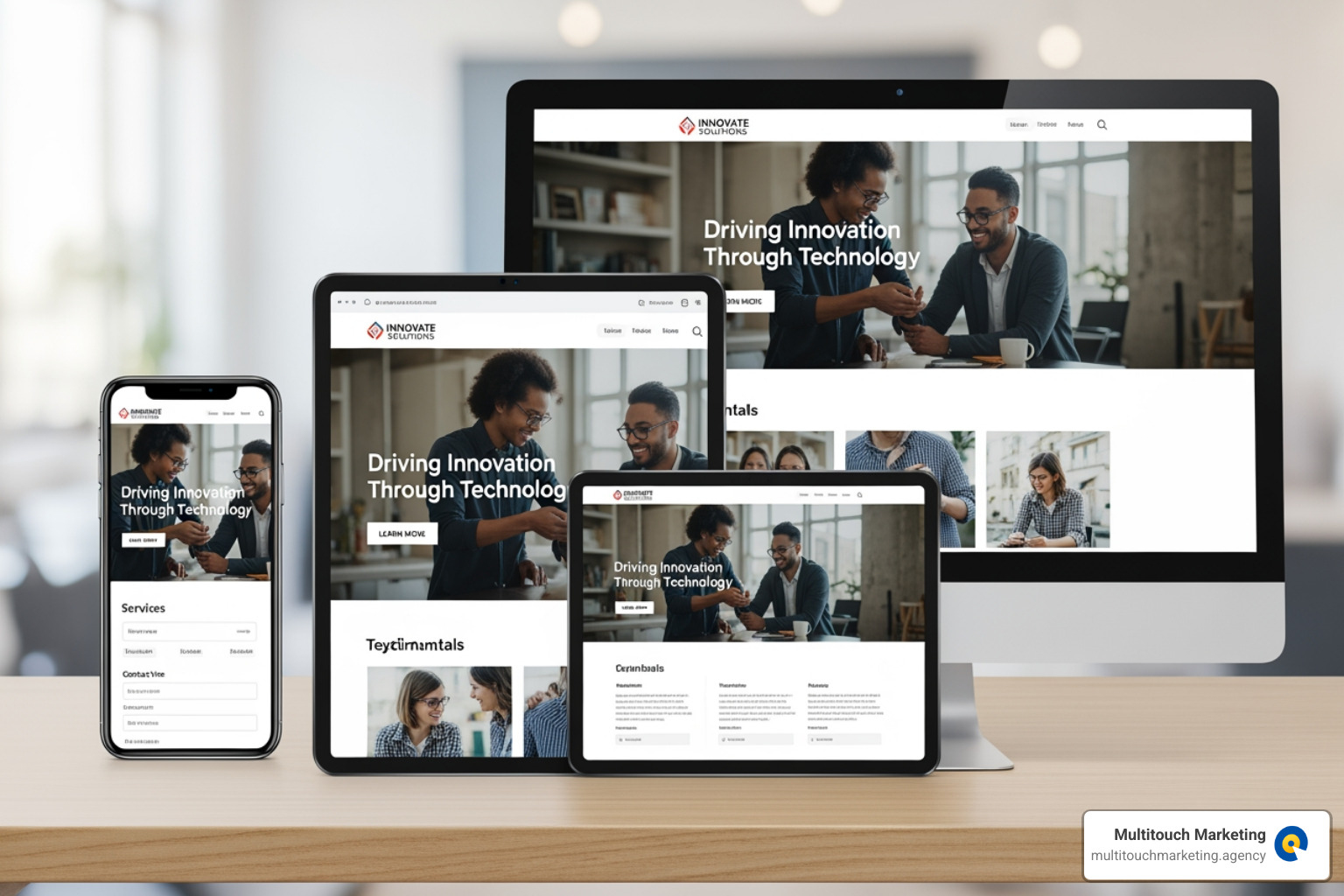
Accept Mobile-First and Responsive Design
A mobile-first approach is non-negotiable. With over 60% of web traffic coming from mobile devices and Google’s mobile-first indexing, the mobile experience dictates search rankings. Designing for mobile first forces a focus on essential functionality, which is then improved for larger screens. Responsive design makes this possible through technical practices like fluid grids, flexible images, and media queries, ensuring one website functions perfectly across all devices. This adaptability is crucial for both SEO and user satisfaction. Learn more with our guide on Responsive Web Design and Search Engine Optimization.
Prioritize Web Accessibility (WCAG)
Accessibility is a fundamental requirement, not an option. With an estimated 16% of the global population living with a disability, ignoring accessibility means excluding a significant market. Adhering to Web Content Accessibility Guidelines (WCAG) expands your audience, improves SEO, and ensures legal compliance. Key practices include using semantic HTML, ensuring sufficient color contrast, enabling keyboard navigation, and providing alt text for images. Companies like Microsoft set a high standard for this inclusive approach.
Implement Progressive Improvement for Resilience
Progressive improvement is a core principle for building a resilient website. It involves starting with core functionality accessible to everyone (using basic HTML), then layering on improvements like CSS for styling and JavaScript for interactivity. This ensures that if a modern feature fails to load on an older browser or slow connection, the user still gets a functional experience. Instead of striving for pixel-perfect uniformity across all browsers, the goal is to provide the best possible experience for each user’s environment. This philosophy creates a robust site that can evolve without constant rebuilds. For a deeper dive, explore Progressive Enhancement explained.
Architectural Strategies for Future-Proof Web Design
Beyond foundational principles, your website’s architecture dictates its long-term viability. Strategic choices here enable scalability, maintainability, and adaptability, preventing expensive overhauls and reducing technical debt.

Adopt Modular Design and Component-Based Systems
Monolithic websites are a thing of the past; the future is modular. This approach breaks pages into smaller, reusable components. The benefits are immense: it ensures brand consistency, speeds up development, and simplifies maintenance. Updating a single component propagates the change everywhere it’s used. This makes scaling your site with new pages or features dramatically faster and more efficient, which is crucial for businesses in active markets like Raleigh, Durham, or Chapel Hill. This modularity is key to avoiding the costly 2-3 year redesign cycle and aligns with the Goals for a Website Redesign.
Leverage API-First Development and Headless CMS
An API-first architecture, often using a headless CMS, decouples the front-end (what users see) from the back-end (where content is stored). This provides omnichannel content delivery—create content once and publish it anywhere, from your website to a mobile app or smart speaker. It also gives developers the freedom to use the best front-end technologies for a highly performant user interface. This approach makes your content inherently ready for future channels like AI and AR/VR, ensuring long-term adaptability. Managing such a system often requires expert help from Website Management Companies.
Plan for Scalability with Cloud Integration
A future-proof website must handle growth without faltering. Cloud integration is essential for this. Cloud platforms provide elasticity to manage traffic spikes from a viral marketing campaign, preventing crashes and ensuring a smooth user experience. They also use Content Delivery Networks (CDNs) to store content closer to users globally, dramatically reducing load times. This robust infrastructure ensures your website remains reliable and performant as your business grows, much like how Netflix serves millions of users seamlessly.
Optimizing for Tomorrow: Performance, Security, and Intelligence
Performance is paramount, security is non-negotiable, and intelligence is the key to staying ahead. These pillars are crucial for building a website that not only functions today but is prepared for tomorrow’s challenges. This holistic approach is part of the broader AI Driven Digital Transformation that modern businesses are embracing.
Maximize Website Performance and Speed
Speed is a competitive advantage. A one-second delay can reduce conversions by 7% or more. For PPC campaigns, page speed is a critical component of Google’s Quality Score; a faster site can lead to lower ad costs and better positions. We focus on optimizing for Core Web Vitals (LCP, FID, CLS) through techniques like:
- Image Optimization: Using next-gen formats like WebP and lazy loading.
- Code Minification: Reducing the size of CSS and JavaScript files.
- Caching Strategies: Using CDNs and browser caching to serve content faster.
- Minimizing Render-Blocking Resources: Deferring non-critical scripts.
These optimizations create a website that delights users and performs well in both organic and paid search.
Integrate Essential Security and Compliance Measures
Security is the foundation of user trust. A single breach can destroy your reputation. Future proof web design treats security as an ongoing process, not a one-time task. Essential measures include using HTTPS everywhere, performing regular software updates to patch vulnerabilities, adhering to data privacy laws like GDPR, and implementing automated backups for disaster recovery. These steps are critical for safeguarding user data and maintaining business continuity, as detailed in our Website Maintenance Best Practices.
Prepare for AI and Emerging Technologies
A future-proof website anticipates innovation. Integrating capabilities that leverage AI and emerging technologies can significantly improve user experiences.
- AI-Driven Personalization: Use AI to deliver personalized content and product recommendations, boosting engagement.
- Voice Search Optimization: Structure content with clear answers and schema markup to be found by voice assistants.
- Immersive Experiences (AR/VR): Explore how AR/VR can offer unique, interactive ways for users to engage with your products or services.
- Progressive Web Apps (PWAs): Offer app-like experiences like offline functionality and push notifications directly through the browser.
Embracing these technologies ensures your website remains relevant and ready for the next wave of digital interaction, a key part of our AI Technology for Marketing strategy.
Driving Growth Over Time: SEO, Content, and Data-Driven Evolution
A website is a dynamic growth engine, not a static billboard. To ensure long-term success, a future proof web design must integrate robust SEO, adaptable content, and a continuous cycle of data-driven improvement. This evolution is central to our Data Driven Marketing Strategies.
Integrate SEO from Day One
SEO should be a foundational element, not an afterthought. Building a site with a logical information architecture and proper semantic markup helps search engines crawl and understand your content. Implementing structured data (Schema.org) is especially crucial for local businesses in Raleigh, Durham, or Chapel Hill, as it helps you appear in local packs and voice search. As search evolves with AI Overviews, having clear, well-structured content is more important than ever for visibility. Learn more about Responsive Web Design SEO.
Structure Content for Adaptability and Engagement
Content is only effective if it’s structured for modern consumption habits. While the space “above the fold” is still important for grabbing attention, users are accustomed to scrolling. The key is to craft a compelling narrative that guides them down the page. Use clear, empathetic headlines and a logical content hierarchy (, , etc.) to make your content scannable and digestible. A flexible CMS is also vital, allowing your team to keep content fresh and relevant without developer assistance. Find more tips in our SEO Content Optimization Tips.
Use Analytics and A/B Testing for Continuous Improvement
Future-proofing is an ongoing process fueled by data. We track key performance indicators (KPIs) like traffic sources, user behavior, and conversion rates to understand what’s working. This is especially critical for optimizing paid campaigns. By using tools like heatmaps and A/B testing, we can make data-informed decisions to improve landing pages. Testing different headlines, calls-to-action, or layouts can significantly increase conversion rates, maximizing the ROI from your PPC spend. This culture of continuous improvement ensures your website evolves to consistently deliver results. Explore more in our Marketing Insights resources.
Frequently Asked Questions about Future-Proof Web Design
What is the most important principle of future-proof web design?
The most important principle is strategy before technology. A successful website is built on a clear understanding of business goals and user needs, not just the latest tech trend. Prioritizing architectural flexibility and user-centricity creates a foundation that can adapt over time.
How much more does a future-proof website cost?
While the initial investment may be higher than a basic template site, a future proof web design delivers significant long-term savings. It reduces the need for frequent, costly redesigns (which average $15,000-$100,000), resulting in a much higher return on investment (ROI) over the website’s lifespan.
Can an existing website be made future-proof?
Yes. An existing site can be made more resilient through a phased approach. This typically involves auditing the current architecture, then prioritizing high-impact changes like improving performance, ensuring accessibility, and retrofitting a responsive design. It’s a journey of continuous improvement to make your site a more sustainable digital asset. Our Website Maintenance and Support services can guide this process.
Build a Website That Lasts
As we’ve explored, future proof web design is a strategic imperative for businesses in Raleigh, Durham, Chapel Hill, and beyond. By embracing adaptability, scalability, performance, and security, you build an enduring digital asset that evolves with your business.
This is not a one-time project but an ongoing process. A resilient website is the foundation for all your digital marketing efforts, ensuring your brand remains competitive and that every dollar spent—especially on PPC campaigns—has the best possible chance to convert.
At Multitouch Marketing, we specialize in crafting robust, adaptable websites that deliver measurable business outcomes. We build digital solutions designed to stand the test of time.
Invest in a future-proof website today by exploring our Responsive Web Design services