

Why Every Dollar of Your Marketing Budget Deserves Scrutiny
Marketing spend analysis is the process of evaluating where your advertising dollars go, which channels deliver results, and how to maximize return on investment. It involves:
- Data Collection: Gathering spend data from all marketing channels.
- Performance Tracking: Measuring KPIs like Cost Per Acquisition (CPA) and Return on Ad Spend (ROAS).
- Identifying Waste: Finding underperforming campaigns and inefficient allocation.
- Optimizing Allocation: Shifting budget from low to high-performing channels.
- Continuous Monitoring: Using dashboards to track performance in real-time.
While marketing is often seen as just another expense, external spend can account for 60-80% of total revenue. Organizations that implement intelligent spend analysis can reduce time spent on manual data preparation by up to 90%.
The stakes are high. Marketing budgets fell to 7.7% of company revenue in 2024, down from 9.1% in 2023. Yet digital marketing spending continues to grow at 8.9%, with over half of marketing budgets now allocated to digital channels. This means you’re working with less while competition for the same audience intensifies.
The good news is that savvy marketers use spend analysis to achieve savings of 3% to 5%, and advanced analytics have yielded up to a 63x return on investment. Knowing where your marketing dollars go—and having the courage to reallocate them—can be the difference between thriving and barely surviving.
I’m Milton Brown, and since 2008 I’ve managed marketing budgets from $20,000 to $5 million across multiple industries. I use marketing spend analysis to drive measurable performance improvements for clients in e-commerce, healthcare, and education, ensuring every dollar works harder for your business.
Understanding Marketing Spend: More Than Just an Expense
Many business owners treat every marketing dollar as a short-term expense. The reality is more nuanced, and understanding the difference between spend and investment can transform your budget strategy.
Think of marketing spend as a short-term operational cost with a finite lifespan, like a seasonal ad campaign. When you stop paying, the visibility stops. In contrast, a marketing investment builds long-term value, like your brand identity or content. A blog post published today can generate leads for years, becoming a valuable asset.
This distinction is critical for marketing spend analysis. Focusing only on immediate costs means you might cut a long-term asset like content marketing, which sees leads convert at 14.6% compared to 1.7% for outbound methods.
What are the key components of marketing spend?
Your marketing budget includes several key components that fall into either spend or investment categories.
-
Digital advertising: This is your most visible spending, including PPC Pay Per Click Campaigns, social media ads, and display ads. These offer immediate, measurable results.
-
Search Engine Optimization (SEO): While SEO delivers long-term results, it requires current spending on consulting, content, and technical work. The payoff takes months but provides lasting organic presence.
-
Content creation: This is where spend becomes an investment. Blog posts, videos, and guides can become lead generation machines that work for years.
-
Marketing technology software: Essential for modern marketing, this includes subscriptions for your CRM, email platforms, and analytics tools.
-
Agency fees and personnel costs: This covers salaries for your in-house team or fees for specialized agencies that provide Data-Driven Marketing Strategies.
-
Other costs: Don’t forget public relations, market research, and events or trade shows, which can also be significant expenses.
Effective marketing spend analysis requires understanding how each category contributes to both immediate goals and long-term growth. Viewing your budget through this dual lens of spend versus investment leads to smarter decisions and drives profitability.
The Four-Stage Process for Effective Marketing Spend Analysis
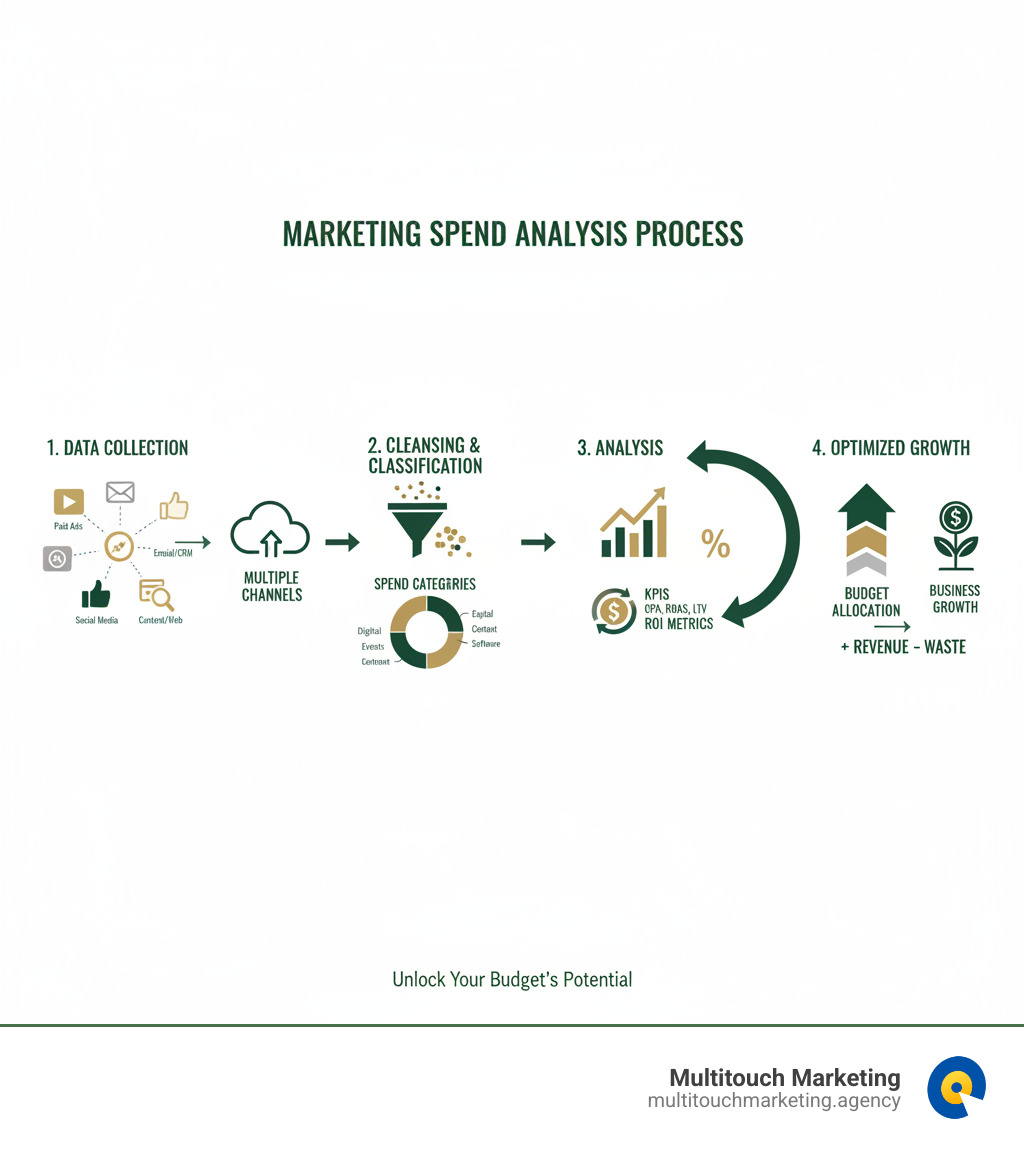
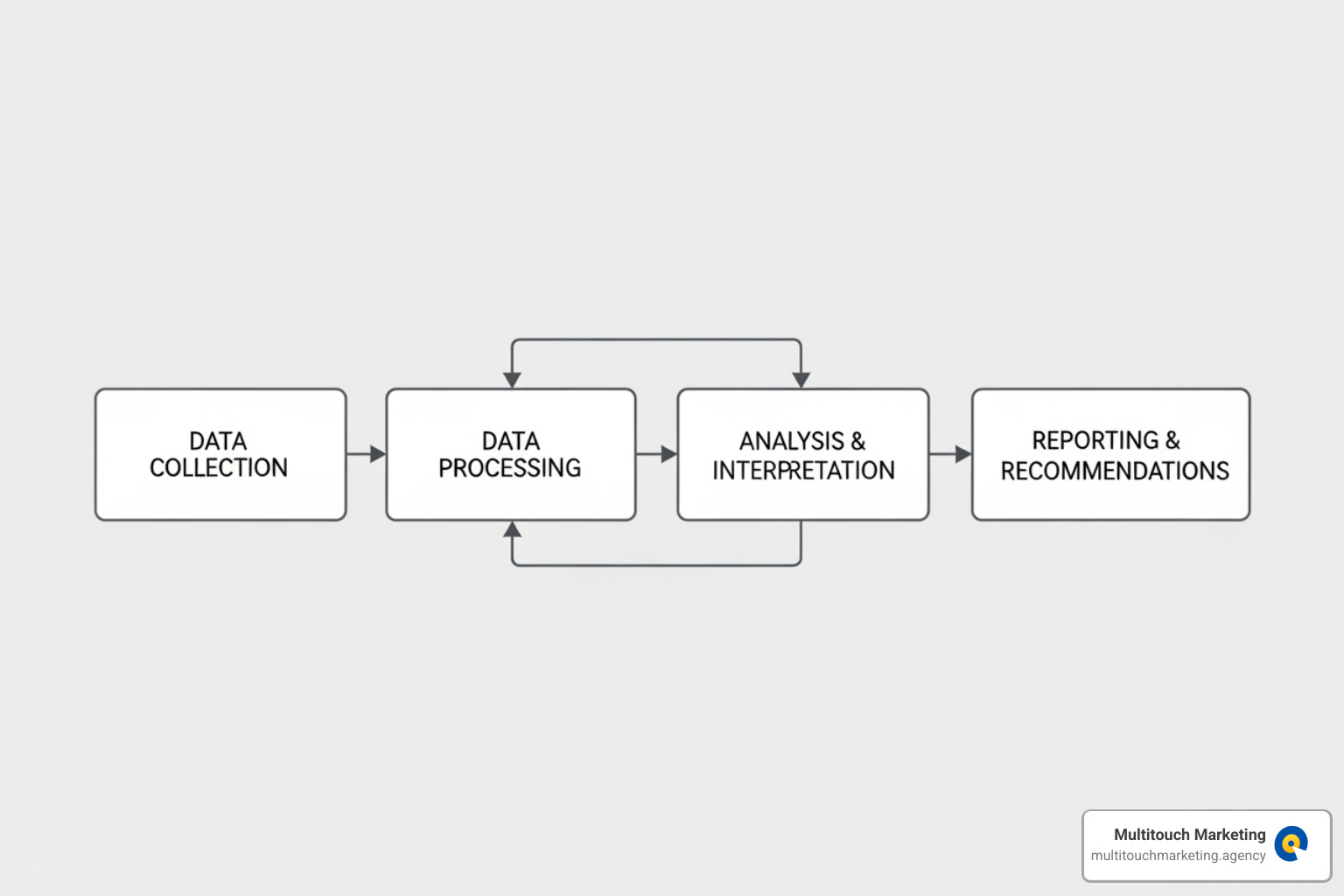
Effective marketing spend analysis is a systematic, four-stage process that turns scattered data into a clear picture of your financial performance. The payoff is substantial: organizations applying this rigor can achieve savings of 3% to 5%, and those leveraging advanced analytics have seen up to a 63x ROI. This process transforms marketing from a cost center into a profit engine.
Stage 1: Data Collection and Integration
Marketing data is often scattered across different platforms—Google Ads, Facebook, your CRM, and invoicing systems. These data silos prevent a holistic view and make analysis difficult. Manually collecting this data is tedious and error-prone, which is why intelligent spend analysis can reduce data preparation time by up to 90%.
The solution is data integration. We use specialized tools to automatically pull information from all your marketing platforms into a single, centralized database. This automated approach to Data-Driven Marketing Strategies eliminates manual work, ensures accuracy, and provides a complete view of your marketing investments.
Stage 2: Data Cleansing and Classification
Raw data is messy and inconsistent. Data cleansing fixes inaccuracies, removes duplicate expenses, and standardizes entries (e.g., merging “Google Ads” and “Google Advertising”). This ensures you have a clean and reliable dataset.
Next, data classification organizes the clean data into meaningful categories. We group spending by channel (PPC, social media), assign unique identifiers to campaigns, and consolidate expenses by vendor. This meticulous organization is the foundation for accurate analysis.
Stage 3: In-Depth Marketing Spend Analysis
With clean, organized data, we can uncover the story it tells. We start by identifying spending patterns and trends to find opportunities for optimization. We then hunt for waste and inefficiencies, such as underperforming campaigns or overpriced vendors, to find immediate savings.
We evaluate performance using key Key Performance Indicators (KPIs):
- Return on Ad Spend (ROAS) shows how much revenue each ad dollar generates.
- Cost Per Acquisition (CPA) reveals the cost to acquire a new customer through each channel.
- Customer Lifetime Value (LTV) helps justify acquisition costs for high-value customer segments.
By scrutinizing all purchasing data, we uncover unnecessary expenses and overinflated prices, laying the groundwork for understanding How to Increase Your ROI Through Scientific SEM.
Stage 4: Reporting and Visualization with KPI Dashboards
Analysis is useless if the insights aren’t accessible. The final stage is changing findings into clear, visual reports that drive action. A well-designed KPI dashboard acts as a marketing command center, providing a single-screen view of campaign health.
Dashboards enable ongoing monitoring with real-time data, so you can spot issues or opportunities immediately. Visual charts make complex information easy to digest, helping you identify patterns at a glance. Most importantly, dashboards track progress against your goals, ensuring your marketing efforts align with business objectives.
Modern tools, including those using AI in Marketing Analytics, can populate these dashboards with predictive insights, freeing your team to focus on strategy instead of data compilation.
From Analysis to Action: Optimizing Your Marketing Spend
Once your analysis is complete, it’s time to put those insights to work. This means embracing a mindset of continuous improvement to turn your marketing budget into a growth engine.
Proven Strategies for Marketing Spend Optimization
Optimization requires discipline and data. Here are proven tactics that make a difference:
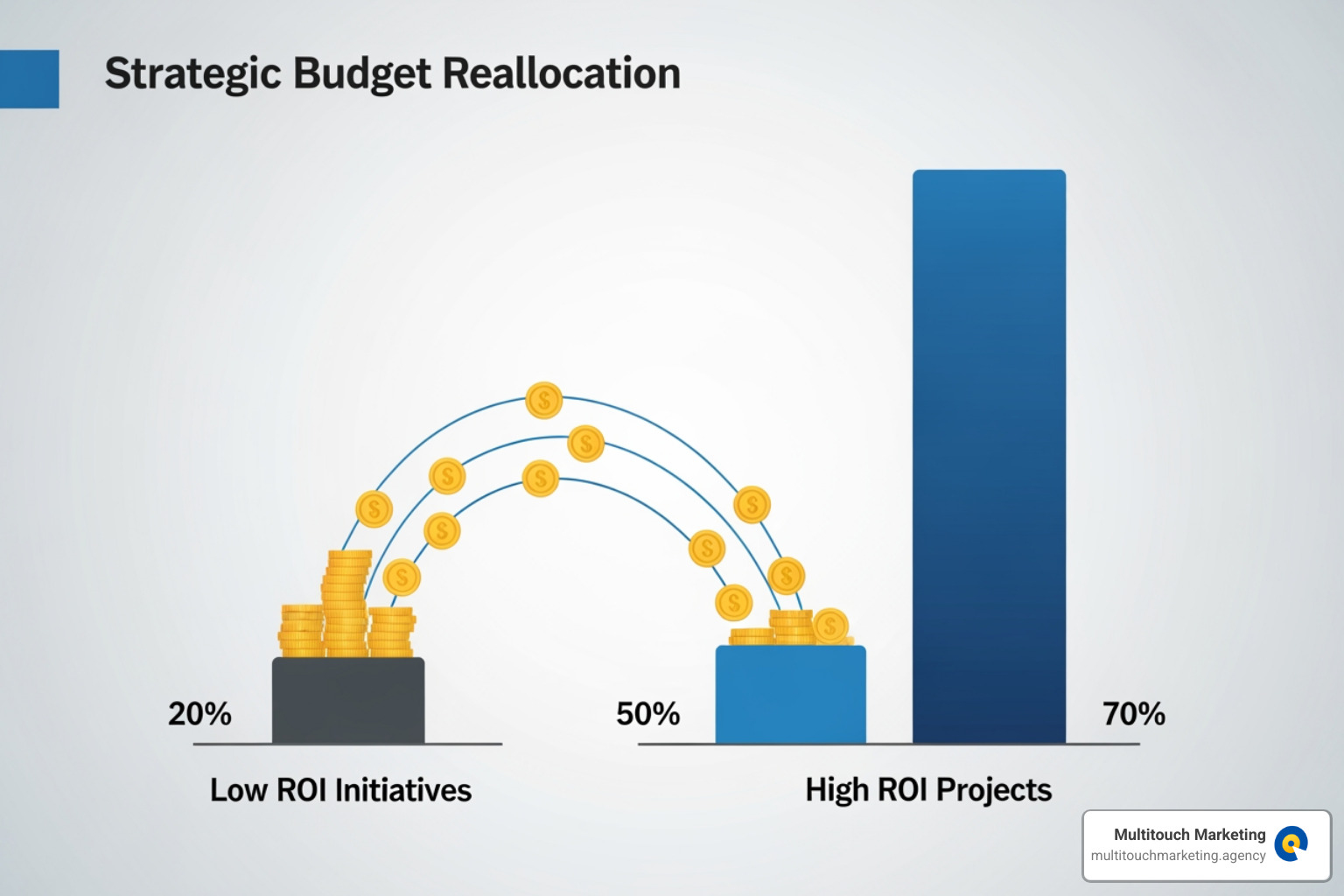
- Budget reallocation: Have the courage to cut spending from underperforming channels and shift those dollars to what’s actually working.
- A/B testing: Constantly run experiments on ad creatives, headlines, and landing pages to find what resonates before scaling up spend.
- Audience refinement: Use customer segmentation and precise targeting to reduce wasted clicks from people who will never convert.
- Negative keywords: A robust PPC Negative Keyword Strategy is non-negotiable for preventing ads from showing for irrelevant searches.
- Landing page optimization: Ensure your landing pages are fast, clear, and relevant to the ad that brought the user there. This is where conversions happen.
- Retargeting campaigns: Reach warm leads who have already shown interest in your business to increase conversion rates and lower costs.
- Bidding strategies: Experiment with manual and automated bidding strategies (like Target CPA) to find the sweet spot between cost and performance.
- Channel diversification: Once core channels are optimized, strategically expand into new platforms to open up new audience segments.
The Role of AI and Automation in Modern Marketing Spend Analysis
Manually analyzing modern marketing spend is nearly impossible at scale. AI and automation are essential for handling the volume, speed, and complexity of today’s data.
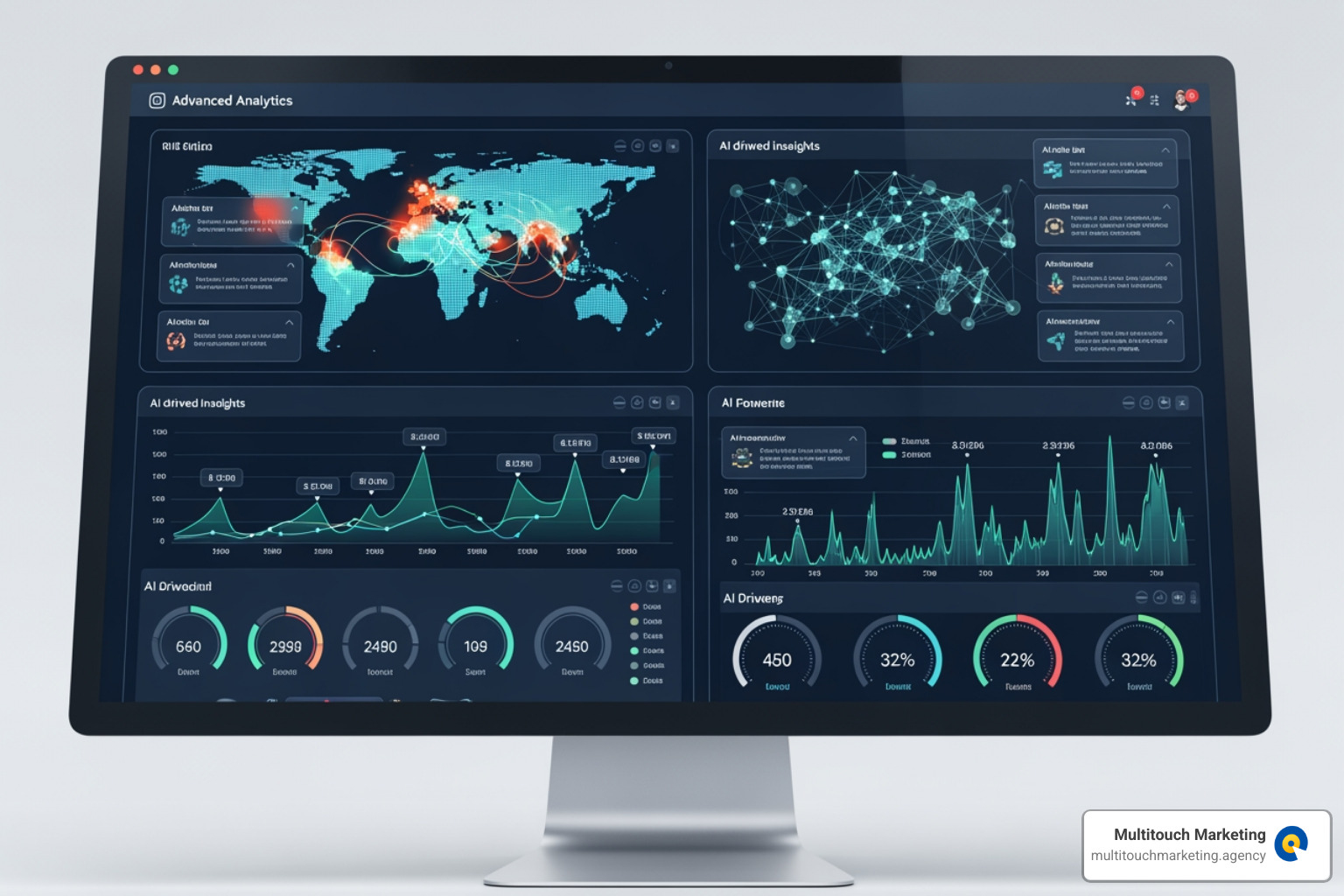
Automated data processing eliminates tedious manual work and errors, with organizations seeing up to a 90% reduction in data preparation time. Predictive analytics helps forecast future trends, allowing for proactive adjustments. Anomaly detection acts as a watchdog, flagging unusual spending or performance drops in real-time.
AI tools can also suggest budget shifts, identify new keyword opportunities, and power automated bidding to optimize for goals at a speed humans can’t match. As the Gartner CMO Survey notes, a primary benefit of GenAI is efficiency. This frees up your team to focus on strategy. At Multitouch Marketing, we use these tools to power AI-Driven Marketing Campaigns that give our North Carolina clients a competitive edge.
Aligning Spend with Profitability and Business Objectives
Marketing spend analysis proves its value by connecting every dollar spent to measurable business outcomes. It helps shift marketing from a cost center to a profit driver by drawing a clear line from a campaign to actual revenue.
This strategic alignment allows you to direct spend toward specific business goals, like increasing market share in a particular city. By continuously optimizing, you improve ROI and business agility, allowing you to pivot quickly as market conditions change. Perhaps most importantly, solid spend analysis helps you build a compelling, data-backed case for future marketing investments, changing marketing into a strategic growth engine that drives profitability.
Frequently Asked Questions about Marketing Spend Analysis
Here are answers to the most common questions business owners have about making sense of their marketing budgets.
How do I determine how much to spend on advertising?
There’s no magic number; your ideal budget depends on several factors:
- Business Goals: Are you aiming for aggressive market penetration or steady growth? Your goals dictate your budget commitment.
- Customer Lifetime Value (LTV): Your LTV is your North Star. If a customer is worth $5,000, you can justify a higher acquisition cost. Understanding PPC Campaign Budgeting for Small Businesses starts with knowing your numbers.
- Industry Benchmarks: As a starting point, many businesses allocate 7-10% of gross revenue to marketing. Growth-stage startups might invest 20% or more.
My practical advice is to start conservatively, track everything, and scale what works. Begin with a modest allocation, measure results, and increase spending on proven channels. This test-and-adjust approach minimizes risk.
What is a good Return on Ad Spend (ROAS)?
The definition of a “good” ROAS is different for every business.
- Profit Margins: A software company with 80% margins can be profitable with a 2:1 ROAS, while an e-commerce store with 20% margins might lose money at that same ratio.
- Campaign Goals: Brand awareness campaigns may have a lower initial ROAS, while direct response campaigns require higher targets to be justifiable.
A 4:1 ROAS is often cited as a solid benchmark, but the key is to know your own numbers—margins, LTV, and break-even point. Set ROAS targets that align with your specific profitability goals. We never look at ROAS in isolation; we evaluate it alongside CPA and LTV for a complete picture.
How often should I conduct a marketing spend analysis?
Marketing spend analysis should be a continuous rhythm, not a once-a-year event.
- Real-time Dashboards: Use a KPI dashboard for an at-a-glance view of critical metrics, allowing you to spot issues or opportunities as they happen.
- Monthly Reviews: Review performance against goals and check budget pacing to catch problems before they become expensive.
- Quarterly Deep Dives: This is for strategic work. Review your channel mix, evaluate vendors, and make significant budget reallocation decisions.
- Annual Strategic Planning: Use a comprehensive yearly analysis to inform your budget and strategy for the coming year.
For businesses running active campaigns, periodic PPC Audit Services are also highly recommended. An expert audit can uncover hidden inefficiencies that even experienced teams might miss.
Conclusion
Marketing spend analysis is not a one-time task but an ongoing practice that separates thriving businesses from those struggling with their marketing budgets. It’s about changing data into action.
By following the four-stage process—from data collection to reporting—and leveraging AI and automation, you can make this process faster and more accurate than ever. The results are proven: organizations reduce manual work, achieve significant savings, and see returns as high as 63x on their analytics investments.
The real magic happens when you use these insights to make bold decisions: cutting what doesn’t work, doubling down on what does, and continuously testing. This is how marketing evolves from a mysterious expense into a reliable engine for growth.
At Multitouch Marketing, we’ve helped businesses in Raleigh, Durham, and Chapel Hill turn their marketing budgets into strategic advantages since 2008. We translate numbers into actionable strategies that drive profitability, ensuring your budget works as hard as you do.
The question isn’t whether you can afford to invest in marketing spend analysis—it’s whether you can afford not to. While competitors rely on guesswork, you can make informed decisions backed by solid data.
Ready to see where your marketing dollars are really going? Get a comprehensive analysis of your ad spend with a Free PPC Audit. Let’s turn your marketing budget into your competitive advantage.