

Why Ecommerce Store Management Services Are Essential for Modern Businesses
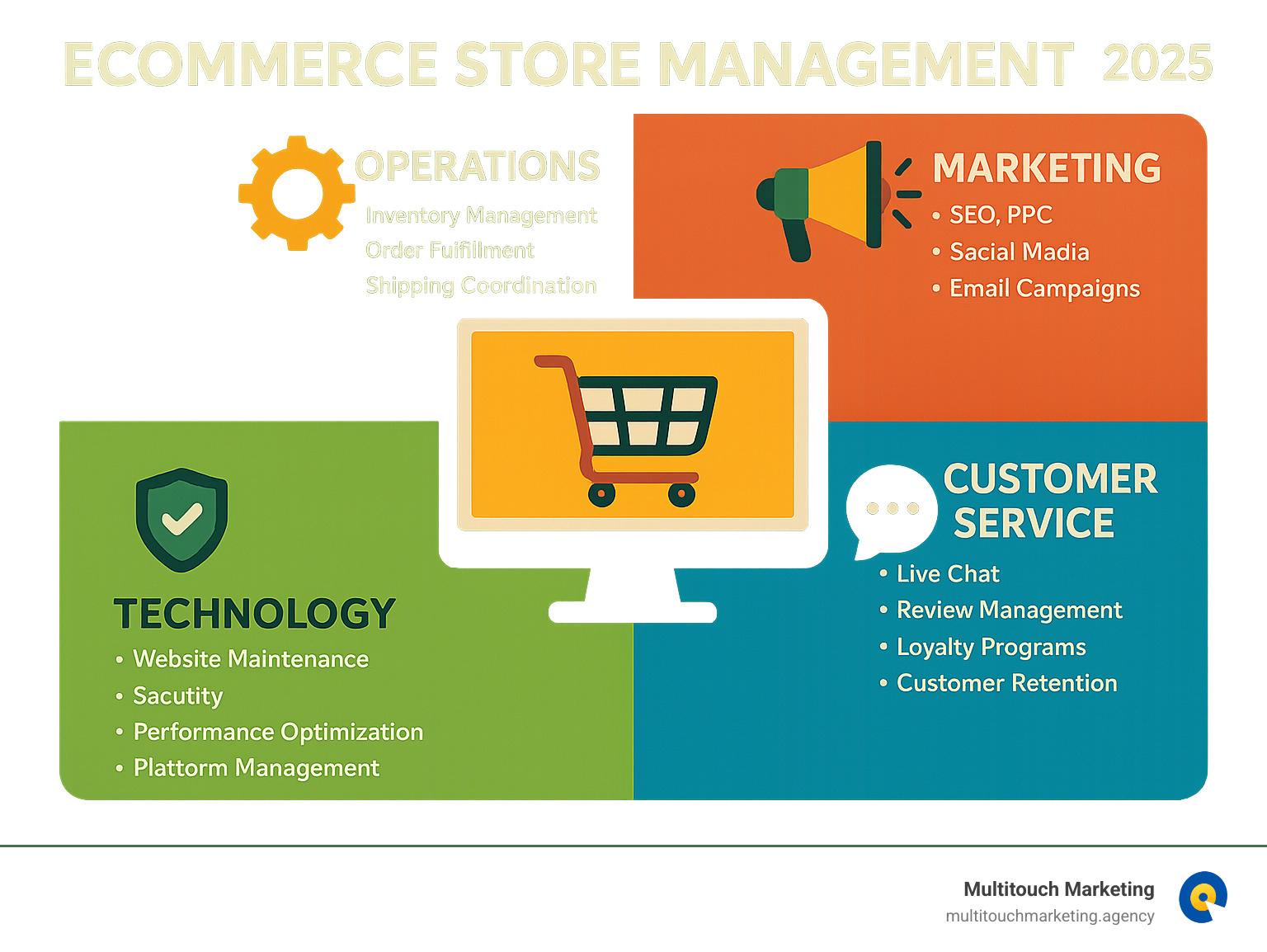
Ecommerce store management services encompass the comprehensive operational, technical, and marketing support needed to run a successful online business. These services typically include:
- Operations Management: Inventory tracking, order processing, shipping coordination, and returns handling
- Technical Support: Website maintenance, security updates, performance optimization, and platform management
- Marketing & Growth: SEO, PPC advertising, email campaigns, and conversion rate optimization
- Customer Service: Live chat support, review management, and customer retention programs
Running an ecommerce store means juggling countless moving parts, and the complexity can quickly overwhelm any business owner. The global ecommerce market is projected to reach $6.3 trillion by 2024, but success requires more than just an online store. With 84% of consumers saying a company’s experience is as important as its products, every part of your operation must work seamlessly.
As Milton Brown, I’ve spent over 15 years helping businesses steer these challenges through strategic digital marketing and ecommerce management. My experience has shown that the most successful online businesses either master these operational complexities or partner with experts who can handle them effectively.
The Engine Room: Key Components of Effective Ecommerce Management
Think of your online store as a well-oiled machine where every component works together to drive sales. Ecommerce store management services handle these moving parts so you can focus on the bigger picture.
This section covers the essential, hands-on tasks required to run a successful online store, from the warehouse to the website’s backend.

Day-to-Day Operations & Fulfillment
The heartbeat of any ecommerce business is its daily operations. Without a smooth workflow, even the best marketing strategy will fail.
Inventory management means accurate tracking across all channels to avoid overselling or tying up cash in excess stock. It includes product listings, bulk uploads, and real-time inventory syncing.
Order processing covers the entire order lifecycle, from payment and invoicing to shipment preparation and status updates, ensuring a smooth customer experience.
Shipping coordination involves working with carriers for efficient, affordable delivery. Platforms like ShipStation can streamline this by integrating with numerous selling channels and carriers.
Returns management can turn a potentially negative experience into a positive one. A smooth, hassle-free return process builds customer loyalty.
Ongoing website maintenance is crucial. Your site needs routine checks, bug fixes, and monitoring to ensure it operates smoothly, as this directly impacts your ability to serve customers. Website maintenance and support keeps everything running behind the scenes.
Technical & Platform Management
Your website is your digital storefront and requires expert technical maintenance to stay secure and appealing.
Website performance directly impacts your bottom line. A 1-second page load delay can cut conversions by 7%. We optimize sites for speed, targeting high performance scores and fast load times.
Security updates are mandatory. Robust security includes SSL certificates, regular vulnerability scans, and continuous monitoring to protect customer data and your reputation.
Bug fixes are handled swiftly with expert support, ensuring glitches don’t interrupt the shopping experience.
Platform expertise on systems like Shopify, WooCommerce, or Magento is vital. Deep knowledge ensures your store is optimized, including custom work and integrations. Responsive web design SEO guarantees functionality across all devices.
Marketing & Customer Acquisition
Getting customers to visit your store and make a purchase is where digital marketing expertise shines.
Search Engine Optimization (SEO) drives organic traffic by improving search rankings through keyword research, optimized product listings, and valuable content.
Pay-Per-Click (PPC) advertising drives immediate, qualified traffic via targeted campaigns on platforms like Google and Amazon. Careful bid management, ad copy, and ACoS monitoring maximize ROI. A strong PPC strategy can significantly exceed the average 2-3% ecommerce conversion rate. PPC advertising benefits are extensive.
Social media marketing connects with your audience through engaging content, managed profiles, and targeted social ads.
Email campaigns nurture relationships and drive repeat purchases with welcome sequences, cart reminders, and promotional newsletters.
Conversion Rate Optimization (CRO) turns more visitors into customers by analyzing user behavior and A/B testing page layouts and checkout flows. This can increase conversion rates by 10-15%.
Customer Service & Retention
Happy customers become repeat customers, and businesses that prioritize retention are more profitable.
Inquiry management means promptly and professionally addressing customer questions via email, phone, or ticketing systems to build trust.
Review monitoring is key to managing your digital reputation, as 93% of customers are influenced by online reviews. Actively managing reviews on your site and third-party platforms builds crucial trust. The online reputation impact on your business is significant.
Live chat support provides real-time assistance, improving satisfaction and conversions. Chatbots can resolve up to 80% of routine questions, freeing up human agents.
Loyalty programs reward repeat purchases and build long-term relationships. Since 60% of consumers prefer brands with loyalty programs, they create lasting value.
With 84% of consumers valuing experience as much as products, AI-improved customer experience tools are essential for delivering exceptional service at scale.
The Growth Catalyst: Why Outsourcing Your Ecommerce Store Management Services Makes Sense
The sheer number of tasks in ecommerce can be overwhelming. Outsourcing isn’t about losing control; it’s a strategic move to free you up to focus on your core business. Just as a race car driver relies on a pit crew, you can rely on experts to handle the operational details.

Gain Specialized Expertise and Advanced Tools
Partnering with professional ecommerce store management services gives you immediate access to a team of experts who are always on top of the latest trends, platform updates, and conversion strategies.
They bring tested, industry best practices, helping you avoid costly trial and error and implement strategies that are proven to work.
You also gain access to advanced software and tools for inventory, marketing, and analytics that would be costly to acquire and learn on your own. AI in Marketing Strategy has become crucial, with personalization driving significant revenue increases.
Every decision is backed by data, not guesswork. Data-driven strategies are fueled by solid analytics, including detailed analysis of conversion rates for continuous improvement.
Boost Efficiency and Focus on Your Core Business
Outsourcing provides incredible time savings. By offloading tasks like product uploads and inventory updates, business owners can reclaim dozens of hours each month.
Reduced operational costs are another major benefit. You gain an entire team of experts for a fraction of the cost of hiring even one full-time specialist, avoiding expenses like salaries, benefits, and training.
Scalability becomes effortless. A professional service can scale support up or down instantly for holiday rushes or new product launches, eliminating the need to hire and train temporary staff.
Most importantly, you can focus on product development and brand building. With operations handled, you can pour your energy into what makes your business unique, like creating new products or refining your brand story.
Drive Sales and Improve the Customer Journey
This behind-the-scenes work translates directly into a better bottom line and happier customers.
Professional management leads to improved website UX, including faster load times and smoother navigation. Since a 1-second delay can cost 7% of conversions, this directly impacts sales.
Proactive customer support builds loyalty by anticipating and solving issues before they escalate, turning one-time buyers into lifelong fans.
Consistent brand messaging across all touchpoints creates a professional, trustworthy experience that encourages customer recommendations.
The result is increased customer loyalty. Smooth operations lead to better reviews, repeat purchases, and word-of-mouth marketing. How SEO Pushes Business Growth demonstrates how this comprehensive approach creates lasting success.
In short, professional ecommerce store management services transform your business into a growth machine, freeing you to be an entrepreneur, not just an operator.
Finding Your Perfect Partner: How to Choose the Right Service
Choosing the right partner for your ecommerce store management services is a critical decision. It requires careful research, as you’re handing over the keys to your digital storefront. This proven process will help you find a partner who understands your business and can drive real results.
Step 1: Define Your Business Needs and Goals
Before you start your search, get clear on your company’s position and objectives.
Identify your biggest pain points. Are you struggling with inventory, low conversion rates, or poor search rankings? Listing these frustrations will guide your search for the right help.
Set clear, measurable objectives. Instead of vague goals, aim for specifics like “increase conversion rates by 25%” or “boost organic traffic by 50%.” This helps in evaluating partners and tracking success.
Establish a realistic budget. Quality services are an investment. Pricing can range from hourly rates to monthly packages, but the cheapest option isn’t always the most cost-effective if it fails to deliver results.
Determine which services you need. Prioritize your needs, whether it’s digital marketing, technical support, or operational help. A list of must-haves versus nice-to-haves will focus your search and budget.
Step 2: Evaluating Potential ecommerce store management services
Now it’s time to vet potential partners to ensure they have the skills and track record to deliver.
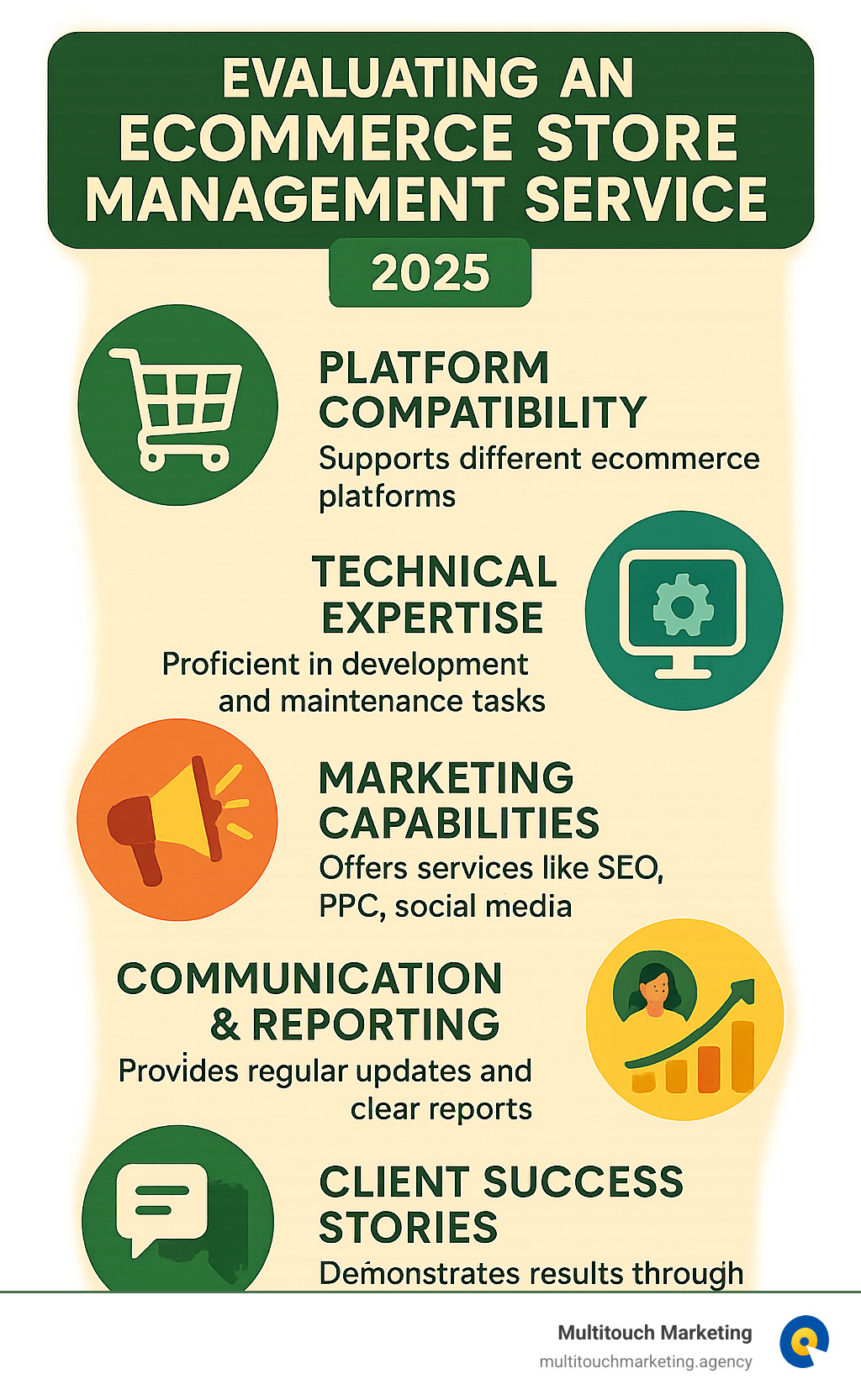
Verify their platform expertise. Ensure they have deep experience with your specific platform (e.g., Shopify, WooCommerce, Magento) and any marketplaces you use, like Amazon or eBay.
Assess their technical capabilities. They should be proficient in website speed optimization, security, and complex integrations. A functional, fast, and secure site is non-negotiable.
Evaluate their marketing services. A good partner should offer comprehensive digital marketing, including SEO, PPC, and email marketing to drive sales. At Multitouch Marketing, we know the power of well-executed PPC for ecommerce growth.
Check their communication and reporting. Look for partners who provide regular, clear reports on key business metrics, not just vanity numbers. Consistent communication is essential.
Check references and case studies. Look for quantifiable results, like “increased conversion rates by 40%.” Vague promises are a red flag. A provider’s online reputation can significantly impact their business, so do your homework.
Step 3: Key Questions to Ask Potential Providers
During the interview phase, ask direct questions to gauge their professionalism and fit.
“What is your onboarding process?” A professional service will have a structured process for learning your business, integrating systems, and establishing communication. Vagueness here is a warning sign.
“How do you measure and report on success?” Ensure their success metrics align with your goals, focusing on KPIs like conversion rates and ROAS, not vanity metrics.
“Can you share examples of results for similar businesses?” Ask for concrete numbers and strategies they’ve used to help other clients increase sales or reduce costs.
“What is your pricing structure and what does it include?” Get clarity on their pricing model (hourly, project, retainer) and what’s included. Transparency is crucial to avoid hidden fees for things like reporting or communication.
The right partner will become an extension of your team, invested in your success. Take the time to find that perfect match, and you’ll wonder how you ever managed without them.
Frequently Asked Questions about Ecommerce Management
We hear the same questions from business owners all the time. Let’s tackle the big ones that come up in our conversations with clients.
What specific tasks are included in ecommerce store management services?
Ecommerce store management services cover a wide range of tasks to keep your online store running smoothly.
- Product listing and optimization: This includes creating compelling, SEO-friendly product descriptions, optimizing images, and organizing listings so customers can find your products.
- Inventory management: This involves tracking stock levels across all channels, managing variations, and coordinating with suppliers to prevent overselling.
- Order processing: This covers the entire order lifecycle, from payment verification and invoicing to tracking orders through fulfillment.
- Customer service: This includes handling inquiries, live chat support, professional returns management, and monitoring reviews to maintain a positive reputation.
- Technical website maintenance: This ensures your site is fast, secure, and bug-free to provide a smooth shopping experience.
- Digital marketing campaigns: This drives traffic through SEO, PPC advertising (our specialty), social media, and effective email campaigns.
What are the common challenges in ecommerce management?
Every online business owner faces common challenges along the way.
- Managing inventory across multiple channels: Keeping inventory synced across a website, Amazon, eBay, and other platforms is a major logistical challenge.
- Keeping up with technical updates and security: The fast pace of technical updates and security patches requires constant attention. A single vulnerability can damage your business and customer trust.
- Acquiring new customers cost-effectively: Rising competition makes cost-effective customer acquisition, especially with PPC advertising, increasingly difficult. It requires expertise to target the right audience efficiently.
- Providing timely customer support: Meeting customer expectations for timely, 24/7 support across multiple channels can stretch resources thin.
- Analyzing data to make informed decisions: Businesses are often flooded with data, but turning numbers about sales, customer behavior, and marketing into actionable insights requires significant expertise.
How does technology aid in efficient ecommerce store management?
Technology is essential for modern ecommerce store management services.
- Automation handles repetitive tasks like order processing, inventory updates, and email sequences, freeing up your time for strategy.
- Data insights from analytics platforms reveal customer behavior, top-selling products, and effective marketing campaigns, guiding key business decisions.
- Streamlined management systems sync inventory and orders in real-time across all sales channels, preventing overselling and manual errors.
- Personalized marketing uses technology to track customer behavior, enabling targeted recommendations and emails that boost conversion rates.
- Improved customer service tools like CRMs and AI chatbots provide faster, 24/7 responses, allowing your team to focus on complex issues.
AI for Small Business Owners can provide even more insights into how technology can transform your business operations and customer experience.
Conclusion: Transform Your Store From a Job Into an Asset
We’ve covered the vast range of tasks required for successful ecommerce management, from daily operations to strategic marketing. It’s normal to feel overwhelmed by the complexity. But you don’t have to master every single aspect yourself.

Your store might feel more like a demanding, unsustainable job than a business asset, with you constantly putting out fires and handling tasks at all hours.
Professional ecommerce store management services can change this dynamic. Instead of being chained to your computer managing daily operations, you can step back and watch your business run smoothly.
The change brings three game-changing benefits. Efficiency streamlines processes, saving time and reducing errors. Expertise provides access to specialists in platform optimization, SEO, and advertising. Growth becomes inevitable when operations, marketing, and customer experience are all optimized.
This shift is profound. When you’re not buried in operational tasks, you can finally focus on the big picture: developing new products, exploring new markets, and building the brand you’ve always envisioned. You’re working on your business instead of being trapped in it.
At Multitouch Marketing, we’ve seen this change countless times. While ecommerce store management services handle the operational side, our digital marketing expertise—particularly in pay-per-click advertising—amplifies your growth potential. We understand that every aspect of your business needs to work together seamlessly.
The goal is to turn your online store into a valuable asset that generates consistent revenue while giving you the freedom to focus on what you do best.
Ready to make that change? Let’s explore how we can help you build a thriving ecommerce business that works for you, not against you.