
Why Every Small Business Needs a Way to Rank Website Pages in Search
Rank website tools are software platforms that track where your web pages appear in search engine results for specific keywords.
Here are the most popular tools to rank and monitor your website in search:
| Tool | Best For | Free Option |
|---|---|---|
| SE Ranking | All-in-one rank tracking + AI visibility | Yes (trial) |
| Semrush | Competitive analysis + keyword research | Limited |
| Sitechecker | Beginner-friendly rank monitoring | Yes (trial) |
| Ranktracker | Multi-engine tracking + SERP features | Yes |
| XRanks | Global website traffic rankings | Yes |
| Google Search Console | Free keyword position data | Yes |
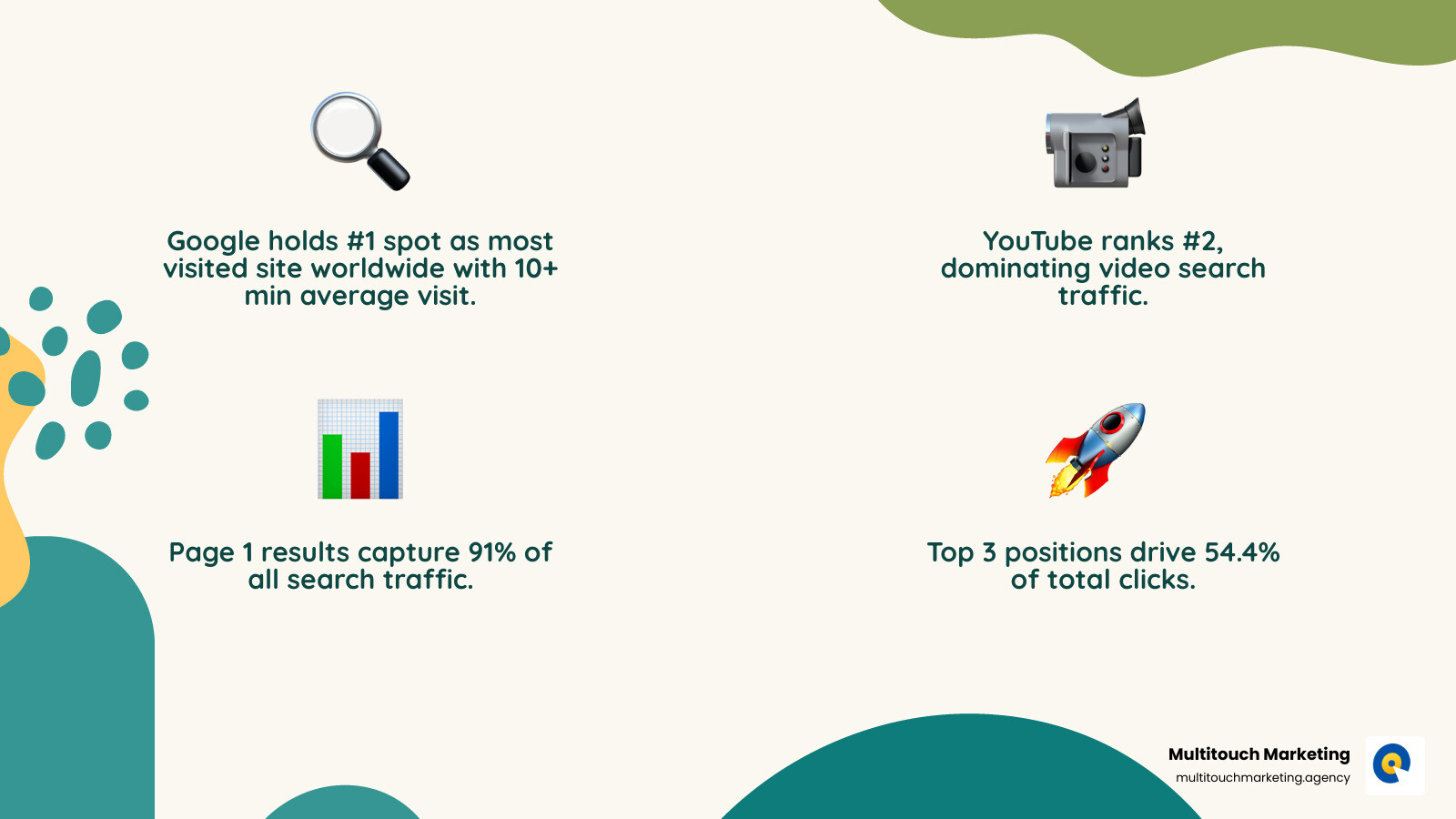
Right now, google.com holds the #1 spot as the most visited website in the world, with users spending an average of over 10 minutes per visit. YouTube sits at #2. The gap between the top results and everyone else is enormous — and where your pages land in those results directly determines how much traffic, leads, and revenue you get.
For small business owners, this matters more than ever. If your competitors show up on page one and you don’t, you’re invisible to the people searching for exactly what you sell.
That’s why ranking tools exist — not just to satisfy curiosity, but to give you actionable data so you can close the gap.
I’m Milton Brown, a digital marketer with experience since 2008 helping businesses across e-commerce, healthcare, and education improve their online visibility and rank website assets more effectively across search engines. In the sections ahead, I’ll walk you through the best tools available so you can pick the right one for your niche and start tracking what matters.
Similar topics to rank website:
The Core Mechanics Required to Rank Website Assets
To successfully rank website pages, we must first understand the “how” behind the numbers. A website ranking checker doesn’t just guess where you are; it uses automated bots or proxies to simulate real user searches across different locations and devices.
Platforms like XRanks: The Ultimate Website Rankings, Analytics & SEO Platform aggregate these data points, looking at traffic statistics, engagement signals, and trend analyses. When you analyze any website, you aren’t just looking at a static number. You are viewing a snapshot of how search engines perceive that site’s authority and relevance at that exact moment.
Utilizing Keyword Tracking to Rank Website Pages
Keyword tracking is the heartbeat of any SEO strategy. Most modern tools allow us to enter a domain and a list of target keywords to see exactly which position we hold. But it goes deeper than that. To truly understand how to rank website content, we need to adjust search settings for:
- Country Selection: Search results in the US differ wildly from those in the UK or Japan.
- Platform: Rankings on desktop often differ from mobile due to different algorithms and layout constraints.
- Localized Results: This is vital for businesses in North Carolina looking to capture local intent.
By monitoring these variables, we can implement better SEO Search Engine Optimization tactics that cater to the specific way our audience searches.
Local SEO and Geolocation for Specific Regions
If you are a business owner in Raleigh, NC, ranking #1 globally for a broad term might be less valuable than ranking #1 in your specific city for a high-intent term. Rank trackers now support hyper-local SEO by allowing us to track performance down to the city or even zip code level.
For instance, Local SEO Raleigh strategies rely on these tools to see how a business appears in the “Local Pack” (the map results). Tracking regional performance ensures that when someone in Durham or Chapel Hill searches for your services, your business is the one they see first.
Essential Metrics for Search Visibility and Performance
Data is only useful if you know which numbers to watch. When we work to rank website assets, we look at a “Visibility Score.” This is a percentage that represents how often your site is seen by users searching for your target keywords. If you have a 100% visibility score, it means you rank #1 for every single keyword in your list.
Leveraging SERP Features to Rank Website Content
The search engine results page (SERP) isn’t just a list of blue links anymore. It’s a complex landscape filled with:
- Featured Snippets: The “Position Zero” box that answers a question directly.
- Local Packs: The map and business listings.
- Knowledge Graphs: Information boxes on the right side of the screen.
Using Google SEO Tips to optimize for these features can dramatically increase your click-through rate, even if your organic position doesn’t change. Tools like Ranktracker can monitor over 30 different SERP features to tell us exactly where our content is appearing.
Understanding Website Visibility Calculations
Visibility is calculated by aggregating your keyword positions and weighing them against search volume. A #1 ranking for a keyword with 10,000 searches contributes more to your visibility than a #1 ranking for a keyword with 10 searches. Understanding this helps us prioritize our SEO Optimization Tips for the terms that will actually move the needle for business growth. To see how these efforts translate to the bottom line, it’s helpful to understand How SEO Pushes Business Growth through increased organic reach.
You can also Explore SE Visible for deeper strategic insights into how your brand appears across various search environments.
Advanced Features of Modern Ranking Engines
The best tools to rank website pages today do much more than just track positions. They act as full-scale SEO command centers.
Identifying SEO Opportunities to Rank Website Content
One of our favorite features in tools like SE Ranking or Semrush is the “Keyword Gap” analysis. This shows us exactly which keywords our competitors are ranking for that we aren’t. By finding these low-competition, high-volume terms, we can find “quick wins” to boost traffic.
Furthermore, understanding About Keyword Consistency SEO allows us to ensure our content matches the technical requirements search engines look for. Many tools now provide a “Keyword Difficulty” score from 0 to 100, helping us decide if a term is worth the effort or if we should pivot to a long-tail variation.
Future Trends in AI Visibility and Multi-Engine Support
The search world is changing. With the rise of AI search engines, we now need to track how we appear in ChatGPT responses or Google’s AI Overviews. Modern platforms are beginning to offer “AI Visibility” tracking to ensure your brand is mentioned when users ask AI for recommendations.
As we develop new sites, we must use SEO Tactics for Developing Websites that account for these multi-engine environments. You might also want to Explore Planable to see how social media management can complement your search visibility by driving social signals. For a quick check-up on your current status, we always recommend a Free SEO Audit to catch technical errors before they hurt your rankings.
Strategic Implementation and Tracking Frequency
How often should you check your rankings? While it’s tempting to look every hour, SEO is a long game.
| Frequency | Best For | Why? |
|---|---|---|
| Daily | High-competition niches | To catch sudden drops or algorithm updates immediately. |
| Weekly | Most small businesses | Provides a clear trend without getting bogged down in daily “noise.” |
| Monthly | Low-competition / Local | Good for long-term reporting and overall strategy shifts. |
Setting up a tracker is straightforward:
- Enter your domain name.
- Add your target keywords.
- Select your locations (e.g., Raleigh, NC or Durham, NC).
- Choose your devices (Mobile vs. Desktop).
For those who enjoy a more visual approach to ranking anything from tools to strategies, you can TierMaker Live to create your own priority lists. To keep things running smoothly without the manual labor, an SEO Maintenance Package can automate this entire process for you.
Exporting Data and White Label Reporting
For agencies or teams, the ability to export data is crucial. Whether it’s a CSV for deep analysis or a PDF for a client, clear reporting builds trust. If you are working with an SEO Company Raleigh North Carolina, you should expect “White Label” reports that feature your own branding and clear, actionable insights.
Frequently Asked Questions about Website Ranking
What is the difference between free and paid rank checkers?
Free tools often limit the number of keywords you can track (usually 5–10) and don’t provide historical data. Paid tools provide thousands of keywords, daily updates, competitor tracking, and deeper metrics like “Share of Voice.”
How often should I check my website rankings?
For most businesses in North Carolina, a weekly check is perfect. It allows you to see the impact of your content changes without reacting too quickly to the natural “dance” of search results.
What are the most common mistakes in rank tracking?
The biggest mistake is ignoring mobile rankings. Over 50% of web traffic is mobile, and Google uses a “mobile-first” index. If you only track desktop, you’re only seeing half the picture. Another mistake is not tracking local results if you serve a specific geographic area like Chapel Hill or Durham.
Conclusion
At Multitouch Marketing, we know that while organic search is a vital pillar of growth, it isn’t the only way to rank website assets and get results. In fact, research shows that in certain industries like hospitality, PPC ads convert 50% better than SEO.
While SEO is a marathon that builds long-term equity, PPC (Pay-Per-Click) is a sprint that puts you at the top of the page instantly. We specialize in helping businesses in Raleigh, Durham, and across North Carolina navigate this balance. Whether you need to dominate the local map pack or scale a national ad campaign, we have the expertise to make it happen.
Ready to take your visibility to the next level? Explore our full range of digital marketing services and let’s build a strategy that actually moves the needle.