
Why Social Media Data Platforms Are Essential for Modern Marketing
A social media data platform is software that collects, analyzes, and visualizes social media data to help businesses understand performance, audience behavior, and ROI. By aggregating data into unified dashboards, these platforms enable marketers to:
- Track key performance metrics across all channels
- Monitor brand mentions and sentiment in real-time
- Benchmark against competitors to find opportunities
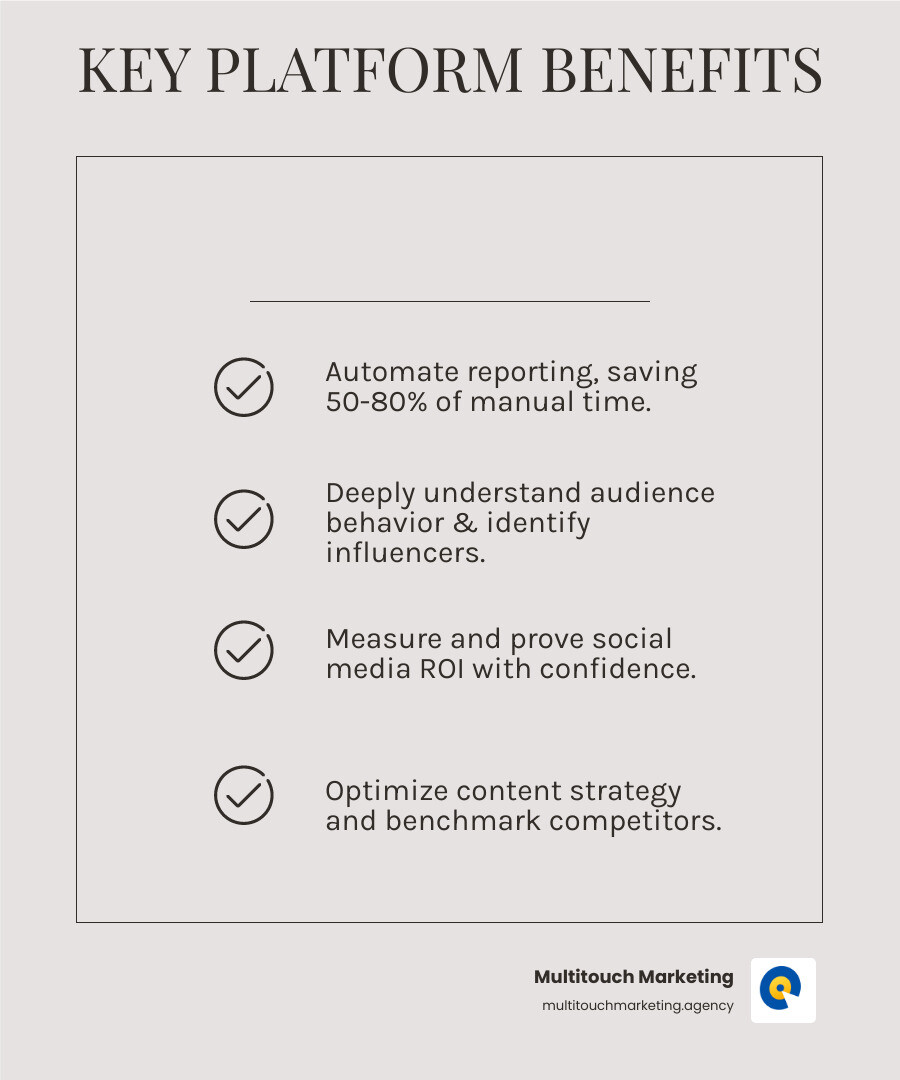
- Generate automated reports, saving hours of manual work
- Find relevant trends and influencers
Brand presence alone isn’t enough. With the shift toward community-led growth and social commerce, marketers face a new challenge: manual data collection is inefficient and misses the full picture. Native platform insights are too basic for the actionable intelligence needed to prove ROI and make strategic decisions.
Social media data platforms solve this by translating raw numbers into strategic narratives. For example, one user reported that reports now take 1-2 hours instead of a full day, saving over $16,000 annually. This redirects resources from spreadsheets to strategy.
I’m Milton Brown, and with over 15 years of experience managing digital campaigns, I’ve seen how the right platform transforms guesswork into growth. Let’s explore the tools that can do the same for your business.
What is a Social Media Data Platform and What Does It Do?
A social media data platform is specialized software that eliminates the headache of manually compiling data from different channels. It collects and analyzes data from your social media presence, turning raw numbers into strategic narratives that tell you what’s working, what’s not, and what to do next. The goal is to give marketing teams the clarity to measure performance, optimize campaigns, and report results with confidence.
Core Functionalities
The power of these platforms lies in how they handle data. Data aggregation is the starting point, pulling information from all your connected profiles (Facebook, Instagram, TikTok, X, LinkedIn, etc.). Social listening and media monitoring take this further by tracking mentions of your brand, keywords, and conversations across social media, blogs, and forums. Tools like Talkwalker and Brand24 excel at capturing this data in real-time.
Reporting is one of the biggest time-savers. Instead of spending days in spreadsheets, platforms like Socialinsider and Hootsuite Analytics can generate comprehensive, easy-to-digest reports in minutes or hours. Finally, benchmarking answers the critical question of how you stack up against the competition. Tools like Rival IQ and Hootsuite allow you to compare your performance against competitors and industry standards, revealing key opportunities.

Key Metrics
Understanding which metrics matter is crucial for turning data into insights.
- Engagement rate: Measures how actively your audience interacts with your content (likes, comments, shares).
- Reach & Impressions: Reach is the number of unique users who saw your content, while impressions are the total number of times it was displayed.
- Share of voice: Shows your brand’s presence in online conversations compared to competitors.
- Sentiment score: Gauges the emotional tone (positive, negative, neutral) of conversations around your brand.
- Conversion rate: Tracks how many social media interactions lead to desired actions, like purchases or sign-ups. Agorapulse is noted for helping measure this ROI.
To learn more, you can explore the social media metrics that really matter.
Types of Analytics
Social media data platforms offer different layers of analysis:
- Descriptive analytics summarizes historical data to show what happened (e.g., last month’s follower growth).
- Diagnostic analytics digs deeper to understand why something happened (e.g., why a campaign underperformed).
- Predictive analytics uses AI and statistical models to forecast what will happen next, helping you anticipate trends.
- Prescriptive analytics is the most advanced, recommending what to do about it, such as suggesting optimal posting times or content formats.
How a Social Media Data Platform Fuels Business Growth
A social media data platform isn’t just about graphs; it’s about driving tangible business growth. These platforms transform raw data into actionable insights that shape your entire marketing strategy.
Deepen Audience Understanding & Identify Influencers
Effective marketing starts with understanding your audience. A data platform helps you build vivid customer personas by analyzing demographics, interests, and online behavior. Tools like Sprout Social and SparkToro reveal what your audience reads and where they spend their time, while Audiense helps identify key sources of influence. This allows for precisely custom messaging. For a deeper dive, see our insights on Social Media Audience Insights.
These platforms also streamline influencer marketing. Tools like IZEA Flex and Keyhole help you vet potential partners by providing metrics on reach and engagement, ensuring they align with your brand values before you commit.
Optimize Content and Social Media Ad Creative
A data platform transforms content strategy from guesswork into data-backed decisions. Socialinsider uses AI to identify your top content pillars, while Hootsuite recommends the best times to post and how to repurpose your top-performing content. This data-driven approach maximizes reach and engagement. AI-powered recommendations from platforms like Adverity and Hootsuite help continuously refine your strategy, a key component of modern AI-Driven Marketing Strategies.

Master Social Media Competitor Analysis and Benchmarking
Knowing your rivals’ moves is half the battle. A data platform gives you the intelligence to stay ahead. Tools like Rival IQ and Hootsuite let you track competitors’ posts, engagement, and audience growth. By dissecting this data, you can identify their strategies, spot gaps in the market, and carve out your own unique position.
Measure Social Media ROI and Justify Spend
Proving the value of social media has always been a challenge. A data platform makes measuring ROI straightforward. Platforms like Agorapulse and Hootsuite Advanced Analytics help you see which posts drive leads and revenue, directly linking social efforts to business outcomes. This is critical for effective Social Media Conversion Tracking. The time saved on reporting alone can be significant, with some users saving over $16,000 annually by automating reports for stakeholders.
Enable Real-Time Monitoring and Crisis Management
On social media, a crisis can erupt in minutes. Real-time monitoring is your early warning system. Tools like Brand24 and Talkwalker provide instant alerts for brand mentions. Sentiment analysis from platforms like Siftsy helps you understand the emotional tone of these conversations, allowing you to distinguish a minor complaint from a brewing PR disaster. This enables you to respond promptly, manage the narrative, and protect your brand’s reputation.
Key Trends and Advanced Capabilities in Social Media Data Platforms
The world of social media moves fast, and the platforms built to analyze it are evolving with cutting-edge technologies to tell the deeper story behind the numbers.

Advanced Sentiment Analysis
Modern sentiment analysis goes far beyond sorting comments into “positive” or “negative.” Platforms are now better at detecting nuanced emotions. For instance, Bloom Social Analytics measures eight primary emotions, including joy, anger, and surprise, to reveal how people truly feel. Similarly, Siftsy and Talkwalker’s Blue Silk™ AI provide deep qualitative insights into customer sentiment.
This emotional intelligence is invaluable for interpreting audience reactions and crafting appropriate responses. For more on this, explore our insights on AI-Driven Customer Insights.
Predictive Analytics
If sentiment analysis tells us how people feel now, predictive analytics tells us what they’ll care about tomorrow. Using machine learning, these platforms spot emerging trends before they hit the mainstream. Talkwalker, for example, helps brands identify trends and influencers their audience wants. This shift from a reactive to a proactive strategy is a game-changer, allowing marketers to position their brands ahead of the curve with data-backed confidence.
Platform Integration
A good social media data platform must grow with the expanding digital landscape. As new platforms like TikTok and Threads gain prominence, marketers need data from them. Tools like Hootsuite and Bright Data have adapted to track performance and provide datasets from these channels.
Crucially, API access allows platforms like Adverity to connect with hundreds of data sources, cleaning and organizing information into a unified dashboard. The goal is a single, comprehensive view of the conversation, regardless of where it’s happening.
How to Choose the Right Social Media Data Platform
Choosing the right social media data platform involves matching a platform’s strengths to your specific needs, not just picking the one with the most features.
Evaluating Core Features and Usability
Start by identifying your primary pain points. Are you struggling with competitor analysis (Rival IQ), missing brand mentions (Brand24), or spending too much time on reporting (Socialinsider)? List your must-have features first.
Next, consider usability. A powerful platform is useless if it’s too complicated. Tools like Buffer are praised for being intuitive. Evaluate reporting capabilities and ensure the platform can scale with your business, like Hootsuite’s plans that support unlimited accounts. Finally, don’t underestimate the value of good customer support, a feature where platforms like Socialinsider and Hootsuite receive high marks.
Understanding Pricing Models for a social media data platform
Pricing for these platforms can be complex, but most offer free trials (Sprout Social, Rival IQ) or free plans (Buffer, Social Status) to let you test them out. The majority use tiered pricing (e.g., Basic, Pro, Enterprise), with costs based on factors like the number of users or connected accounts.
- Basic plans ($0-$100/month) are good for small businesses.
- Professional plans ($100-$500/month) offer more advanced analytics.
- Business/Enterprise plans ($500+/month) include custom features and dedicated support.
These are general ranges, so it’s important to get specific quotes based on your needs.
Assessing Integration Capabilities and Support
Your platform must work with the tools you already use. Look for seamless connections to your CRM (Salesforce), marketing automation (HubSpot), and web analytics (Google Analytics). Hootsuite Advanced Analytics, for example, integrates with both Google and Adobe Analytics. This is essential for true Data-Driven Marketing Strategies.
For teams working with large datasets, integration with data warehouses like Google BigQuery is key. Platforms like Adverity and Cyfe excel at aggregating data from all your sources into one dashboard. A connected tech stack eliminates data silos, reduces manual work, and provides a unified view of the customer journey.
Frequently Asked Questions about Social Media Analytics
What are the four types of social media analytics?
There are four primary types, each answering a different question:
- Descriptive analytics: What happened? It summarizes historical data, like follower growth or top posts.
- Diagnostic analytics: Why did it happen? It uncovers the root cause behind performance, like why a campaign underperformed.
- Predictive analytics: What will happen? It uses AI to forecast future trends and audience behavior.
- Prescriptive analytics: What should I do about it? It recommends actions, like the best times to post, to optimize outcomes.
Why use a dedicated social media data platform over native tools?
Native tools (like Facebook or Instagram Insights) are a good start but lack a holistic, cross-channel view. Manually compiling data from multiple platforms is time-consuming and error-prone. A dedicated social media data platform aggregates all your data into a single dashboard, providing deeper competitive analysis and automated reporting. This saves significant time, allowing you to focus on strategy instead of spreadsheets.
What’s the difference between social media analytics and management tools?
Historically, the distinction was clear: analytics tools focused on data analysis and insights, while management tools handled operational tasks like content scheduling and community engagement. Today, the lines have blurred. Many modern platforms are all-in-one solutions that offer both robust analytics and comprehensive management features. For most teams, an integrated platform that handles both is the most efficient choice.
Conclusion: Using Data to Drive Your Marketing Strategy
In digital marketing, data is the difference between guessing and growing. A robust social media data platform transforms how you understand audiences, measure impact, and make decisions that move the needle. These tools turn overwhelming information into clear, actionable strategies by explaining not just what happened, but why it happened and what to do next.
The benefits are tangible: faster reporting, optimized campaigns, measurable ROI, and real-time crisis management. At Multitouch Marketing, we’ve seen how the right platform becomes the foundation for campaigns that deliver results. The tools we’ve explored turn raw numbers into a powerful competitive advantage.
If you’re ready to move beyond guesswork and build a strategy backed by real intelligence, we’d love to help. Ready to build a powerful, data-backed social media strategy? Explore our social media marketing services to learn how we can help.