

Why Social Media Can Feel Like a Guessing Game (And How to Fix It)
Social media A/B testing is a method of comparing two versions of the same content to see which performs better. By showing each version to a different audience segment and measuring metrics like engagement or clicks, you can make data-driven decisions that eliminate guesswork and improve your social media ROI.
Key benefits of social media A/B testing:
- Eliminates guesswork – Make decisions based on real data, not hunches.
- Boosts engagement – Find what your specific audience responds to.
- Maximizes ROI – Optimize ad spend by investing in what actually works.
- Provides real-time insights – Get actionable results quickly.
Social media can be unpredictable. You’re constantly wondering: Should I use a video or an image? What call-to-action gets clicks? Does my audience prefer short or long captions? General best practices don’t always work for your specific audience. That’s where A/B testing (or split testing) comes in.
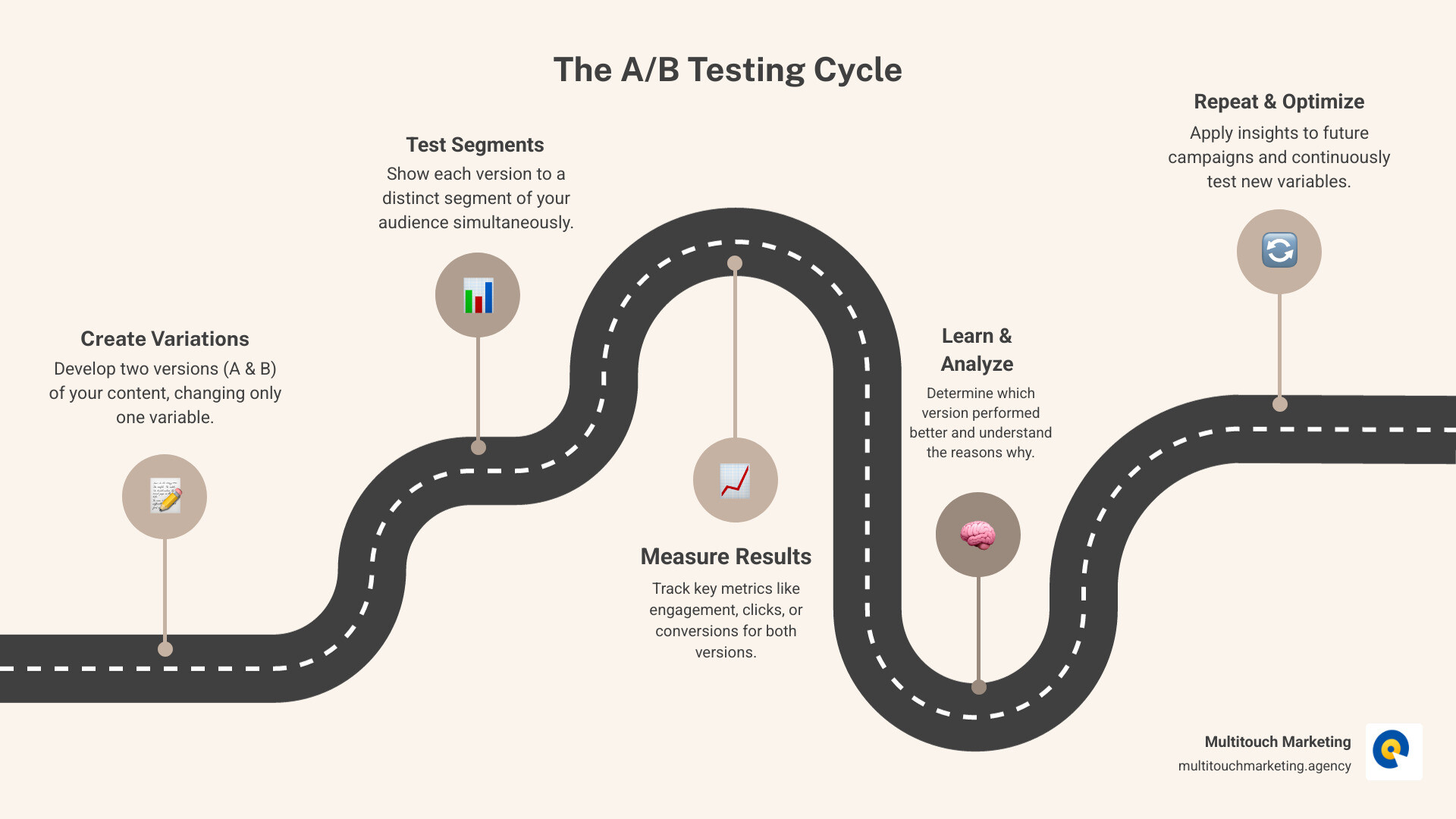
A/B testing applies the scientific method to your marketing. Instead of guessing, you test small variations of your content with real users and let the data tell you what works. You create two versions of a post, change just one element, show each to a different audience segment, and compare the results.
On social media, A/B testing produces insights in real-time, allowing you to refine your strategy on the fly and make every dollar of your ad spend count. It’s accessible to anyone with a social media account and a willingness to learn—no data science degree required.
I’m Milton Brown, and I’ve managed paid social media campaigns since 2008. In my experience, social media A/B testing has been the single most effective tool for improving campaign performance and proving ROI.
In this guide, I’ll walk you through everything you need to know to start testing today—from what to test and how to set up an experiment, to interpreting results and scaling what works.
Similar topics to Social media A/B testing:
What is Social Media A/B Testing and Why is it Crucial?
At its core, social media A/B testing, or split testing, is a scientific approach to optimizing your marketing. Instead of guessing whether a funny or informative caption gets more clicks, A/B testing provides a definitive answer.
The process is simple: create two versions (A and B) of a post or ad, changing only one element. Show these versions to two similar, randomly selected audience groups. By comparing how each group responds, you can determine which version performs better based on your goals. On social media, these insights arrive in real-time, allowing for quick strategy refinements.
Why is this so important for businesses in Raleigh, Durham, Chapel Hill, and across North Carolina?
- Data-Driven Strategy: Relying on intuition alone leads to missed opportunities. Social media A/B testing helps you make informed decisions based on factual data, eliminating guesswork and providing a clear roadmap for what works.
- Understanding Audience Preferences: Your audience is unique. A/B testing reveals their specific preferences, allowing you to tailor content that truly resonates and avoid making broad assumptions.
- Improving Engagement Rates: Whether you want more likes, shares, or clicks, A/B testing helps you find what hooks your audience. Testing elements like post length or CTAs strengthens the bond between your brand and followers. Why Social Media Marketing Is Necessary becomes clear when you can measure and improve these interactions.
- Maximizing ROI on Ad Spend: A/B testing ensures every advertising dollar is spent effectively. By testing ad elements like headlines, visuals, and targeting, you can find the most effective combinations and achieve a higher return on investment. This is where the true Advantages Social Media Advertising shine, especially for our PPC specialists at Multitouch Marketing.
By making social media A/B testing a regular part of your strategy, you can uncover insights specific to your brand and audience, leading to stronger campaigns and better business outcomes.
Key Elements to A/B Test in Your Campaigns
Almost any part of your social media content can be A/B tested, for both paid ads and organic posts. The golden rule is to test only one variable at a time to clearly identify what causes performance changes.
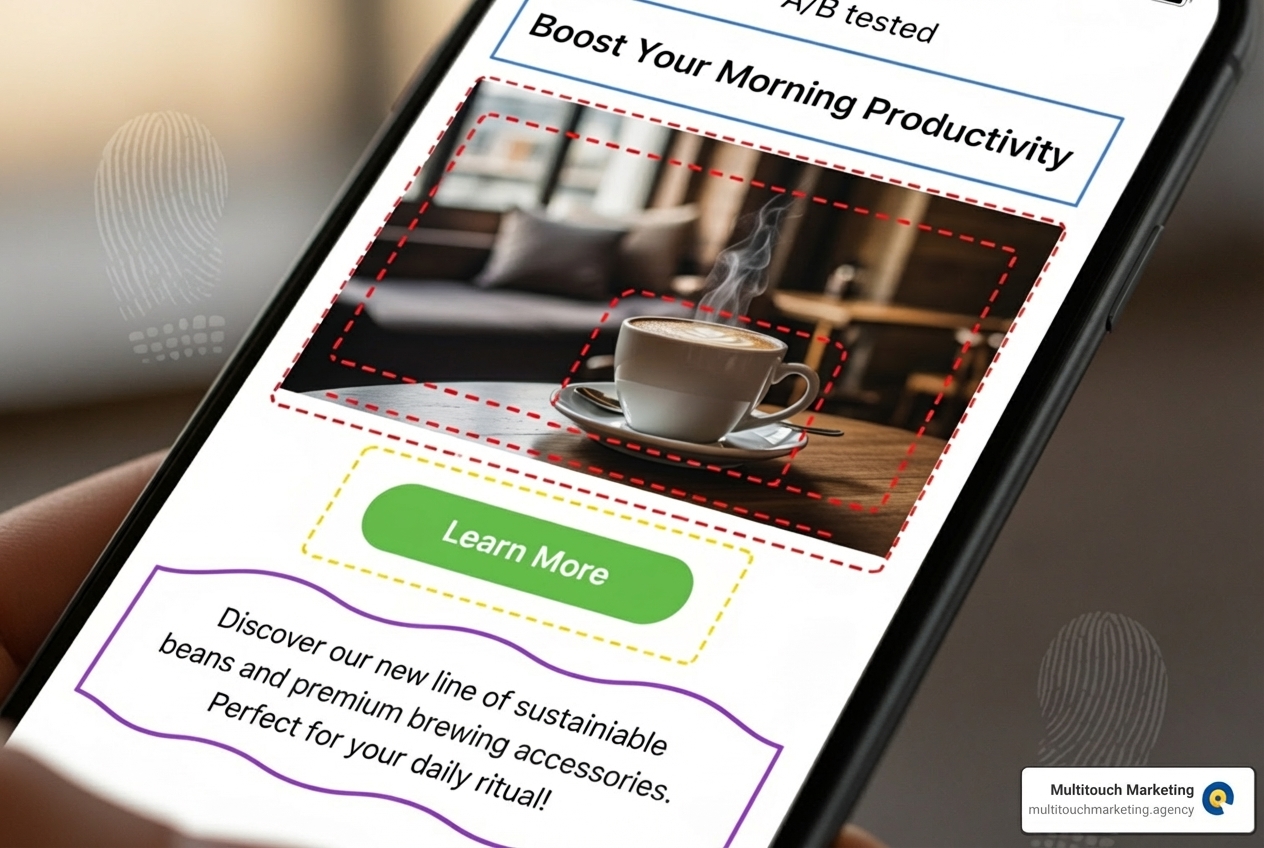
Visuals: Images & Videos
Visuals are the first thing users see, making them a high-impact element to test.
- Single Image vs. Carousel: Does a single, impactful image work better than a multi-image carousel? See how brands like the @seattlestorm testing different images.
- Static Image vs. Video/GIF: Test animated GIFs or short-form videos against a static graphic to see what captures attention.
- Video Hooks and Length: The first few seconds of a video are critical. Test different opening hooks and video lengths to improve watch time.
- Thumbnail Designs: An engaging thumbnail can dramatically improve video click-through rates. Test different designs to see what sparks curiosity.
Optimizing your visuals is a key part of your Social Media Ad Creative strategy.
Copy: Headlines & Captions
The words you use convey your message and are essential for testing.
- Tone of Voice: Test a humorous tone against an educational one, or formal vs. casual.
- Caption Length: Do your followers prefer short, punchy captions or longer, story-driven narratives?
- Question vs. Statement: Does asking a question encourage more engagement than making a statement?
- Use of Emojis: Test if emojis improve engagement or make your post seem less professional.
- Storytelling vs. Statistics: Does your audience respond better to a compelling story or hard data? See how @IKEA testing different ad copy while keeping the video the same.
Remember to consider your Social Media Brand Voice when crafting copy variations.
Calls-to-Action (CTAs)
Your CTA is critical for driving conversions.
- Button Text: Test direct CTAs like “Shop Now” against value-based ones like “Learn More.” The World Surf League testing CTAs like “Install Now” vs. “Use App.”
- CTA Placement: Test if placing the CTA at the beginning, middle, or end of your post works best.
- Button Color and Design: Even subtle visual changes to your CTA button can impact its effectiveness.
- Urgency vs. Value-Focused Language: Does “Limited Time Offer” outperform a benefit-focused message?
Other Key Variables
Beyond visuals and copy, other elements can be tested to refine your strategy:
- Hashtag Strategy: Test the number of hashtags, their placement (in the caption or comments), and the type (branded, trending, or niche).
- Posting Times and Frequency: Experiment with different days, times, and posting frequencies to find the sweet spot for engagement.
- Audience Targeting: For paid campaigns, test different demographics, interests, or behaviors. Compare lookalike audiences against custom audiences to see which delivers better results and gain valuable Social Media Audience Insights.
- Ad Formats: Test single image ads against carousels, or video ads against collection ads, to see which format best meets your campaign goals.
Systematically testing these variables allows for continuous optimization of your social media content.
A Step-by-Step Guide to Running Your First Social Media A/B Test
Running a social media A/B test is a systematic process that moves from a hypothesis to actionable implementation.
Step 1: Define Your Goal & Hypothesis
First, know what you want to achieve. Common goals include improving engagement, increasing click-through rates (CTRs), or boosting conversions. Then, select the key performance indicators (KPIs) that will measure success (e.g., likes, link clicks, sales).
Finally, formulate a clear hypothesis—an educated guess about the outcome. For example: “A video with a ‘behind-the-scenes’ hook (Version B) will achieve a longer average watch time than one with a product demo (Version A).”
Step 2: Choose One Variable & Create Variations
This is the most critical step: isolate only one element to test. Changing multiple variables makes it impossible to know which one caused the difference in performance.
- Choose a Single Element: This could be a headline, image, CTA, or targeting parameter.
- Create Two Versions: Create a control (Version A) and a variant (Version B) where only the chosen variable is different. All other elements must be identical.
Step 3: Set Up and Launch Your Test
Social media platforms make setting up A/B tests straightforward.
- Use Native Platform Tools: Use the built-in A/B testing features in Facebook Ads Manager, X Ads Manager, or LinkedIn Campaign Manager.
- Segment Your Audience: Divide your target audience into two random, similar groups.
- Allocate Budget and Duration: Set a sufficient budget and run the test for at least one week to account for daily fluctuations.
- Launch Simultaneously: Launch both versions at the same time to ensure they run under identical conditions.
Step 4: Analyze Results & Determine a Winner
Once the test is live, be patient.
- Collect Data: After the test concludes, gather the data for your predefined KPIs.
- Compare Performance: See how Version A and Version B performed against each other.
- Check for Statistical Significance: Ensure the performance difference isn’t due to random chance. This is crucial for making informed decisions based on patterns, not one-off results, especially for businesses in Raleigh or Durham.
- Identify the Winning Version: Based on the data, determine which version performed better.
For deeper insights, leverage Advanced Social Media Analytics.
Step 5: Implement, Document, and Iterate
Insights are only valuable if you act on them.
- Apply Learnings: Use the winning version to inform future content and campaigns.
- Document Results: Record what was tested, the results, and the insights gained to build a knowledge base.
- Plan Future Tests: A/B testing is a continuous process. Use your findings to plan new tests and keep optimizing. A well-maintained Social Media Content Calendars can help plan these tests effectively.
Following these steps will help you systematically refine your social media approach.
Best Practices for Effective Social Media A/B Testing
To ensure your social media A/B testing yields reliable and actionable results, follow these best practices to keep your experiments on track.
Best Practices for Reliable Results
- Test One Variable at a Time: This is the most important rule. If you change the image and the headline, you won’t know which change was responsible for the results. Isolate one variable for clear, actionable insights. Learn more about common pitfalls in A/B Testing on FB Mistakes.
- Use a Large Enough Sample Size: To get reliable results, test your variations on a sizable audience. If only a handful of people see your test, the “winner” might be due to random chance, not actual preference.
- Run Tests Long Enough for Statistical Significance: Ending a test too early can lead to misleading results. Run tests for at least one week to account for daily fluctuations and gather enough data to be confident in the outcome.
- Maintain Audience Consistency: Both versions of your content should be shown to similar audience segments. This is easier with paid ads, where platforms can split your audience evenly. For organic content, try to post both versions with similar timing and context.
- Don’t End Tests Early: It’s tempting to stop a test when one variation takes an early lead, but this can be misleading. Let the test run its full course to gather robust data.
Tools to Facilitate Your Social Media A/B Testing
A variety of tools can help streamline the A/B testing process:
- Native Social Media Platform Tools: Facebook Ads Manager, LinkedIn Campaign Manager, X Ads Manager, and TikTok Ads Manager all offer built-in A/B testing features.
- Third-Party Analytics Software: Many social media management platforms support A/B testing by helping schedule posts, track performance, and analyze data.
- Spreadsheets: Simple tools like Excel or Google Sheets are excellent for organizing data and comparing the performance of each version.
- Statistical Significance Calculators: Free online tools can help you determine if the performance difference between your two versions is statistically significant.
Combining these best practices with the right tools transforms social media A/B testing into a powerful, continuous optimization engine. For a deeper dive, explore Social Media Marketing Analytics Tools.
Frequently Asked Questions
When should a brand use A/B testing?
Any business in Raleigh, Durham, or Chapel Hill looking to optimize its social media can benefit from social media A/B testing. Use it when:
- Launching New Campaigns: Test approaches before committing your full budget to maximize ROI.
- Improving Low-Performing Content: Pinpoint which elements aren’t connecting with your audience.
- Optimizing Ad Spend: Test ad copy, bidding, and targeting to make every dollar count.
- Validating a New Strategy: Get data-backed validation for new ideas before a full rollout.
- Adapting to Algorithm Changes: Understand what performs best as platforms evolve.
How does A/B testing for organic content differ from paid ads?
While the core principle is the same, there are key differences between testing organic content and paid ads:
- Audience Control: Paid ads offer precise audience segmentation. Organic reach is less controlled and relies on who naturally sees your post.
- Sample Size: Paid campaigns can quickly reach a large, specific audience for faster results. Organic tests may need to run longer to gather enough data.
- Speed of Results: Paid ad tests generally yield results much faster than organic tests.
- Analytics: Paid ad platforms offer more detailed, built-in analytics for A/B testing, while organic analysis is often more manual.
What’s an example of a successful A/B test?
Imagine a Raleigh business wants to increase its Facebook ad click-through rate (CTR).
Objective: Increase ad clicks.
Variable: The ad headline.
Variants:
- Version A (Control): “Shop Now for Exclusive Discounts at Our Raleigh Store!”
- Version B (Variant): “Limited Time Offer – Visit Our Raleigh Store Today!”
Process: Using Facebook Ads Manager, create two identical ads with the different headlines. Run them simultaneously for one week to the same local audience.
Result: After one week, Version B has a significantly higher CTR.
Implementation: The business now uses the winning “Limited Time Offer” headline in future ads, knowing it’s more effective at driving clicks from its local audience.
Conclusion: Turn Insights into Action and Maximize ROI
In the dynamic world of social media, relying on guesswork is a luxury few businesses can afford. Social media A/B testing provides a powerful, data-driven framework to understand your audience, optimize content, and maximize your return on investment.
By following a systematic process—defining goals, testing one variable at a time, analyzing results, and iterating—you can make informed decisions that lead to real growth. We’ve covered what to test, how to run an experiment, and the best practices to ensure your results are reliable. Continuous testing is what drives a sustainable and effective social media strategy.
At Multitouch Marketing, we specialize in helping businesses in Raleigh, Durham, and Chapel Hill steer digital marketing and optimize pay-per-click (PPC) campaigns. We believe in systematically understanding your unique audience and refining your approach based on data. Stop guessing and start testing. Let social media A/B testing transform your social media presence from a shot in the dark to a precision-guided strategy.
Ready to take your social media strategy to the next level? Let us help you optimize your social media marketing strategy with data-driven insights.