

The Mobile-First World: Why Your Website Needs to Keep Up
With 68.2% of internet traffic now coming from mobile devices, a website that isn’t mobile-friendly is invisible to more than half of your potential audience. Google also prioritizes mobile-friendly websites in search results, meaning a non-responsive site hurts your SEO rankings and increases your bounce rate.
The solution is a Responsive website creator, a no-code platform for building sites that automatically adapt to any screen size. These tools make professional web design accessible to everyone, no coding required.
Top Features to Compare:
- Drag-and-drop editors for code-free building
- Pre-built, mobile-optimized templates
- Real-time device previews
- Built-in SEO tools for meta tags and sitemaps
- Pricing models from free to subscription
Best Options by User Type:
- Small businesses: Wix Studio, Squarespace, Weebly
- Freelancers/Agencies: Duda, Wix Studio, Webflow
- Designers/Developers: Webflow, TeleportHQ, Flipsite
- E-commerce: Shopify, Wix Studio
- Budget-conscious: Carrd, Hostinger, Canva
Modern creators even use AI to generate entire responsive layouts from a text prompt, drastically reducing development time. But how do you choose the right one? I’m Milton Brown, and with over 15 years in digital marketing and web development, I’ve seen which platforms deliver. This guide will break down what matters when choosing your responsive website creator.
A responsive website automatically adjusts its layout to fit any device, from a large desktop to the smallest smartphone. This ensures an optimal user experience, which encourages visitors to stay, engage, and convert. A poor mobile experience, on the other hand, leads to high bounce rates as frustrated users quickly leave.
Beyond user satisfaction, you need to impress Google. The search engine uses mobile-first indexing, meaning it primarily uses the mobile version of your site for indexing and ranking. If your site isn’t mobile-friendly, you’re signaling to Google that your content is less valuable, which can severely harm your search rankings. A responsive website creator ensures your site is built for this mobile-first world.
Core Features to Look For in a Responsive Website Creator
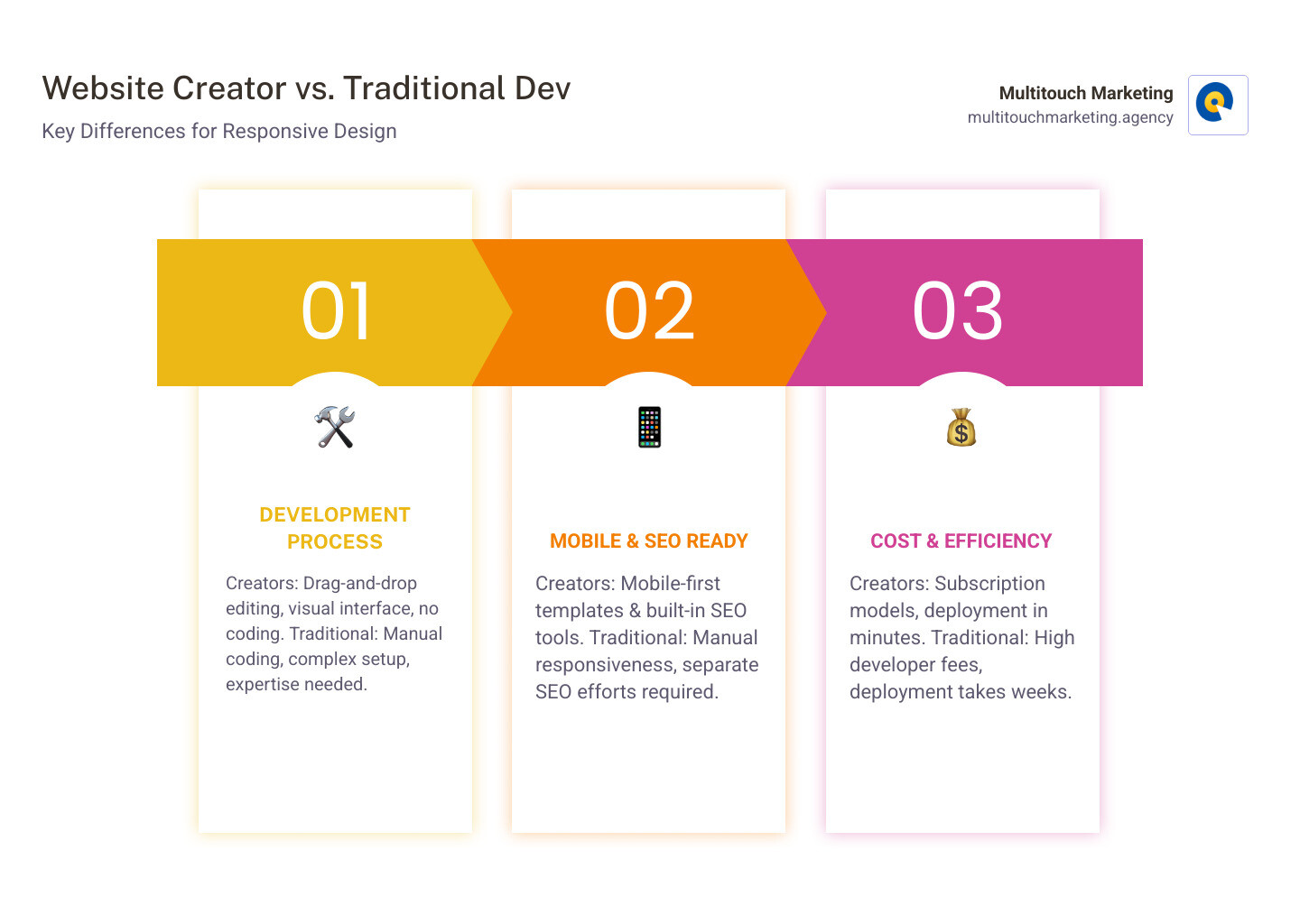
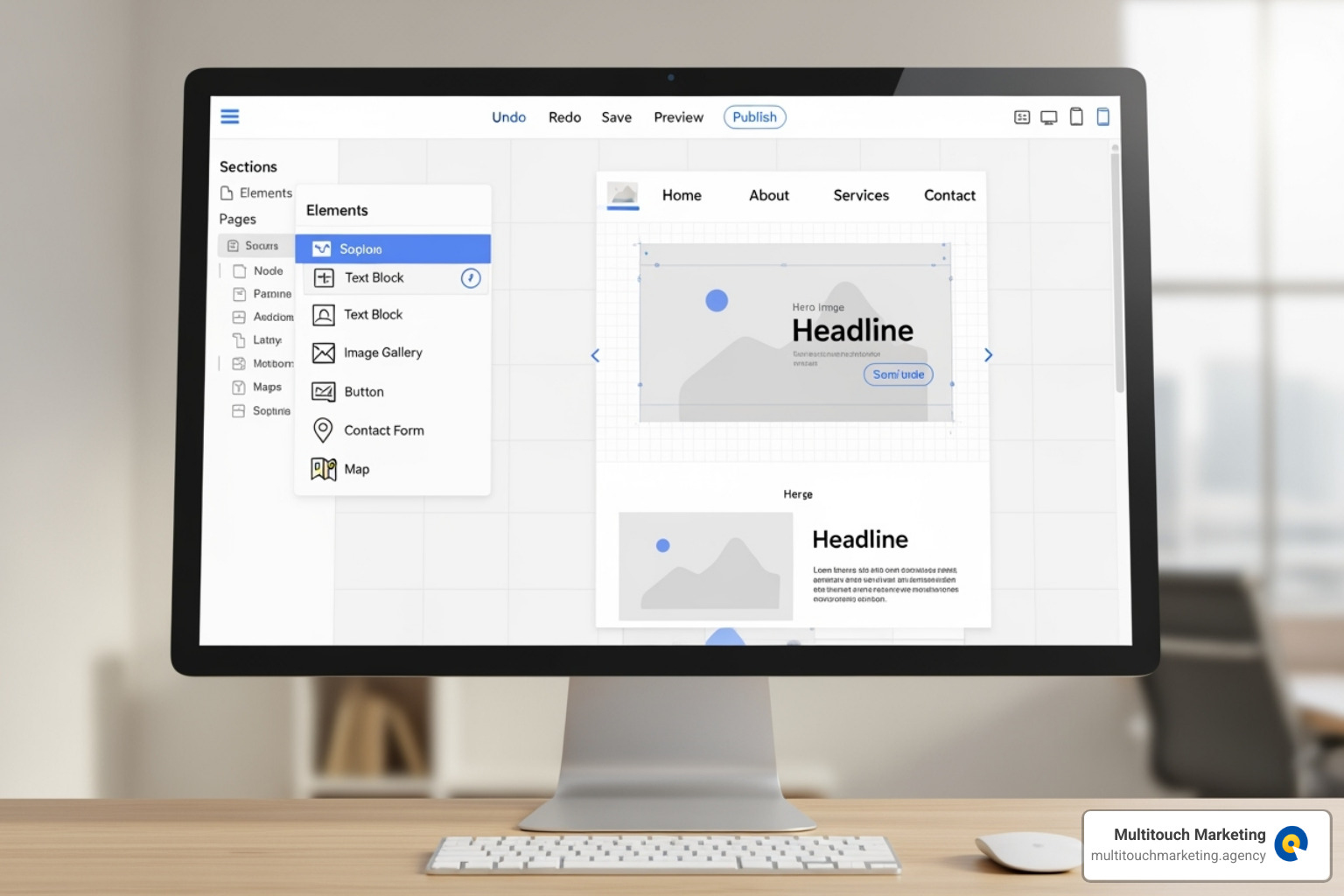
When choosing a responsive website creator, you need a digital toolkit that simplifies the process. The most important feature is drag-and-drop functionality. This allows you to visually build your site by dragging elements like text boxes and images into place, no coding needed. The best no-code platforms let you focus on your message and brand, not on technical syntax.
Design Flexibility & Customization
Great design requires flexibility. Templates provide a professional, mobile-responsive foundation. Webflow offers over 100 templates, while Canva provides thousands. From there, breakpoint adjustments let you fine-tune the layout for desktop, tablet, and mobile views, giving you granular control. Platforms like TeleportHQ and Webflow excel at this, allowing you to override default styles for a perfect look on any device.
For deeper customization, custom CSS access (offered by Webflow and Wix Studio) lets you add unique styling. Mobirise even has a Code Editor extension for direct HTML and script modifications. To ensure brand consistency, features like reusable components (in Duda and Wix Studio) and brand kits (like Canva’s Brand Hub for logos, fonts, and color palettes) save time and keep your design uniform across all pages.
Performance and Reliability
A beautiful site is useless if it’s slow or offline. Page load speed is critical for user experience and SEO. Webflow uses Amazon Web Services and Fastly for fast loading, while Flipsite aims for top speed scores out of the box. An Uptime SLA (Service Level Agreement) guarantees your site’s availability; Duda and Webflow promise 99.99% and 99.9% uptime, respectively.
Strong security and automatic backups are also essential. Duda provides both, along with free SSL encryption. Wix Studio offers enterprise-grade security with multiple certifications. All reputable creators offer Full SSL support via Let’s Encrypt, encrypting the connection between your site and its visitors. These features are fundamental to Responsive Web Design for All Devices, ensuring a flawless and secure user experience.
Built-in SEO & Marketing Tools
A great website needs to be findable. Built-in SEO and marketing tools are your key to attracting an audience. Essential SEO features include customizable meta titles and descriptions, automatic sitemap generation, and easy 301 redirects to preserve SEO value when changing URLs. Platforms like Webflow, Duda, and DeepSite AI handle these basics well.
To capture leads, integrated form builders are a must for creating contact forms and newsletter signups. Carrd and Mobirise offer robust form capabilities with integrations. Finally, understanding your audience is simple with Google Analytics integration, which platforms like Carrd and Duda make easy to set up. Combined with knowledge of Responsive Web Design and Search Engine Optimization, these tools turn your site into a powerful marketing engine.
Website Creators vs. Traditional Development: A Comparison
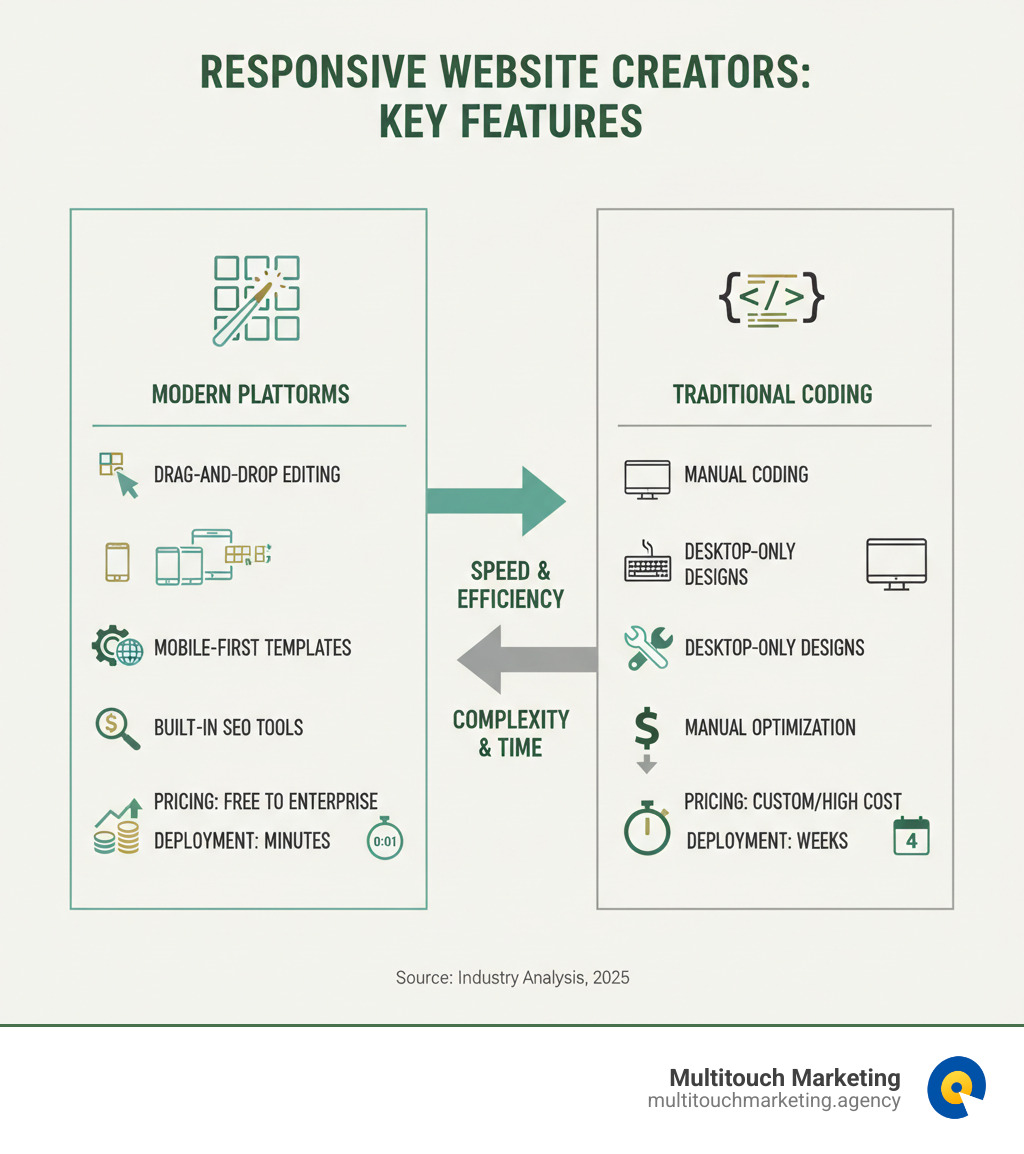
Just a few years ago, serious websites required custom code. Today, that’s no longer true. Modern responsive website creator tools have dramatically closed the gap, offering a powerful alternative to traditional development.
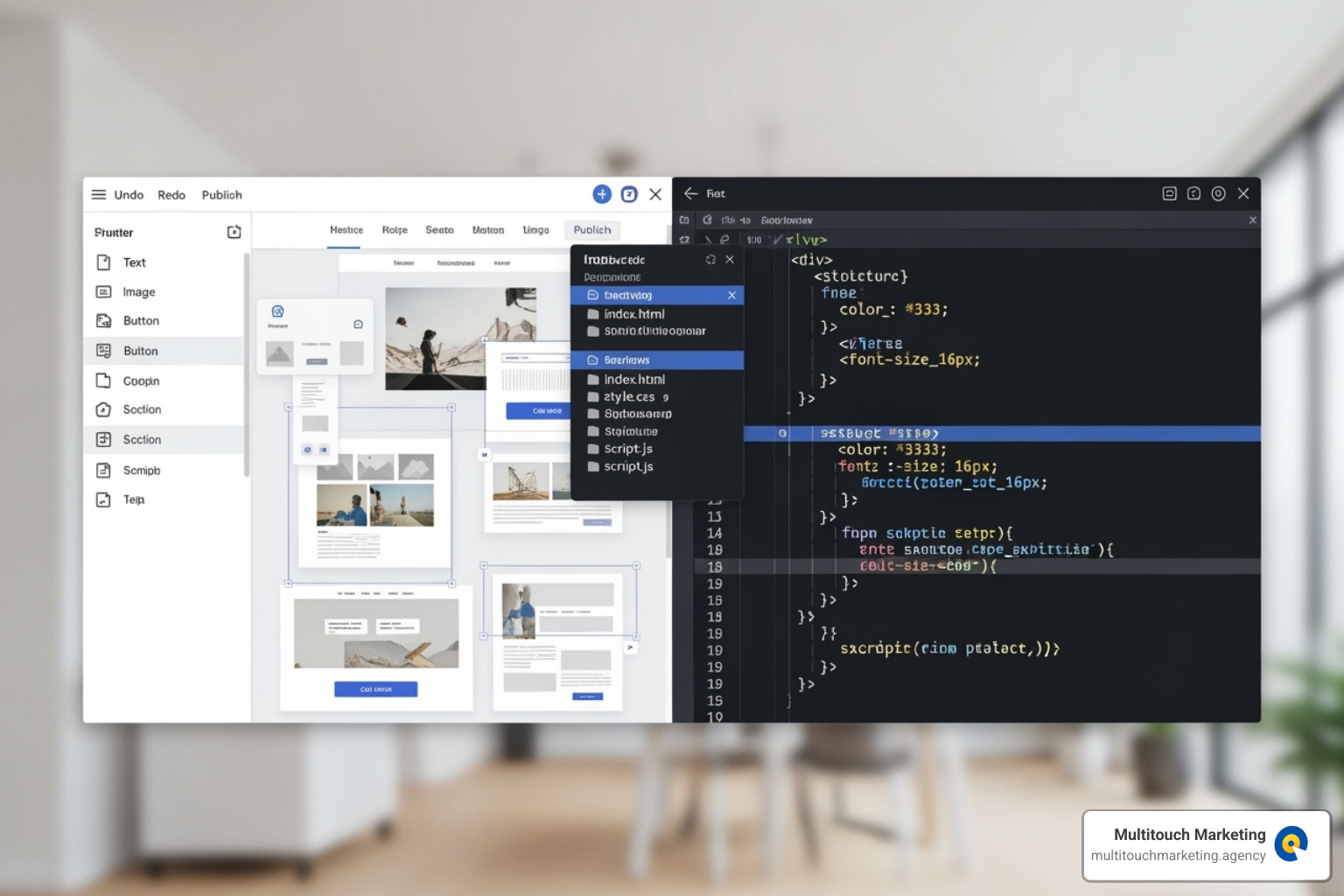
Traditional web development (writing HTML, CSS, and JavaScript) offers ultimate control but requires specialized skills, significant time, and a large budget. For most businesses, it’s overkill. A responsive website creator uses a visual approach, where you drag elements into place. It’s like assembling a high-quality kit home instead of building from raw lumber—faster, easier, and more accessible.
Speed and Efficiency
The time savings are transformative. Development time can be up to 95% faster than coding, according to DeepSite AI. Duda users report building sites 50-70% faster. What once took weeks can now be done in days or even hours.
This speed is enabled by features like instant deployment, which puts your site live with a click, and real-time previews, which show you changes across all devices as you make them. There’s no tedious “code, save, refresh” cycle. When you need to make updates, you can do so instantly yourself, without waiting for a developer. This agility is key to modern Goals for a Website Redesign.
Cost and Accessibility
The cost difference is stark. A traditional developer can charge $75-150 per hour, leading to initial build costs of $3,000-$15,000, plus ongoing fees for updates. The technical barrier is also high, requiring you to learn to code or rely entirely on a developer.
A responsive website creator eliminates these issues. Platforms like DeepSite AI and Canva are designed for users with no coding knowledge. The financial model shifts from large upfront payments to low subscription costs. Carrd’s Pro plan is just $19 per year. Many platforms, including Carrd and Webflow, offer useful free plans, allowing you to start with zero risk. Since you can handle your own Website Maintenance, you save on long-term costs as well.
Common Limitations and How to Overcome Them
Website creators have limitations, but most are solvable. Template constraints are a common concern, but modern platforms like Webflow offer deep customization and even allow building from a blank canvas.
Vendor lock-in is another historical issue, but many creators now offer solutions. Flipsite allows deployment to various services like Cloudflare or AWS, and you can even use Deploying anywhere with GitHub Pages. Mobirise, Webflow, and TeleportHQ provide code export options, giving you the freedom to host your site anywhere.
For custom functionality beyond built-in features, look for platforms with custom code access (Webflow, Wix Studio, Mobirise) or robust API access (Duda, Wix Studio). For most business websites, a modern responsive website creator offers the ideal balance of power, speed, and cost.
The Rise of AI in Responsive Website Creation
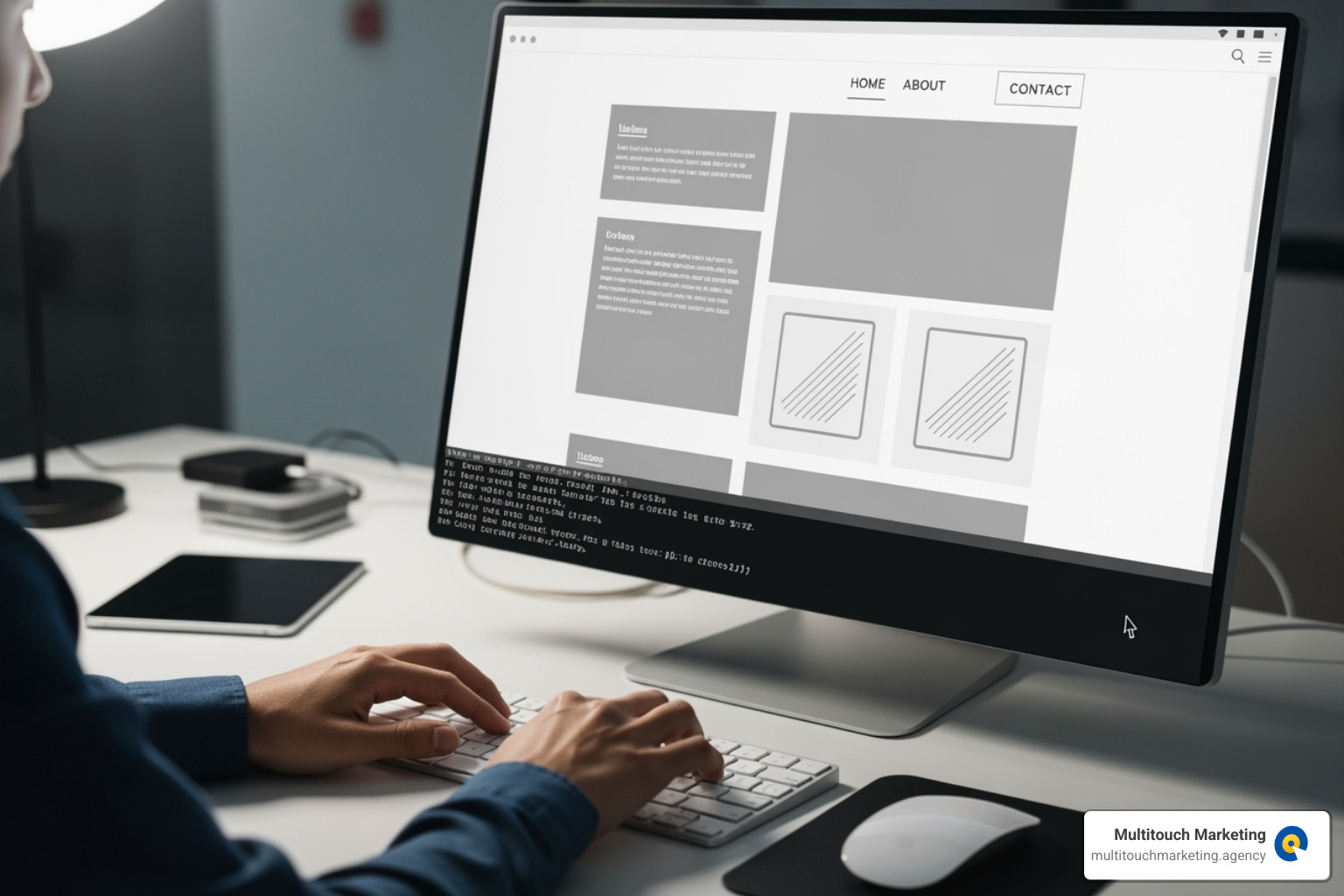
Artificial Intelligence is no longer a buzzword in web development; it’s a core feature that is making the responsive website creator faster and more intuitive. We’re shifting from manual design to intelligent assistance, where you can describe your needs in plain English and have an AI generate a complete website layout, including content and images. This technology is here now, changing what’s possible for everyone from solo entrepreneurs to established agencies.
How AI is Revolutionizing the Building Process
AI is being integrated into every stage of website creation. AI content generation is a game-changer; DeepSite AI can create websites from simple text descriptions, while Duda’s AI assistant generates copy, sections, and even SEO metadata with a click. Canva’s “Magic Write” acts as a co-author, and Mobirise can generate content and layouts from a prompt. This frees you up to focus on strategy and messaging.
AI also provides intelligent layout suggestions. Platforms like DeepSite AI and Duda offer AI-powered page builders that suggest effective designs, helping you overcome creative blocks. AI SEO optimization is another powerful development, with tools in DeepSite AI and Duda automatically generating metadata to improve rankings from day one.
For developers, AI code assistance in platforms like Wix Studio and Canva helps ship projects faster. This blend of no-code simplicity and AI-assisted coding makes sophisticated web development more accessible, aligning with the broader trend of AI Driven Digital Transformation.
The Future Outlook for Your Next Responsive Website Creator
The future of AI in website creation is even more exciting. We’re seeing the rise of AI-native platforms like Webflow and Wix Studio, where AI is integral to the experience. Soon, predictive design will allow AI to learn your brand’s visual style and suggest personalized, effective layouts automatically.
Personalized user experiences will become standard, with AI dynamically adjusting content based on visitor behavior. Your website will respond not just to screen size, but to the individual user. We also anticipate deeper integrations with CRM and marketing automation tools, turning your website into an intelligent hub for your business. This evolution is a key part of AI Digital Marketing Trends, empowering users of all skill levels to build high-performing websites with unprecedented speed.
Choosing the Right Responsive Website Creator for Your Needs
There is no single best responsive website creator for everyone. The right choice depends on your technical comfort, business goals, and scalability needs. Are you building a simple portfolio or a complex e-commerce store? The platform you choose today should be able to grow with you tomorrow. Let’s break down the best options for different users.
For Small Businesses & Startups
If you’re running a small business, you need a professional site now, without a steep learning curve or high cost. An all-in-one solution is ideal. Key features include an intuitive drag-and-drop editor, professional mobile-ready templates, built-in SEO tools, and basic e-commerce capabilities.
Affordability is crucial. Look for platforms with a free plan to test the waters. Wix Studio and Squarespace offer a great balance of features and design, while Weebly is known for its simplicity. For those on a tight budget, Hostinger Website Builder provides style at a lower price point. If you only need a one-page site, Carrd is incredibly affordable at $19/year for its Pro plan. A good creator is a perfect entry point into AI for Small Business Owners.
For Freelancers & Agencies
Managing multiple client websites requires a different set of tools. You need efficiency, collaboration, and client management features. White-labeling, a standout feature of Duda, allows you to brand the platform as your own. Client management tools, like those in Wix Studio, streamline project handoffs.
Collaboration tools are essential for teams, and platforms like Canva, Duda, and Wix Studio deliver. Creating reusable templates and design assets saves immense time across projects. For custom client needs, advanced code access and API capabilities are a must. Duda is built for agencies, with excellent workflows and multi-project management. Wix Studio also caters to agencies with multi-site management and dedicated workspaces. These tools help deliver professional results efficiently, much like our own Contractor Website Design Agency services.
For Designers & Developers
If you demand creative freedom and technical control, you need a creator that won’t hold you back. Pixel-perfect control is non-negotiable, and platforms like Webflow and Wix Studio provide it. You’ll also want custom code access (HTML, CSS, JavaScript) for unique features, which is supported by Webflow, Wix Studio, Mobirise, and TeleportHQ.
For building custom applications, look for robust API integration (Duda, Wix Studio) and flexible CMS capabilities (Webflow, Duda, Flipsite). For ultimate freedom, code export options from Webflow, TeleportHQ, and Mobirise let you host your work anywhere. Webflow is renowned as a designer’s platform, offering a powerful visual builder that generates clean code. TeleportHQ is another strong choice, blending a drag-and-drop editor with a code editor and Figma integration. These tools empower professionals to push creative boundaries, embodying the Beginners Guide to Responsive Web Design Principles with advanced capabilities.
Frequently Asked Questions
As you explore responsive website creators, some common questions arise. Here are the answers to help you make an informed decision.
Why is a responsive website so important for SEO?
Google demands mobile-friendly websites. Through mobile-first indexing, Google primarily evaluates your mobile site to determine search rankings. A poor mobile experience will cause you to rank lower, regardless of how good your desktop site is.
Furthermore, Google’s algorithm considers user experience signals. High bounce rates and short visit times on mobile—common on non-responsive sites—tell Google that your site is low quality. A responsive site ensures a smooth experience, leading to better engagement signals and higher rankings. It also helps you meet Google’s Core Web Vitals for speed and stability. As we’ve seen, Responsive Website Design Matters for SEO.
Can I build a complex e-commerce site with a website creator?
Yes. Modern responsive website creators offer powerful native e-commerce solutions capable of handling everything from a few products to large online stores. Platforms like Shopify are built for e-commerce, managing inventory, shipping, and taxes. Wix Studio and Duda also provide impressive, scalable e-commerce features.
These platforms integrate seamlessly with major payment gateway providers like Stripe and PayPal. You get professional product management tools and the scalability to grow without rebuilding your site. While highly specialized stores might still need custom development, a creator is sufficient for the vast majority of e-commerce businesses.
How hard is it to make a website responsive with these tools?
It’s not hard at all; in fact, it’s mostly automatic. These platforms are designed to be responsive by default. When you choose a pre-built template from a library like Canva’s or Webflow’s, it’s already optimized to adapt to any screen size. The technical work is done for you.
The visual drag-and-drop editors handle how elements reflow on smaller screens. For more control, platforms like Webflow and TeleportHQ let you switch between device views to make specific adjustments. With real-time previews, you see exactly how your site will look before publishing. No coding is required, which is why these tools are perfect for anyone following our Responsive Web Design for Beginners guide.
Build Your Vision, We’ll Bring the Clicks
Responsive website creators have democratized web design. They offer incredible speed, cutting development time from weeks to days. They are highly cost-effective, replacing large upfront developer fees with affordable subscriptions. And with the rise of AI power, they are becoming even more intuitive, with features like AI-generated content and automated SEO optimization.
Whether you’re a small business in Chapel Hill, NC, a freelancer, or a designer, there is a creator that fits your needs. The technology is mature, and the barriers to entry are gone. You have the tools to build a professional, high-performing website.
But a beautiful website is only half the battle. If no one sees it, it can’t generate business. That’s where we come in. At Multitouch Marketing, we specialize in driving targeted traffic to your website. Our expertise in PPC campaigns ensures your site gets in front of the right audience, turning visitors into customers. We help businesses across Raleigh, Durham, and North Carolina connect with their audience on any device.
Ready to build something amazing and ensure it gets found? Learn more about our Responsive Web Design services and let’s turn your vision into clicks, traffic, and real business results.