
Why Getting More Local Customers is Critical for Your Business
Get more local customers is not just a goal—it’s the lifeblood of every local business. Here’s what you need to know right now:
Quick Answer: To Get More Local Customers:
- Optimize your Google Business Profile – Claim and complete your listing with accurate information
- Focus on local SEO – Use location-specific keywords on your website
- Encourage and respond to reviews – 88% of consumers trust online reviews as much as personal recommendations
- Use targeted PPC ads – Reach people actively searching for your services nearby
- Engage on social media – Post local content and interact with your community
- Build partnerships – Cross-promote with complementary local businesses
- Ensure mobile-friendly website – Most local searches happen on smartphones
- Get listed in online directories – Maintain consistent business information everywhere
- Run local promotions – Offer exclusive deals to attract new customers
- Track your results – Monitor what’s working and adjust your strategy
The stakes are high. 76% of people who search for a nearby service on their phone visit a business within a day. When a customer searches for a service you offer, local lead generation determines whether they find you or a competitor.
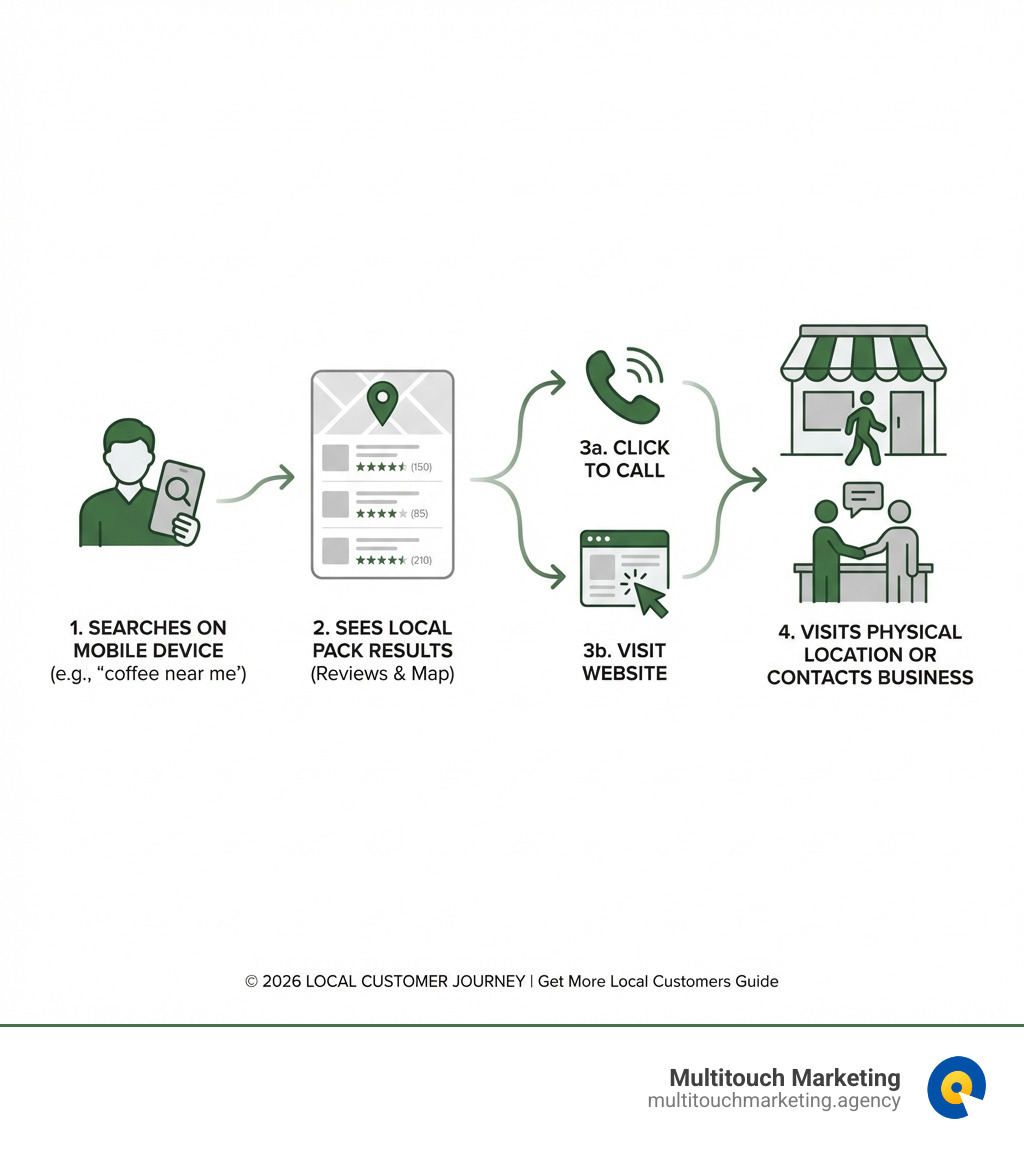
Most local shoppers start their journey online. They search Google, check reviews, and compare options before deciding who to call. If you’re not visible in those critical moments, you’re losing business.
The good news is you don’t need a massive marketing budget. The right strategies, consistently applied, can help small businesses outrank larger competitors by focusing on relevance, proximity, and reputation in their community.
I’m Milton Brown, and since 2008, I’ve helped businesses get more local customers through strategic digital marketing. My expertise in Paid Media Management and Local SEO has driven measurable results for clients looking to dominate their local markets. In this guide, I’ll walk you through ten proven tactics that work—no theory, just practical strategies you can implement today.
Simple guide to Get more local customers terms:
Master Local Search to Be Seen by Nearby Customers
Your business’s journey to get more local customers often begins with a search query. Whether someone is looking for a “coffee shop near me” in Raleigh or “plumber Durham NC,” showing up prominently in local search results is non-negotiable. This is where local SEO (Search Engine Optimization) becomes your best friend.
Local SEO is the process of optimizing your online presence so your brand appears when nearby customers search for keywords related to your business. It ensures Google understands what you do, where you are, and why you’re relevant to local searchers. Google’s local ranking algorithm relies on three core factors:
- Relevance: How well your business profile matches what someone is searching for.
- Distance: How far your business is from the searcher’s location.
- Prominence: How well-known your business is, based on factors like links, articles, and reviews across the web.
When these three factors align, your business gets a prime spot, often in the coveted “Local Pack” – the top three business listings shown for relevant searches on Google Maps and Search. This visibility significantly increases traffic and customer actions.

Optimize Your Google Business Profile
Your Google Business Profile (GBP), formerly known as Google My Business, is arguably the most critical tool for local businesses. It’s free, easy to use, and a powerful way to appear in local search results. Think of it as your digital storefront on Google.
Here’s how to make it shine:
- Claim and Verify Your Listing: First, ensure you’ve claimed your business. You may find an existing listing to claim, or you can create a new one. Verification proves to Google that you’re a legitimate business, boosting your trustworthiness.
- Accurate and Complete Information: Fill out every section of your GBP with accurate details. This includes your Name, Address, and Phone number (NAP) – consistency across all online platforms is key! Make sure your business hours are up-to-date. Complete and accurate profiles are more likely to appear in local search results.
- High-Quality Photos and Videos: Visuals matter! Upload engaging photos of your storefront, products, services, and team. This helps customers visualize your business and makes your profile more appealing.
- Respond to Q&A: Google allows users to ask questions directly on your GBP. Monitor and respond to these questions to demonstrate responsiveness.
- Encourage Reviews: We’ll dive deeper into reviews shortly, but they are a massive factor in prominence. Encourage satisfied customers to leave reviews directly on your GBP.
A well-optimized GBP improves credibility and increases your chances of appearing in Google’s Local Pack, putting you before active searchers. For more tips, see our guide on Google My Business SEO Tips.
Optimize Your Website to Get More Local Customers
While GBP is crucial, your website remains your digital home base. For local customers, its performance and content are vital. Nearly half of all Google searchers are looking for local information, and a stellar website is how you capture that intent.
Here’s what to focus on:
- Mobile-Friendly Design: This isn’t optional; it’s a must. Most local searches happen on smartphones. If your website isn’t mobile-friendly, potential customers will leave. We recommend using responsive design principles so it adapts to any screen size. You can check your site’s mobile-friendliness with Google’s Mobile Friendly Test tool.
- Website Speed: A slow website is a conversion killer. Google’s algorithms prioritize fast-loading sites. We suggest compressing images, enabling browser caching for static resources, and testing your site’s performance with PageSpeed Insights tool. Slow loading times are a prime culprit for a bad user experience, deterring 88% of consumers from returning.
- Location-Specific Keywords & Content: Integrate keywords that combine your service with your target locations (Raleigh, Durham, Chapel Hill, NC). For example, if you’re a home repair service in Chapel Hill, you’d want pages optimized for “Chapel Hill home repair,” “Chapel Hill contractor,” or “handyman services Chapel Hill NC.” Keyword research is crucial to understand how customers search.
- City and Service Pages: Create dedicated pages for each service you offer and, if applicable, for each specific city you serve. This makes your content highly relevant to local search queries. For instance, a dental clinic might have separate pages for “Dental Implants Raleigh NC” and “Family Dentistry Durham NC.”
- On-Page SEO: Ensure your website’s meta titles, descriptions, headings (H1, H2, etc.), and image alt-text include your target local keywords. This helps search engines understand your content’s context. Don’t forget Core Web Vitals—Google’s user experience metrics like LCP, FID, and CLS. Optimizing these technical aspects is critical for ranking.
If your site needs an overhaul to rank better, Hire a web developer who understands local SEO. WordPress users can use the free Business Profile plugin to help Google display your business information. Learn more about how we can help with Search Engine Optimization Raleigh.
Build Local Citations and Directory Listings
Beyond Google, a robust network of local citations across online directories is essential for local SEO. A citation is any online mention of your business’s Name, Address, and Phone number (NAP). Consistent and numerous citations make your business appear more trustworthy and prominent to search engines.
Why are they important?
- Verifies Your Business: Consistent NAP information across reputable sites confirms to Google that your business is legitimate and located where you claim.
- Boosts Visibility: These listings help customers find information about your business.
- Drives Traffic: Many directories allow users to leave reviews, get directions, or visit your website directly.
Key directories to focus on include:
- Yelp
- Bing Places
- Better Business Bureau
- Angi (for home services businesses)
- TripAdvisor (for travel and hospitality)
- Merchant Circle
- YP online (formerly Yellow Pages)
Don’t forget niche-specific directories relevant to your industry. For example, a dental clinic in Durham might want to be listed on health-specific directories. The goal is consistency. Ensure your NAP is identical across all listings, as discrepancies can confuse search engines and hurt your ranking. We can help manage these critical online mentions. Learn more about Google Maps Citations for Local Business SEO.
Build Trust and a Strong Reputation in Your Community
In the competitive local market, trust is currency. Customers are more likely to choose a business they perceive as credible, reliable, and genuinely part of the community. Building a strong reputation isn’t just about what you say about yourself; it’s about what others say about you.
Leverage Online Reviews to Build Credibility
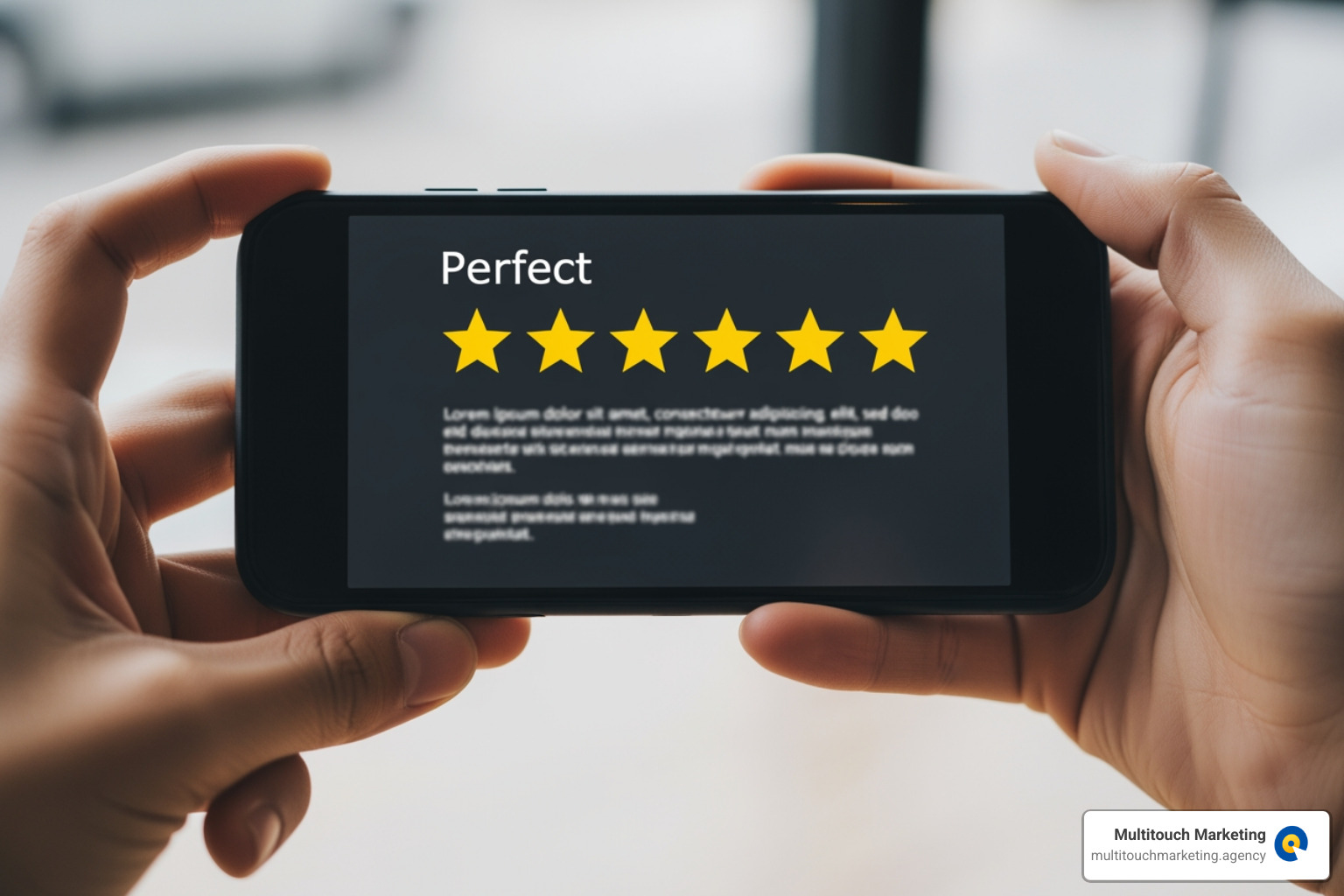
Online reviews are modern-day word-of-mouth. A staggering 88% of consumers trust online reviews as much as personal referrals. They are a powerful form of social proof that can make or break a local business. More positive reviews contribute to your local ranking and influence purchase decisions.
Here’s how to harness the power of reviews:
- Actively Encourage Reviews: Don’t just wait for them. Ask them directly! After a positive experience, ask customers to leave a review on Google, Yelp, or other relevant platforms. Consider sending a thank-you email or text with a direct link to your review page.
- Respond to All Feedback: This is crucial. Respond to positive reviews with gratitude to show appreciation. For negative reviews, respond professionally and empathetically. Address the issue, offer a solution, and invite further private discussion. This shows potential customers you care about customer satisfaction. Your star rating shows up in paid ads and influences results.
- Showcase Testimonials: Don’t be shy! Feature positive reviews on your website, social media, and marketing materials. This builds immediate credibility.
93% of people read—and trust—online reviews before making a decision. Building a strong review profile is one of the most effective ways to get more local customers.
Form Strategic Partnerships with Local Businesses
When businesses support each other, everyone wins. Collaborating with other local businesses creates mutual benefits and increases customer reach without high marketing costs. This strategy taps into new audiences and strengthens community ties.
How to build effective partnerships:
- Identify Complementary Businesses: Look for businesses that serve a similar customer base but don’t directly compete with you. For instance, a local pet groomer in Raleigh could partner with a pet supply store, or a fitness studio in Durham might collaborate with a healthy meal prep service.
- Cross-Promotion: This can take many forms:
- Referral Networks: Establish referral programs. A real estate agent might refer clients to a local moving company, who in turn refers clients back.
- Bundled Offers: Create joint promotions, like a “date night package” from a local restaurant and a movie theater in Chapel Hill.
- Shared Events: Co-host workshops, charity drives, or promotional events that draw customers from both businesses.
- Community Involvement: Connect with your local community by joining your local chamber of commerce or other community organizations. This helps you build relationships with residents and other business owners. Sponsoring local events in Raleigh, Durham, or Chapel Hill shows community spirit and boosts brand visibility.
These partnerships help you get more local customers by leveraging existing trust and expanding your reach.
Use Targeted Digital Marketing to Get More Local Customers
Beyond organic search and reputation management, strategic digital marketing allows you to actively reach high-intent local customers precisely when and where they are looking for your services. This means less wasted ad spend and more relevant leads.
Reach Active Searchers with Local PPC Ads
Pay-per-click (PPC) advertising is a powerful tool to get more local customers because it puts your business directly in front of people who are actively searching for your products or services right now. Unlike traditional advertising, PPC allows for incredibly precise targeting, ensuring your ads are seen by the most relevant audience.
Here’s how we make local PPC work:
- Geo-targeting: This is the magic sauce for local PPC. We can target specific zip codes, cities (like Raleigh, Durham, or Chapel Hill), or even a custom radius around your business location. This ensures your ad budget is spent on reaching potential customers who are physically nearby and ready to engage. Highly targeted ads are more effective than general ads at generating leads and conversions.
- High-Intent Keywords: We focus on keywords that signal immediate need and local intent, such as “emergency plumber Raleigh” or “dentist near me Durham.” This captures customers who are actively looking to solve a problem right away.
- Google Local Services Ads (LSAs): These are a game-changer for service-based businesses. LSAs appear at the very top of Google search results, even above traditional PPC ads. The best part? You only pay when a potential customer contacts you directly—not just for a click. This pay-per-lead model is incredibly efficient. To appear in LSAs, your business needs to pass Google’s screening and verification process, earning you the coveted Google Guaranteed badge, which builds immense trust. You can get started on Google’s LSA page.
- Call-Only Ads: For services where immediate contact is critical (think plumbers, locksmiths, or emergency vets), Google offers call-only ads. These ads allow users to tap a button to call you directly from the search results, bypassing your website entirely.
- Ad Spend Control: With PPC, you set your budget, and we optimize campaigns to maximize your return. We track not just clicks, but actual conversions, customer lifetime value (CLV), and return on ad spend (ROAS). Running PPC without proper tracking is like driving blindfolded—you need to know where you’re going! We can even use AI and upload campaign data from your CRM to train Google’s algorithms to find customers similar to your best existing clients.
Whether you’re new to paid advertising or looking to optimize existing campaigns, our team specializes in Local Business PPC Management and can help you answer the question, Does PPC Work for Small Businesses? Spoiler: yes, it absolutely does!
Leverage Social Media to Get More Local Customers
Social media isn’t just for sharing cat videos; it’s a powerful platform to connect with your local community and get more local customers. With nearly 2.9 billion users, platforms like Facebook, Instagram, and Reddit offer incredible opportunities for targeted local marketing.
Here’s how to make your social media local:
- Local Content: Share content that resonates with your community. Highlight local events, traditions, or issues relevant to Raleigh, Durham, or Chapel Hill. Feature your local team members, show behind-the-scenes glimpses, or partner with local charities. Localized content receives significantly higher engagement.
- Geotagging Posts: Always tag your location in your posts. This helps local users find your content and business. Encourage customers to geotag your business when they post about their experience.
- Engaging with Followers: Respond to comments, messages, and mentions promptly. Engage in conversations, answer questions, and show genuine interest in your local audience. Tools like TweetDeck or Hootsuite can help you manage interactions across platforms.
- Facebook Groups & Local Communities: Join relevant Facebook groups or online forums specific to your area. Offer valuable advice and answer questions without being overly salesy. Becoming a trusted member of these communities can naturally lead to new customers. The same principle applies to platforms like finding customers on Reddit.
- Targeted Social Ads: Platforms like Facebook ads and Instagram allow for hyper-local targeting. We can create campaigns that show ads only to people within a specific radius of your business, or those with demographics that match your ideal local customer. Facebook lead ads are particularly effective, as they allow users to submit their information without even leaving the platform, making the conversion process smoother.
- Content Speed: If you have a blog, consider using features like Facebook’s Instant Articles or the Instant Articles for WP plugin for WordPress to ensure your content loads quickly on social media, improving user experience and engagement.
- Scheduling Tools: Use tools like Buffer to schedule posts in advance, maintaining a consistent presence without constant manual effort.
By actively engaging and targeting your local audience on social media, you can build brand awareness, foster community, and significantly contribute to efforts to get more local customers. For comprehensive guidance, explore our SMM for Local Businesses services.
Implement Geofencing Marketing
Imagine sending a special offer to potential customers the moment they walk past your storefront or enter a specific shopping district in Durham. That’s the power of geofencing marketing. Geofencing marketing involves setting up a virtual boundary that triggers a marketing action (like a push notification or an ad) to a mobile device when a user enters or exits that boundary.
How we use geofencing to help you get more local customers:
- Location-Based Triggers: We can create virtual perimeters around your business, local event venues, or even complementary businesses in Raleigh, Durham, or Chapel Hill. When a potential customer crosses this boundary, they receive a targeted message.
- Personalized Promotions: Geofencing is a powerful way to send relevant, personalized promotions at the perfect time. A restaurant could send a lunch special to office workers in a nearby building during their break, or a car dealership could target customers who are test-driving at a competitor’s lot.
- Targeting Competitor Locations: Ethically, this can be a very effective strategy. By setting a geofence around a competitor’s location, you can present your unique selling proposition to customers who are already in the market for a similar product or service.
- Event Marketing: Promote your business to attendees of local festivals, concerts, or sporting events in your area. This captures a high volume of local traffic with specific interests.
Geofencing allows for highly precise, real-time marketing, ensuring your message reaches the right person at the right place and time. It’s an innovative way to stand out and directly influence local purchasing decisions.
Measure, Analyze, and Refine Your Local Marketing Efforts
Marketing without measurement is like sailing without a compass – you’re just drifting. To truly get more local customers and ensure your efforts are effective, you need to constantly track, analyze, and refine your strategies. This data-driven approach allows us to optimize campaigns, allocate resources efficiently, and maximize your return on investment (ROI).
Track Key Performance Indicators (KPIs)
KPIs are the vital signs of your marketing health. By monitoring these metrics, we can understand what’s working, what isn’t, and where opportunities lie.
Essential KPIs for local marketing include:
- Leads Generated: How many inquiries (calls, form submissions, messages) are you receiving from local marketing efforts?
- Conversion Rate: What percentage of those leads turn into actual paying customers?
- Cost Per Lead (CPL): How much does it cost to acquire a single lead from a specific marketing channel? This helps us determine efficiency.
- Customer Acquisition Cost (CAC): The total cost of acquiring a new customer, including all marketing and sales expenses.
- Customer Lifetime Value (CLV): This is crucial for long-term strategy. customer lifetime value (CLV) estimates the total revenue a customer is expected to generate over their relationship with your business. High CLV means you can spend more to acquire those customers profitably.
- Website Traffic from Local Search: How many visitors are coming to your site specifically from local search queries?
- Google Business Profile Actions: Track calls, website clicks, and direction requests directly from your GBP insights.
- Online Review Volume & Rating: Monitor the number of new reviews and your average star rating.
By tracking these KPIs, we gain clear insights into the effectiveness of each strategy and can make informed decisions to optimize your local customer acquisition funnel.
Use Analytics to Understand Your Customers
Analytics tools are your microscope for understanding customer behavior and campaign performance. They provide the data needed to make intelligent, data-driven decisions.
Key analytics platforms we leverage:
- Google Analytics: This free tool provides deep insights into your website traffic. We can see where your visitors are coming from (including local search), what pages they visit, how long they stay, and their demographics. This helps us identify popular content, user flow issues, and opportunities for optimization.
- Google Business Profile Insights: Your GBP dashboard offers valuable data specific to your local listing. You can see how customers find your business (direct search vs. findy search), where they view your listing (Search vs. Maps), and the actions they take (website visits, phone calls, direction requests). This is invaluable for understanding the direct impact of your GBP.
- Social Media Analytics: Platforms like Facebook and Instagram provide their own analytics dashboards. We use these to track engagement rates, audience demographics, top-performing content, and the effectiveness of local social media campaigns.
- Call Tracking: For many local businesses, phone calls are a primary conversion. We implement call tracking to measure calls generated by specific campaigns (PPC, GBP, website) and even listen to recordings (with proper disclosure) to understand lead quality and sales performance.
By continuously analyzing data from these sources, we can refine your strategies, double down on what’s working, and swiftly adjust what isn’t, helping you to truly Generate Organic Visits for Google Business Profile and beyond. This iterative process ensures your efforts to get more local customers are always improving.
Frequently Asked Questions about Attracting Local Customers
What is the most effective way to attract local customers?
A combination of a strong online presence through Local SEO and an optimized Google Business Profile, coupled with excellent customer service to generate positive reviews and word-of-mouth referrals, is most effective. This multi-faceted approach ensures you’re visible where customers search, trustworthy when they evaluate, and memorable after they experience your service.
How can I get local customers for free?
You can attract local customers for free by fully optimizing your Google Business Profile, engaging in local community groups on social media, encouraging customer reviews, and networking with other local businesses for cross-promotions. Consistent, valuable content on your website and social media can also draw organic local traffic without direct ad spend.
How do I measure the success of my local marketing?
Measure success by tracking KPIs like increases in website traffic from local search, phone calls from your Google Business Profile, lead form submissions, and foot traffic. Use tools like Google Analytics and GBP Insights to monitor these metrics, paying close attention to conversion rates and customer acquisition costs to understand your ROI.
Conclusion
Successfully attracting and retaining local customers in Raleigh, Durham, and Chapel Hill requires a strategic, multi-touch approach. It’s about being visible, trustworthy, and engaging across all channels where your local customers spend their time. From optimizing your Google Business Profile and website for local search, to building a stellar online reputation through reviews, and leveraging targeted digital marketing like PPC and social media, every piece of the puzzle contributes to your success.
At Multitouch Marketing, we understand the unique challenges and opportunities local businesses face. Our expertise in PPC and Local SEO is designed to help you cut through the noise, connect with your community, and ultimately get more local customers who are ready to do business with you. We believe in data-driven strategies that deliver measurable results, ensuring your marketing investment translates into tangible growth.
Don’t let your competitors capture the local market. Take the next step to dominate your local market with expert guidance. Learn more about our Local SEO services in Raleigh and let us help you build a marketing strategy that brings your business closer to the customers who matter most.