

Why Your Website’s DNS Infrastructure Matters More Than You Think
A DNS management service is a third-party solution that handles the translation of your domain names into IP addresses, ensuring visitors can reliably reach your website while providing improved security, performance, and uptime guarantees. Here’s what these services provide:
- Automated DNS administration – Eliminates manual server configuration.
- Improved security features – Protects against DDoS attacks, hijacking, and more with DNSSEC.
- Superior performance – Delivers fast response times (as low as 11ms) via global Anycast networks.
- High availability – Ensures up to 99.999% uptime with redundant infrastructure.
- Traffic management – Offers advanced load balancing and automatic failover.
- Expert support – Provides 24/7 access to DNS specialists.
Think of DNS as the phonebook of the internet. When someone types your domain name, DNS servers translate that address into the numeric IP address computers need to connect. If this process fails or slows down, your website becomes unreachable, leading to wasted ad spend, lost customers, and a damaged brand reputation.
Premium managed DNS services use resilient, global Anycast networks to offer near-100% uptime. For example, Cloudflare’s DNS has an average response time of 11ms, and No-IP has over 150 points of presence worldwide. For businesses investing in digital marketing, these performance metrics are crucial for converting paid traffic.
When paying per click, a slow or unreliable DNS means visitors may leave before your site loads, wasting your marketing budget. Managed DNS also offers real-time threat detection against malware, phishing, and DDoS attacks that could take your site offline.
I’m Milton Brown. In my career managing digital marketing campaigns with budgets from $20,000 to $5 million, I’ve learned that reliable DNS is critical for campaign ROI. A robust DNS management service is the foundation that ensures your marketing investments reach your audience.
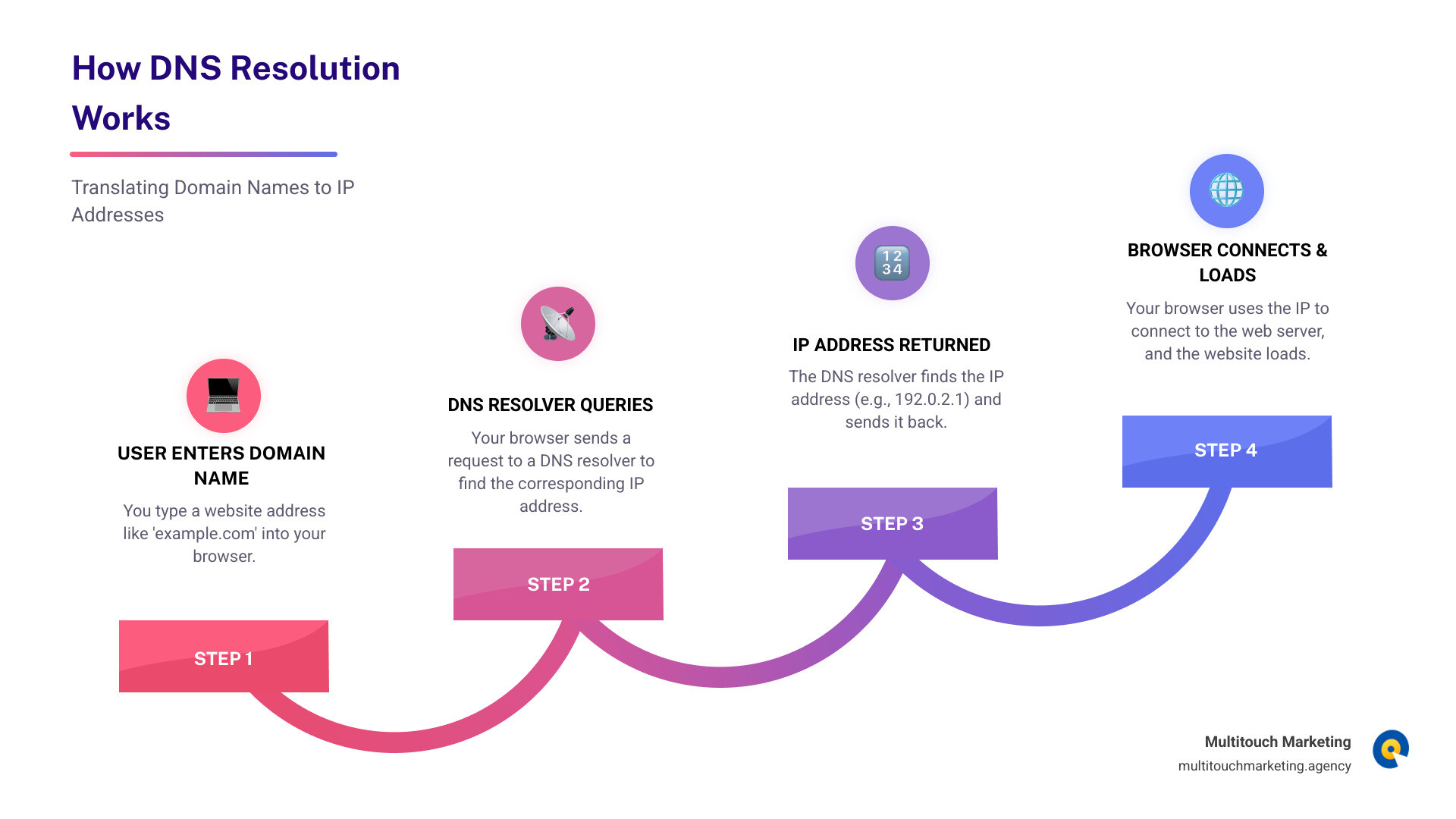
Important DNS management service terms:
What is a DNS Management Service and Why Do You Need One?
Imagine running a busy storefront in downtown Raleigh. You wouldn’t manage your own electricity grid or security system; you’d rely on experts. A DNS management service is much the same for your online presence. It’s a specialized third-party service that takes over the complex, critical task of administering your Domain Name System records. Instead of your team wrestling with server configurations, a managed DNS provider ensures your website is always available, fast, and secure.
This allows businesses in places like Durham and Chapel Hill to focus on growth instead of DNS intricacies. It simplifies administration by leveraging expert support and a global network that’s impossible to build in-house.

Managed DNS vs. Self-Managed DNS
The choice between managed and self-managed DNS boils down to control versus convenience and responsibility versus expertise.
Self-Managed DNS:
Choosing to self-manage your DNS means building and maintaining your own website “phonebook.” This involves:
- Full Control: You manage all DNS records and settings.
- Infrastructure Costs: You must buy, set up, and maintain your own DNS servers, including hardware, software, and networking.
- Technical Expertise: Requires in-house staff with deep DNS, networking, and server knowledge.
- Security Responsibility: You are solely responsible for protecting against DDoS attacks, hijacking, and other threats.
- Uptime Management: Achieving high uptime requires building a costly and complex redundant global network.
- Scalability Challenges: Scaling for traffic spikes requires significant infrastructure and expertise.
While self-management offers complete control, it comes with substantial risks and costs that are often unfeasible for small to medium-sized businesses.
Managed DNS:
A DNS management service means entrusting your DNS to a specialized provider. They handle:
- Outsourced Management: The provider handles all configuration, maintenance, and security via a user-friendly platform.
- Simplified Administration: Automates server management, freeing up your IT resources.
- Key Benefits: Gain maximum uptime, speed, security, and observability, often with pay-as-you-go pricing.
- Expert Support: Includes 24/7 access to DNS specialists for quick issue resolution.
For businesses in North Carolina, a managed DNS service is often the clear winner for maintaining a strong online presence without the infrastructure headaches.
Core Benefits of a DNS Management Service
Here’s what a managed DNS service brings to the table:
- Simplified Administration: Intuitive dashboards and APIs replace complex command-line configurations, freeing up IT staff for strategic tasks.
- Improved Performance: Fast DNS resolution is crucial for user experience, SEO, and PPC success. Managed services use global Anycast networks to reduce latency, with providers like Cloudflare achieving response times of 11ms.
- Improved Security: Managed DNS providers offer robust security features, including real-time threat detection, to protect your domain from malware, phishing, and DDoS attacks.
- Cost-Effectiveness: Avoid the high cost of building and maintaining a global DNS infrastructure. Managed services offer a scalable, pay-as-you-go model.
- Expert Support: Get 24/7 access to DNS specialists, providing peace of mind and quick resolutions to any issues.
- Increased Reliability: Achieve near-100% uptime through redundant global networks, automated failover, and continuous monitoring. Providers like No-IP use Anycast networks to guarantee service availability.
Boosting Performance and Reliability with Managed DNS
In the digital world, performance and reliability are essential for success. For businesses in Raleigh, Durham, and Chapel Hill, a slow or unreliable website means lost opportunities, especially when every click in a PPC campaign costs money. A robust DNS management service is the secret sauce that ensures your online presence is exceptional.
Managed DNS boosts website speed by minimizing latency. It routes user requests to the nearest DNS server, speeding up IP address lookups. This, plus high uptime guarantees, keeps your site fast and always available.
These services achieve this through sophisticated global network infrastructure, advanced traffic management, and intelligent load balancing. They constantly monitor server health and automatically reroute traffic if an issue is detected (DNS failover), keeping your site online and performing optimally.
The Role of Anycast DNS in a Global Network
Ever wondered how websites load so quickly for users across the globe? A huge part of that magic is Anycast DNS.
Anycast is a networking technique where multiple servers share one IP address. When a user makes a DNS query, the network routes it to the nearest server. This is like having many local libraries instead of one central one, directing you to the closest location.
- Points of Presence (PoPs): These networks use numerous data centers (PoPs) worldwide. Cloudflare has PoPs in over 330 cities, while No-IP has over 150.
- Redundancy: If one PoP fails, traffic is automatically rerouted to the next closest server, ensuring continuous service.
- Lower Latency: Routing to the nearest server reduces travel distance for data, resulting in faster response times. Cloudflare’s DNS averages an 11ms response time.
- 99.999% Uptime: The redundancy of Anycast networks allows providers to offer uptime guarantees as high as 99.999%. For example, Webnames Premium DNS guarantees this level of uptime.
Anycast DNS is a fundamental component of a high-performance, reliable DNS management service, ensuring your website is always within easy reach of your users.
Advanced Traffic Management and Load Balancing
Beyond simply finding your website, a managed DNS service can intelligently direct traffic to optimize user experience and resource utilization.
- Geo DNS Routing: Directs users to servers based on their geographic location to minimize latency. For instance, a user in North Carolina is routed to an East Coast server.
- Latency-Based Routing: Routes traffic to the server with the lowest latency for the user, based on real-time performance measurements.
- Weighted Round Robin: Distributes traffic across servers based on assigned weights, allowing you to direct more traffic to more powerful servers.
- Optimizing User Experience: These methods connect users to the best available server, ensuring faster load times and a better experience.
- Automatic Failover: If a server fails, the DNS management service automatically reroutes traffic to a healthy alternative. Services like Amazon Route 53 use health checks to enable this, preventing downtime and protecting your brand.
Fortifying Your Digital Presence: Security in Managed DNS
In today’s digital landscape, security is paramount. An attack on your DNS can be devastating, leading to service outages and significant reputational damage. A robust DNS management service acts as a digital shield, offering critical protections against numerous online threats.

Common DNS threats include hijacking (redirecting your domain to a fake site), cache poisoning (injecting false IP addresses into a DNS cache), and DDoS attacks (overwhelming servers with traffic). Managed DNS also helps with phishing prevention by enabling proper email security record configuration (SPF, DKIM, DMARC) and blocking malicious domains. Providers offer real-time threat detection and response to protect against these activities.
Understanding DNSSEC and Its Importance
DNSSEC (Domain Name System Security Extensions) is a critical protocol that adds a layer of authentication to DNS, verifying that responses haven’t been tampered with.
- Cryptographic Signatures: DNSSEC adds digital signatures to DNS records to verify they are from the correct source and haven’t been altered.
- Authenticating Responses: It allows resolvers to authenticate DNS responses, ensuring the IP address is legitimate.
- Data Integrity: This guarantees that DNS data has not been manipulated.
- Preventing Attacks: By authenticating responses, DNSSEC prevents attacks like DNS hijacking and cache poisoning.
- Easy Implementation: Many providers like Cloudflare offer simple, one-click DNSSEC implementation, making it easy to secure your domain.
Implementing DNSSEC is a best practice for any business serious about online security, and a quality DNS management service makes it simple.
How Managed Services Combat DDoS Attacks
Distributed Denial of Service (DDoS) attacks aim to overwhelm your servers and make your website unavailable, which means immediate revenue loss for businesses running PPC campaigns. A managed DNS management service is a powerful defense.
- DDoS Mitigation: Providers use massive, global networks to absorb and mitigate DDoS attacks. Cloudflare’s network, for instance, has the capacity to handle attacks far larger than any recorded.
- Real-Time Detection: Advanced analytics and machine learning are used to detect DDoS attack patterns in real-time.
- Global Capacity: Attack traffic is spread across a vast global network of PoPs, diluting its impact and filtering it at the network edge.
- Traffic Filtering: Malicious traffic is identified and blocked by scrubbing centers, while legitimate traffic passes through, keeping your site online.
- Protecting Availability: The main goal is to ensure your DNS resolution is always available, thus safeguarding your entire online presence from DDoS attacks.
For a deeper dive into how DNS security, performance, and reliability are improved, we recommend reviewing this white paper: Improving DNS security, performance, and reliability. This proactive defense is a cornerstone of a reliable DNS management service.
Choosing the Right DNS Management Service for Your Business
Selecting the right DNS management service for your business in Raleigh, Durham, or Chapel Hill requires focusing on key considerations, pricing, and integration to find a solution that aligns with your needs and future growth.
The choice depends on your requirements: Do you need basic DNS, or advanced traffic management, robust security, and deep analytics? Will it need to integrate with your existing cloud infrastructure like AWS, Azure, or Google Cloud? Understanding these aspects will guide you to the best fit.
Key Factors to Consider
When evaluating providers for a DNS management service, look at these critical areas:
- Performance SLAs: Look for strong guarantees on uptime (ideally near 100%) and low latency response times.
- Security Features: Check for advanced security like DNSSEC, DDoS protection, and anti-phishing measures.
- Uptime Guarantee: Prioritize providers offering high uptime guarantees, such as 99.999%.
- Customer Support: Ensure the provider offers 24/7 expert support, especially if your business operates around the clock.
- Ease of Use: The service should have an intuitive interface and clear documentation to simplify DNS management.
- API Access: A robust API is crucial for automation and integration with DevOps workflows (IaC).
- Advanced Analytics: For monitoring and optimization, look for real-time analytics on query volumes, performance, and threats.
Typical Pricing Models and What to Expect
Pricing for a DNS management service varies based on features, scale, and support. Common models include:
- Free Tiers: Suitable for personal sites, but lack advanced features, SLAs, and dedicated support.
- Pay-as-You-Go: Models like Azure DNS bill based on usage (queries, zones), which is cost-effective for fluctuating traffic.
- Tiered Plans (Pro, Business): A common model with set monthly/annual fees for different feature and support levels, like Cloudflare’s Pro and Business plans.
- Per-Domain Pricing: A set fee per domain, sometimes with discounts for bulk management.
- Query-Based Costs: Be aware of potential overage charges for queries exceeding a plan’s limit.
- Add-on Features: Advanced security, load balancing, or premium support may cost extra.
When budgeting, consider not just the base price but also potential growth and the need for advanced features.
Integration with Your Existing Infrastructure
A key advantage of a managed DNS management service is its ability to integrate with your existing infrastructure.
- Cloud Services (AWS, Azure, Google Cloud): Top DNS providers integrate with major cloud platforms. For example, AWS Route 53 works with EC2 and S3, Azure DNS hosts domains alongside apps, and Google Cloud DNS integrates with IAM and Cloud Logging for security and analytics.
- Infrastructure as Code (IaC) & DevOps: Modern DNS platforms support IaC, allowing you to manage DNS configurations as code. This integrates into DevOps workflows for automated deployments.
- API Management: A robust API is essential for programmatically managing DNS records and integrating with other systems.
- Common DNS Record Types: A quality managed DNS service must support all standard and advanced record types for full domain configuration flexibility. This includes essential records like A (maps a domain to an IPv4 address), AAAA (for IPv6), CNAME (alias for another domain), MX (for email servers), and TXT (for verification and security policies like SPF/DKIM). Support for other records like NS, SRV, and CAA is also important for advanced configurations.
Frequently Asked Questions about DNS Management
We often hear similar questions from businesses exploring DNS solutions. Let’s tackle some of the most common ones.
My web host offers free DNS. Is that enough?
While free DNS from a web host may suffice for personal or low-traffic sites, it’s a risk for serious businesses. These services typically lack the advanced features, performance, security, and reliability of a dedicated DNS management service. They often have slower performance, no uptime guarantees, and limited protection against threats like DDoS attacks. If your website is critical to your business, especially for PPC campaigns in markets like Raleigh, investing in a dedicated service is a wise choice for performance and security.
What is the difference between Dynamic DNS (DDNS) and Managed DNS?
These two services address different needs:
- Dynamic DNS (DDNS): This is for users with a changing (dynamic) IP address, common in homes or small offices. DDNS automatically updates your domain to point to your current IP, which is useful for remotely accessing devices like security cameras or home servers. No-IP is a well-known provider in this space.
- Managed DNS: This is an enterprise-grade service for domains with static IP addresses, like your business website. A DNS management service focuses on providing high performance, reliability, security, and advanced traffic management for public-facing services.
In short, DDNS helps you find a moving target (a dynamic IP), while managed DNS ensures a fast, secure route to a fixed target (your website’s static IP).
Can I use a managed DNS service if my domain is registered elsewhere?
Yes, absolutely. This is a common and recommended practice. Your domain registrar (where you bought the domain) and your DNS provider can be separate. To use a managed DNS management service, you just need to update the “nameserver” settings at your registrar to point to the nameservers provided by your new DNS service. This allows you to choose the best provider for each service independently.
Conclusion
In the intricate mix of the internet, the DNS management service is an often-overlooked yet fundamental component. For businesses in Raleigh, Durham, and Chapel Hill, leveraging a robust DNS management service is not merely a technical detail; it’s a strategic imperative.
We’ve explored how a managed service simplifies DNS administration, improves performance and reliability through Anycast networks and traffic management, and fortifies security with features like DNSSEC and DDoS mitigation.
Performance, security, and reliability are the cornerstones of online success, and a top-tier DNS management service provides that foundation. At Multitouch Marketing, we focus on maximizing your PPC campaign ROI. Inefficient DNS leads to slow load times or downtime, which wastes ad spend. By ensuring your site is always fast, secure, and available, a managed DNS service directly boosts your PPC success, reduces bounce rates, and maximizes your investment.
Just as professional website maintenance impacts your marketing ROI, so too does a professional DNS strategy. We’re here to help you steer these complexities and ensure your online foundation is as strong as your marketing efforts.
Learn how professional website maintenance impacts your marketing ROI