
Why PPC Trends for 2026 Demand Your Attention Right Now
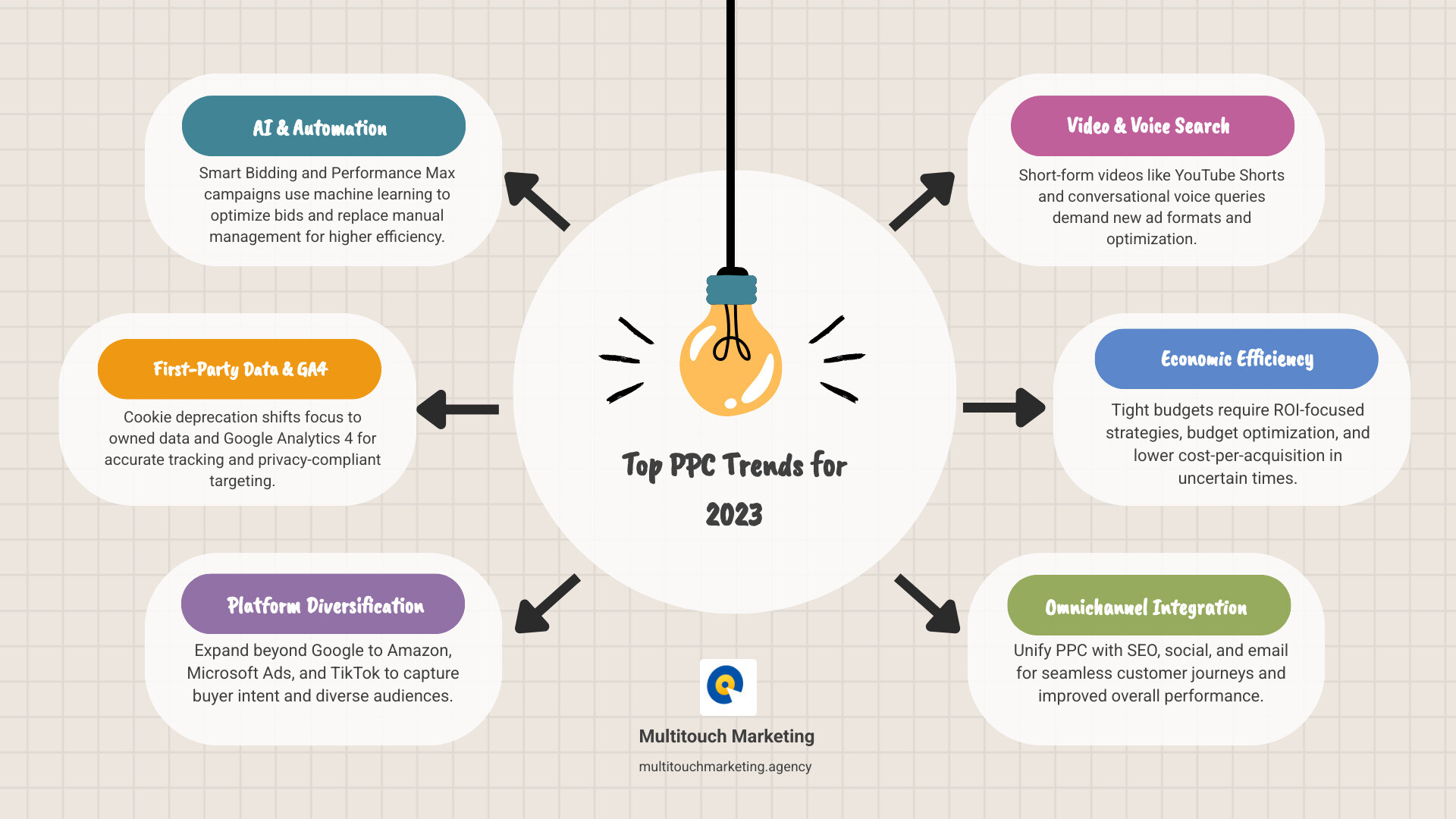
The top PPC trends for 2026 you need to know are:
- AI and automation – Smart Bidding and Performance Max continuing to replace manual campaign management
- First-party data and GA4 – Privacy changes keeping the focus on owned data and Google Analytics 4
- Platform diversification – Amazon, Microsoft Ads, and TikTok expanding beyond Google dominance
- Video and voice search – Short-form video and conversational queries reshaping ad formats
- Economic efficiency – Tighter budgets pushing a harder focus on ROI and cost-per-acquisition
- Omnichannel integration – Connecting PPC with SEO, social, and email for a unified customer journey
Digital ad spending has continued to grow in recent years. Nearly half of global digital ad investment still comes from U.S. advertisers.
That number sounds exciting. But here is the uncomfortable truth: more ad spend does not mean more return. For small business owners, it can also mean more waste.
The PPC landscape has shifted fast over the past few years. Google retired Universal Analytics. Performance Max campaigns became harder to ignore. AI started making bidding decisions faster than any human could. And platforms like TikTok and Amazon kept pulling advertiser dollars away from Google.
If your campaigns are still running the same way they did a few years ago, you are likely leaving money on the table – or burning it outright.
The good news? PPC can still deliver strong returns when done right. The key is knowing which shifts to act on now and which ones to watch carefully.
I’m Milton Brown, a paid media specialist with experience running PPC campaigns since 2008 across industries like e-commerce, healthcare, and higher education – and tracking how PPC has evolved has been central to helping clients scale efficiently. Let’s walk through the major shifts shaping paid search today and what they mean for your ad spend.
Explore more about PPC trends for 2026:
The Rise of AI and Automation in PPC Trends for 2026
If you feel like the machines have taken over the driver’s seat, you aren’t imagining things. Artificial Intelligence (AI) and machine learning have become the backbone of modern advertising. We have seen a major shift from manual control to algorithmic optimization, which continues to shape PPC trends for 2026.
One of the biggest changes has been the continued dominance of Performance Max campaigns. This goal-based campaign type allows advertisers to access all Google Ads inventory – YouTube, Display, Search, Gmail, and Maps – from a single campaign. While it offers incredible reach, it requires a different mindset. Instead of picking keywords alone, advertisers now provide audience signals and high-quality creative assets, letting Google’s AI find the best path to a conversion.
Manual Bidding vs. Smart Bidding: The Current Reality
The debate between manual and automated bidding has largely tipped in automation’s favor. Smart Bidding uses machine learning to optimize for conversions or conversion value in every single auction – a feat no human can replicate at scale.
| Feature | Manual Bidding | Smart Bidding (AI-Powered) |
|---|---|---|
| Control | Full control over every cent | Algorithmic control based on goals |
| Speed | Slow, reactive adjustments | Real-time, auction-time bidding |
| Data Usage | Limited to visible metrics | Analyzes millions of signals (device, time, intent) |
| Best For | Low-volume, niche keywords | Maximizing ROI and scaling |
At Multitouch Marketing, we’ve seen that the most successful advertisers are not just setting and forgetting their ads. Instead, they are focusing on AI in Google Ads by providing better data inputs. This includes uploading CRM data – like qualified leads and closed deals – to train the AI on what a good customer actually looks like.
Automation also extends to ad copy through Responsive Search Ads (RSAs). By testing multiple headlines and descriptions, the system automatically serves the combination that best matches the user’s search intent and device. The goal today is clear: let the AI handle the math, while humans handle the strategy, creative direction, and quality control.
Navigating the Shift to First-Party Data and GA4
Privacy is no longer just a buzzword; it is a technical requirement. With the deprecation of third-party cookies and stricter regulations like GDPR, the way we track success has had to evolve. One of the most significant milestones in this shift was the sunset of Universal Analytics, which made the Google Analytics 4 migration a necessary step for advertisers.
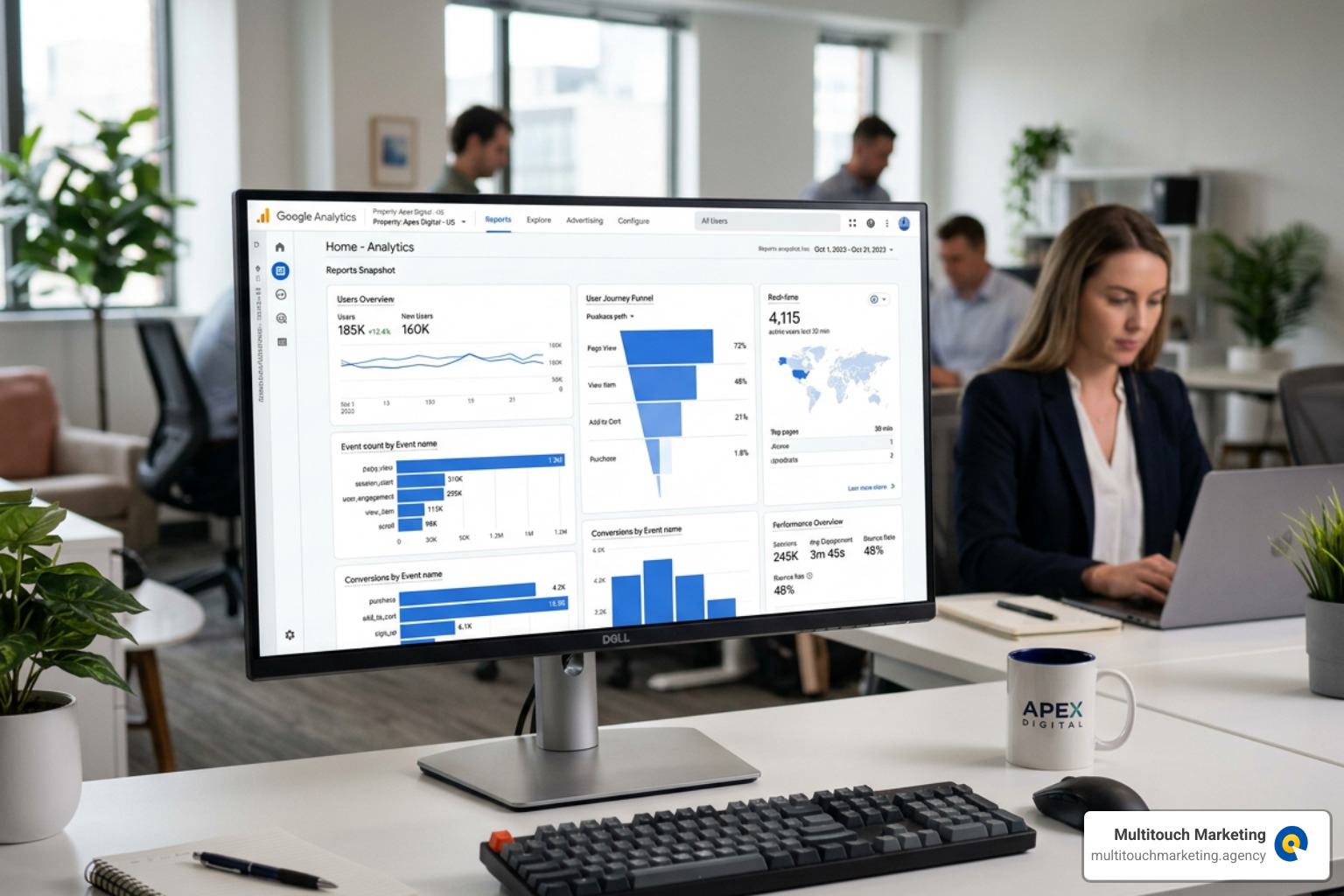
GA4 is built for a world with less reliance on third-party cookies. It uses an event-based data model that tracks the user journey across different devices and platforms. For businesses in Raleigh, Durham, and Chapel Hill, this has meant a steeper learning curve but ultimately better data. If you haven’t checked your tracking lately, our expert PPC audit services can help ensure your data isn’t leaking.
The shift to first-party data means your own customer list is now one of your most valuable assets. By collecting emails, phone numbers, and purchase history directly, with consent, you can build robust Customer Match lists. These lists allow you to reach your best customers across search and social media without relying on unreliable third-party tracking.
Leveraging GA4 for Better PPC Trends for 2026 Insights
GA4 is not just a reporting tool; it is also a predictive one. By using advanced PPC techniques, we can now leverage:
- Audience Modeling: Filling in the gaps when users opt out of tracking.
- Predictive Analytics: Identifying which users are most likely to churn or make a purchase in the near future.
- Cross-Device Targeting: Understanding that a user might click an ad on their phone in Raleigh but finish the purchase on a laptop in Durham.
This level of insight allows us to move away from last-click attribution and better understand the value of every touchpoint in the marketing funnel.
Diversifying Beyond Google: Amazon, Microsoft, and Social Commerce
While Google still owns the largest share of the search market, advertisers have continued looking for greener pastures to lower costs and reach new audiences. Amazon has become a major advertising platform by offering something Google cannot always guarantee: high buyer intent. When someone searches on Amazon, they often are not just looking for information – they are looking to buy.
Microsoft Advertising has also remained a strong alternative. With AI-powered search experiences and the expansion of the Microsoft Audience Network, it has become a viable lower-cost option for many brands. For B2B companies in North Carolina, Microsoft Ads can often deliver higher quality professional engagement at a lower cost-per-click (CPC) than Google.
Social media platforms have also continued to blur the lines between scrolling and shopping. TikTok, with its massive user base, rewards ad quality and engagement. That means a creative, compelling video can often outperform a bland ad with a much larger budget. Integrating these platforms into omnichannel PPC strategies helps ensure your brand stays visible wherever your audience spends time.
Video and Voice Search: Essential PPC Trends for 2026
Content consumption habits have shifted toward snackable media. Short-form video – think YouTube Shorts, Instagram Reels, and TikTok – is no longer optional. Many marketers continue to report strong ROI from video advertising. We have found that even for specialized sectors like PPC for travel industry, a 30-second property tour or top 5 things to do video can convert significantly better than a static image.
Voice search has also continued its quiet climb. With the rise of smart speakers and mobile assistants, people are searching using natural, conversational language. Instead of typing “Raleigh HVAC,” they may ask, “Who is the best air conditioning repair company near me?” To win here, your keyword strategy should include long-tail, question-based phrases and colloquialisms that match how real people speak.
Maximizing Efficiency During Economic Uncertainty
Recent years have brought their fair share of economic headlines, and for many businesses, that has meant tighter belts. The focus has shifted from growth at all costs to efficiency at all costs. We continue to see a major push for Google Ads budget management so that every dollar works as hard as possible.
Efficiency today means getting granular. We help clients look at their data to identify waste areas – like certain times of day, specific zip codes, or devices that are not converting. By implementing PPC campaign optimization, businesses can maintain lead flow even with leaner marketing teams.
Seasonality also plays a major role. In a slower economy, understanding when your customers are most likely to take action is vital. For example, we may recommend shifting budget into micro-conversions – like newsletter signups or PDF downloads – during slow months to build a pipeline for when the busy season hits. This longer-term view helps prevent the feast-or-famine cycle that hurts many small businesses.
Frequently Asked Questions about Modern PPC
How does Performance Max improve campaign ROI?
Performance Max uses Google’s advanced AI to find customers across all of Google’s platforms. By analyzing millions of signals in real time, it can identify high-intent users that you might miss with standard search campaigns. When provided with high-quality images, videos, and accurate conversion data, it can help lower your cost-per-acquisition.
Why is first-party data essential for modern targeting?
As third-party cookies disappear, platforms lose some of their ability to track users across the web. First-party data, meaning data you own like your email list, allows you to reduce reliance on those tracking methods. It creates a direct link between you and your audience, enabling more personalized remarketing and stronger audience building.
Can small businesses effectively use PPC automation?
Absolutely. In fact, automation is often a great equalizer for small businesses. It allows you to compete with larger companies by using the same sophisticated bidding algorithms they use. The key is to have proper guardrails in place – like Target CPA or Maximize Conversions with a set budget – so the AI does not overspend while it is learning your market.
Conclusion
The PPC trends for 2026 show that while the tools are getting smarter, the human element is still more important than ever. Machines are great at math, but they do not understand your business goals, your brand voice, or your local North Carolina customers the way you do.
At Multitouch Marketing, we believe the secret sauce is balancing modern automation with strategic human oversight. Whether you are navigating the complexities of GA4 or trying to scale a Performance Max campaign, you do not have to do it alone.
Ready to stop the leaky bucket in your ad account? Unlock success with professional PPC management and let’s make sure your PPC strategy is built for growth, not just spend. We’re here to help businesses in Raleigh, Durham, and beyond turn clicks into customers.