
Why PPC Software Matters for Growing Small Businesses
PPC software for small business helps companies automate, optimize, and manage paid advertising campaigns across platforms like Google Ads, Facebook, and Microsoft Advertising—without needing a marketing degree or full-time specialist.
Top PPC software options for small businesses include:
- Adzooma – Free tier available, multi-platform management with machine learning recommendations
- WordStream – Guided optimization starting at $294/month for businesses spending $10K-$100K monthly
- Shopstory – Free plan with pay-as-you-use from €39/month, ideal for ecommerce
- Optmyzr – Starting at $249/month for automated optimizations and one-click changes
- Adalysis – From $149/month with 100+ automated daily checks for campaign health
- Semrush PPC Toolkit – Comprehensive keyword and competitor research from $99/month
Honestly, managing pay-per-click campaigns manually is time-consuming and inefficient. Without automation, budgets can spiral, bids fluctuate wildly, and businesses waste thousands on non-converting clicks. The right software changes everything—turning scattered ad accounts into streamlined revenue engines.
Research shows that PPC ads convert 50% better than SEO, making them essential for small businesses that need measurable results fast. But here’s the catch: the average customer acquisition cost has doubled since 2013, climbing to $68-$78 for retailers. Rising ad costs mean you can’t afford to wing it anymore.
Modern PPC software handles the heavy lifting—adjusting bids in real-time, pausing underperforming keywords automatically, and surfacing optimization opportunities you’d never spot manually. Tools like Adzooma leverage machine learning to improve quality scores and ROI, while platforms like WordStream guide beginners through structured workflows that turn 60% more leads into customers while spending 10% less.
I’m Milton Brown, and I’ve managed PPC accounts ranging from $20,000 to $5 million since 2008. Throughout my career working with organizations across healthcare, ecommerce, and education, I’ve seen how the right PPC software for small business transforms amateur campaigns into profitable growth engines—even for teams with zero marketing expertise.
Relevant articles related to ppc software for small business:
- PPC advertising for small businesses
- PPC campaign budgeting for small businesses
- Local business PPC management
Why Small Businesses Need Automation to Scale
As we navigate the competitive landscape of North Carolina—from the tech corridors of Raleigh to the bustling storefronts in Durham and Chapel Hill—we’ve found that small businesses face a unique challenge. You need to grow, but you don’t have forty hours a week to sit inside the Google Ads interface. This is where automation becomes your best friend.
The reality is that PPC ads convert 50% better than SEO. While organic search is a great long-term play, PPC provides the immediate “faucet” of leads that small businesses need to stay afloat. However, managing that faucet manually is like trying to catch a waterfall with a thimble.
Automation allows us to scale without adding headcount. When you use PPC management for small business software, you’re essentially hiring a robot assistant that never sleeps. It monitors your ROI tracking around the clock. If a specific keyword starts eating your budget at 2 AM without producing a single lead, the software can pause it instantly.
Furthermore, PPC campaign optimization isn’t just about saving money; it’s about finding new opportunities. Software can perform competitive research in seconds, identifying “keyword gaps” where your rivals are winning and you aren’t even competing. For a local business in Raleigh, this could mean the difference between appearing for “best plumber near me” and missing out on the 5.9 billion searches happening monthly on the Microsoft Search Network.
How PPC Software for Small Business Saves Time
Time is the one resource every small business owner in North Carolina lacks. We’ve seen owners spend their weekends trying to figure out bid adjustments, only to see their Google Ads budget management go out the window by Monday afternoon.
PPC software for small business saves time through several key functions:
- Automated Bidding: Instead of manually guessing how much to pay for a click, the software uses historical data to bid the exact amount needed to win the placement at the lowest possible cost.
- Rule-Based Pausing: You can set “If/Then” rules. For example: “If an ad spends $50 and has zero conversions, pause it.” This prevents “budget bleed” while you’re busy running your business.
- Bulk Optimizations: Changing a headline across 50 different ads used to take hours. With tools like Optmyzr, it takes one click.
- Instant Reporting: Stop wrestling with spreadsheets. Modern tools generate tailored performance reports that show you exactly what’s working in plain English.
We must also remember that creative quality accounts for 49%-70% of an ad’s success. If you’re spending all your time on technical bid management, you aren’t spending time on the creative copy and images that actually drive the click. Software frees you up to be the visionary for your brand.
Essential Features to Look For in Ad Management Tools
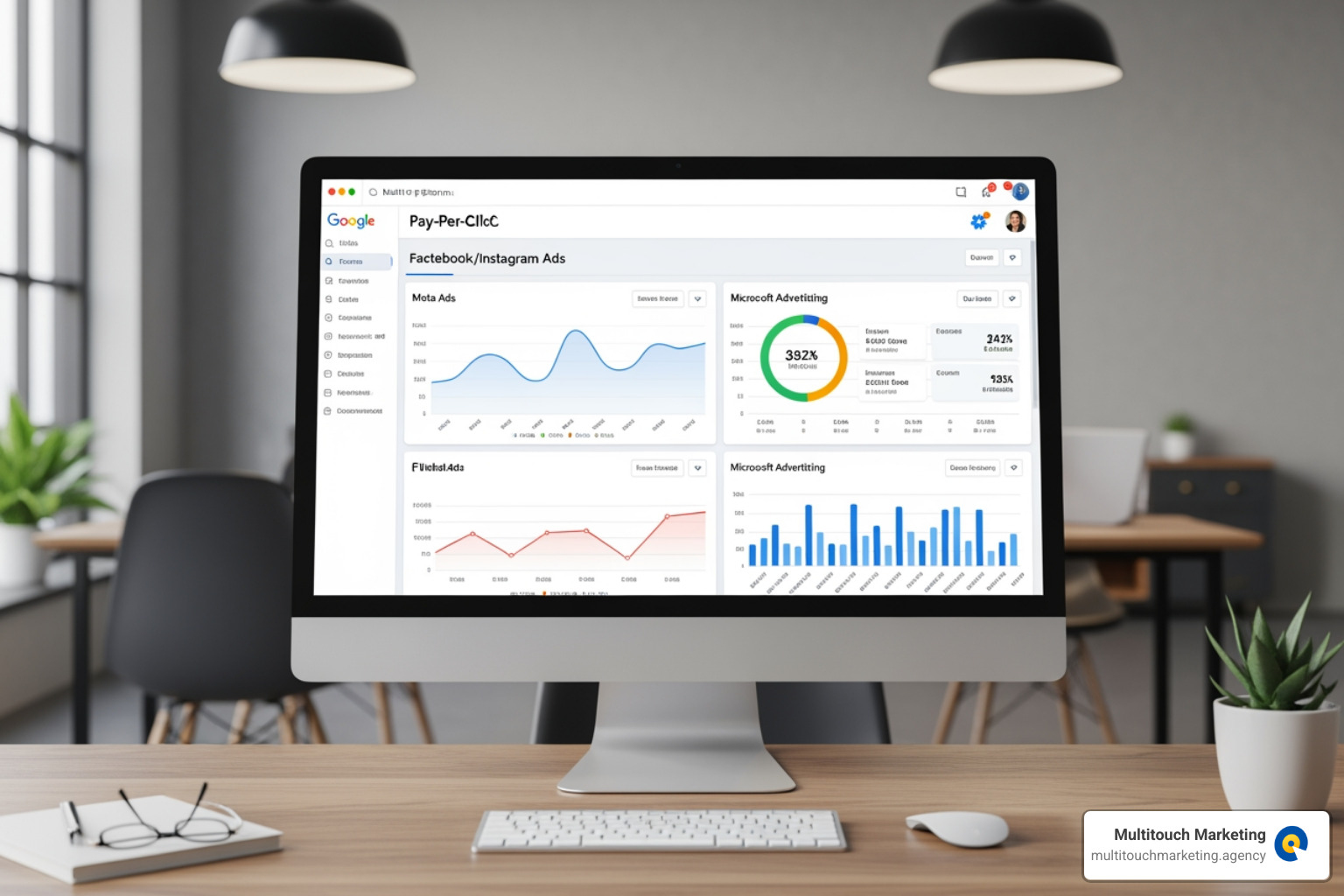
When we evaluate software for our clients in the Research Triangle, we look for a few non-negotiable features. The goal is to simplify, not add another layer of complexity to your life.
Cross-Platform Support is the big one. Your customers aren’t just on Google. They are scrolling through Facebook, checking Instagram, and using Bing (Microsoft Advertising). A good tool should allow you to see your performance across all these channels in one place.
Another essential is AI-Driven Insights. We don’t just want data; we want answers. Instead of a chart showing that your CTR (Click-Through Rate) dropped, we want a tool that says, “Your CTR dropped because your competitor just launched a 20% off coupon; here is a suggestion for a new ad headline.” This kind of PPC expert tips for businesses integrated directly into the software is invaluable.
Lastly, look for Keyword Discovery tools. The way people search changes. In Raleigh, someone might search for “HVAC repair” today and “AC not blowing cold” tomorrow. Software helps you stay ahead of these trends by identifying keyword match types and new search terms automatically.
Manual Management vs. Software Automation
| Feature | Manual Management | PPC Software Automation |
|---|---|---|
| Bid Adjustments | Reactive (done once a week/month) | Proactive (real-time adjustments) |
| Keyword Research | Tedious spreadsheet work | Automated discovery & grouping |
| Ad Testing | Slow A/B tests | Rapid-fire multivariate testing |
| Reporting | 2-3 hours to build a report | Generated in 30 seconds |
| Budget Control | High risk of overspending | Automated “Kill-Switches” |
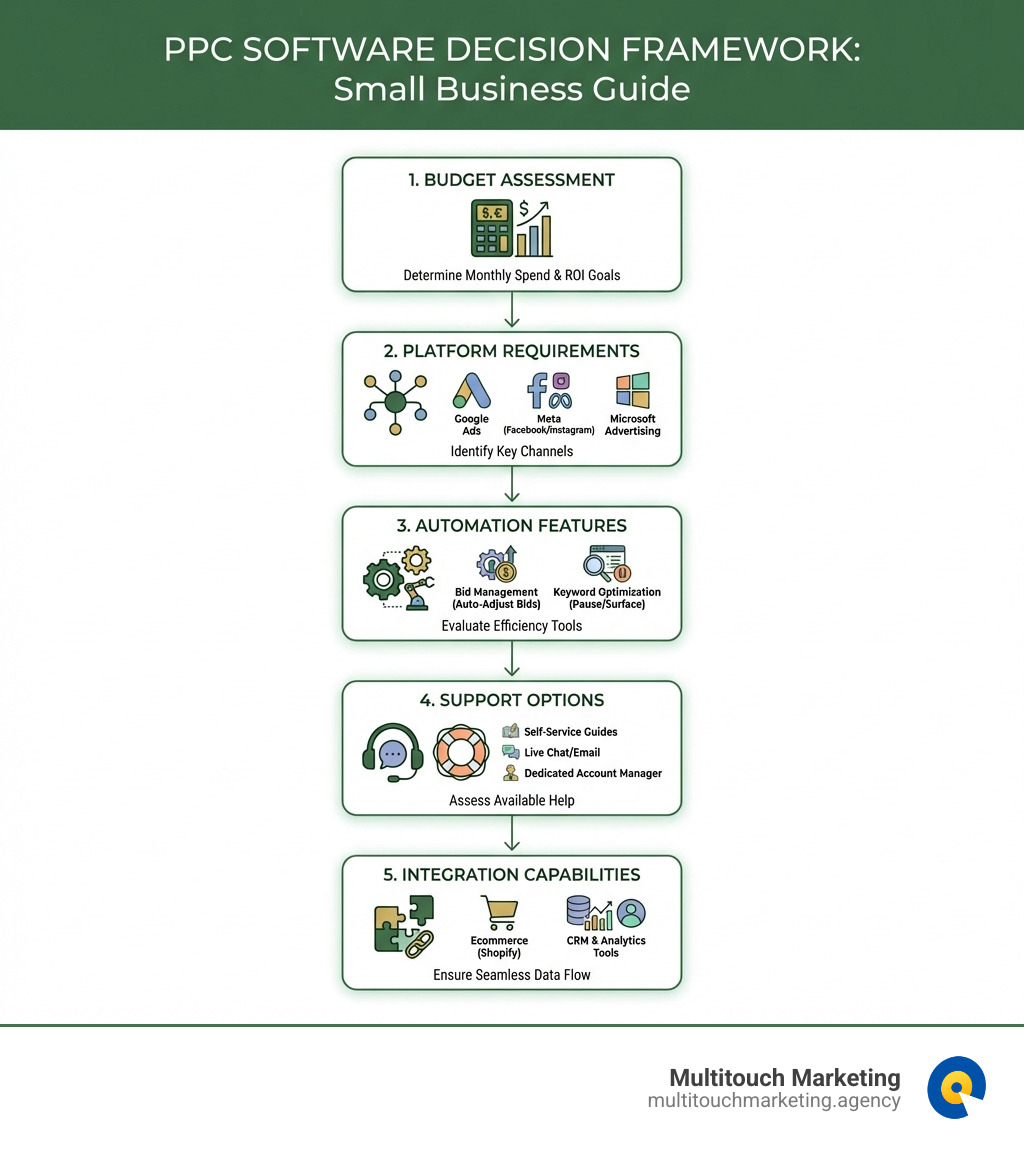
Choosing the Right PPC Software for Small Business Budgets
We know that PPC campaign budgeting for small businesses is often tight. You can’t afford a $1,000/month tool if your ad spend is only $2,000.
The good news is that the market has shifted. There are now several pay-as-you-go models and tiered pricing structures. For example, Adalysis offers a 14-day free trial without requiring a credit card, which is a great way to see if the software actually pays for itself before you commit a single dime.
When choosing, consider the “Total Cost of Ownership.” If a tool costs $150 a month but saves you five hours of work and $300 in wasted ad spend, it’s actually “paying” you $150 a month to use it.
Top-Rated PPC Software for Small Business Options in 2025
Let’s look at the heavy hitters. We’ve selected these based on their reliability, ease of use, and specific benefits for small-to-mid-sized operations.
Adzooma
Adzooma is a favorite for those just starting out. It offers a free tier that provides smart recommendations for Google, Microsoft, and Facebook Ads. It leverages machine learning to suggest “Opportunities”—one-click fixes that improve your quality score and ROI. It’s like having a personal PPC assistant that audits your account every day.
Semrush PPC Toolkit
If you love data, this is your tool. Semrush is legendary for its keyword research. For PPC, it allows you to see exactly what keywords your competitors are bidding on and even what their ad copy looks like. This is vital for local business PPC management where you need to outmaneuver the shop down the street.
WordStream Advisor
WordStream is designed specifically for small businesses spending between $10K and $100K monthly. Their “20-Minute Work Week” is a guided workflow that tells you exactly what to do every seven days to keep your account healthy. It’s famous for helping businesses turn 60% more leads into customers.
Shopstory
For our ecommerce friends in Durham and Raleigh running Shopify or WooCommerce stores, Shopstory is a game-changer. It automates product feeds and bidding without requiring any coding skills. It offers a free plan and then moves to a pay-as-you-use model starting at €39/month.
Optmyzr
Optmyzr is for the business that is ready to scale. It offers high-level automation like “One-Click Optimizations” and custom scripts. While it starts at a higher price point ($249/month), the time it saves on bulk changes across Google, Meta, and Amazon is massive.
Adalysis
Adalysis focuses heavily on “Account Health.” It performs over 100 automated checks daily. If there’s a keyword conflict (where two of your own ads are competing against each other) or a broken landing page, Adalysis will ping you immediately.
AdEspresso
If Facebook and Instagram are your primary drivers, AdEspresso is the king of split testing. It allows you to create hundreds of variations of an ad (different pictures, different headlines) and automatically finds the winner, shifting your budget to the best performer.
SpyFu
SpyFu is the “private investigator” of the group. It has nearly 20 years of historical Google Ads data. You can type in a competitor’s URL and see every keyword they’ve ever bought and every ad test they’ve ever run.
Beginner-Friendly PPC Software for Small Business Owners
We often hear from owners who are intimidated by the “black box” of digital advertising. The best PPC software for small business today focuses on Intuitive Interfaces and Guided Workflows.
You shouldn’t need to know what a “target ROAS” or “enhanced CPC” is to get started. Modern tools like Adzooma and WordStream use “Smart Recommendations.” They present you with a simple choice: “We found that your ad is performing better on mobile than desktop. Should we increase your mobile bid by 10%?” You just click “Apply.”
Another beginner favorite is Automated Account Audits. Tools like TrueClicks or the built-in auditors in Adalysis provide a “Grade” for your account. This gives you a clear roadmap of what to fix first, preventing that overwhelming feeling of not knowing where to start.
Frequently Asked Questions about PPC Software
How much does PPC software typically cost for a small business?
Pricing varies based on your ad spend and the features you need.
- Entry Level: $0 – $50/month (Adzooma free tier, AdEspresso starter).
- Mid-Tier: $100 – $300/month (WordStream, Adalysis, Shopstory).
- Advanced/Agency Level: $500+ /month (Marin Software, Optmyzr for large accounts).
Most software scales with you. For example, AdEspresso’s starter plan is affordable but has a cap on how much ad spend you can manage through the tool.
Are there free PPC software options available?
Yes! Adzooma offers a very robust free tier. Additionally, Google Ads has built-in “Recommendations” and “Automated Bidding” that are free to use. However, third-party software often provides a more unbiased view than the platforms themselves (who, let’s be honest, want you to spend more money). Most premium tools also offer 14-day free trials so you can test the ROI.
Can PPC software help with click fraud prevention?
Absolutely. Click fraud (bots or competitors clicking your ads to drain your budget) is a real problem. Tools like CHEQ Essentials (formerly ClickCease) integrate with your ad accounts to block suspicious IP addresses in real-time. This ensures your PPC campaign budgeting goes toward real humans, not scripts.
Conclusion
Mastering your ad spend doesn’t require a miracle—it just requires the right tools. Whether you are a local shop in Chapel Hill or a growing ecommerce brand in Raleigh, using PPC software for small business is the most effective way to ensure your marketing dollars are actually working for you.
At Multitouch Marketing, we specialize in helping businesses navigate these complex waters. We don’t just look at clicks; we look at conversions and profit. By combining professional strategic planning with these powerful automation tools, we help our clients achieve professional results that scale.
Ready to take control of your budget and stop the “cash shovel” approach to Google Ads? We’re here to help you audit your current campaigns and find the “leaks” in your funnel.
Learn more about our PPC services and how we can help you grow