

Why Your Website is More Than Just a Digital Brochure
Website design management is the ongoing process of maintaining, optimizing, and evolving your website to ensure it remains a powerful business asset. Unlike a one-time project, it involves continuous monitoring, updates, and strategic improvements to keep your site secure, fast, and conversion-focused.
What Website Design Management Services Include:
- Technical maintenance: Regular backups, security updates, and performance optimization
- Content management: Fresh content creation, blog updates, and SEO optimization
- User experience improvements: A/B testing, conversion rate optimization, and mobile responsiveness
- Security monitoring: SSL certificates, malware scanning, and firewall protection
- Performance tracking: Analytics monitoring, speed optimization, and uptime management
Your website is a dynamic tool where every element must work cohesively. Research shows that 88% of consumers are less likely to return to a site after a bad experience, making continuous management critical for business success.
The difference between a thriving online business and one that struggles often comes down to treating your website as a living marketing tool that requires ongoing attention, rather than a “set it and forget it” digital brochure.
I’m Milton Brown, and with over 15 years in digital marketing, I’ve seen how proper website design management directly impacts PPC performance and marketing ROI. I’ve helped organizations of all sizes understand that their website isn’t just where traffic lands—it’s the foundation that makes every marketing dollar work harder.
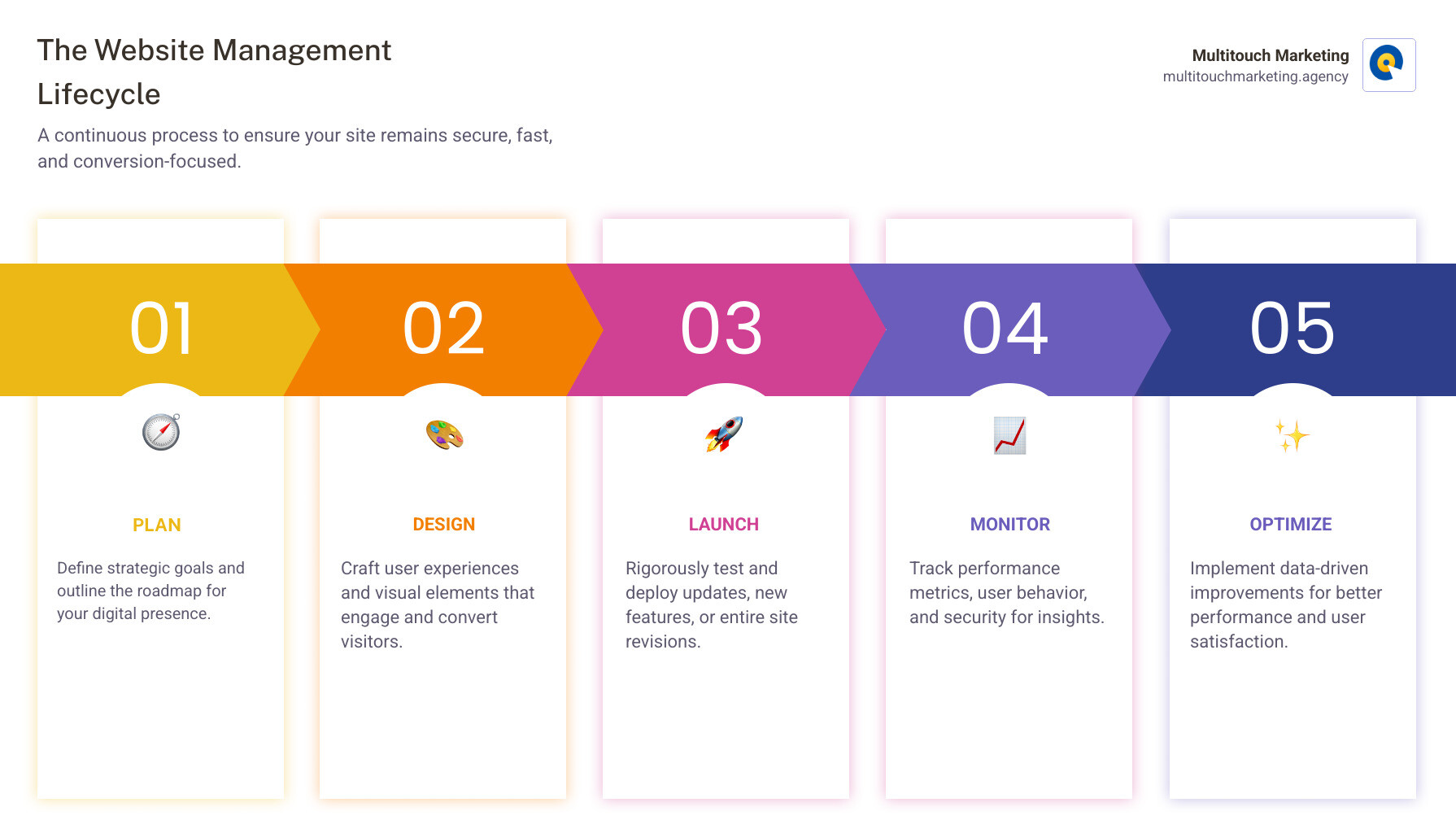
The Core Pillars of Effective Website Design Management

Think of your website like a retail store. It needs constant care to be successful. The same goes for website design management – it’s the daily work that transforms a static site into a thriving business tool.
This is critical because 88% of consumers are less likely to return to a site after a bad experience. On the flip side, every dollar invested in user experience can return $100 in value. These numbers prove that ongoing website care directly impacts your bottom line.
Effective website design management rests on three pillars that work together seamlessly. Let’s walk through each one.
Technical Health & Performance
Your website’s technical foundation is like a building’s plumbing—invisible when it works, but a disaster when it breaks.
Uptime monitoring ensures your site is always online for customers. We monitor its availability 24/7 and act immediately if it goes down.
Regular backups are your site’s insurance policy. We create copies of your content and data so we can quickly restore your site after any issue.
Page speed optimization is crucial, as slow sites drive visitors away. We optimize images, code, and server response times to make your site load faster.
Mobile responsiveness is non-negotiable. We ensure your site looks and works perfectly on all devices, from smartphones to desktops. Learn more in our guide on Responsive Web Design for All Devices.
Fixing broken links maintains a professional user experience. We regularly find and fix broken links before they frustrate visitors or harm your SEO.
Technical SEO audits help search engines find and rank your site. We audit your site’s structure for issues like crawl errors or duplicate content that could be hiding you from customers.
Security and Maintenance
Website security protects your data, reputation, and customer trust. A single breach can undo years of hard work.
SSL certificates create a secure, encrypted connection for visitors. The padlock icon in browsers tells customers they’re safe and helps your search rankings.
Malware scanning and firewall protection act as a security system for your digital property, blocking malicious attacks before they cause harm.
Software updates for your CMS, plugins, and themes are like tune-ups for your car. They include critical security patches and performance improvements that protect your site from hackers.
User permission management is vital when multiple people access your site. We set up proper controls so the right people can make changes while keeping the site secure.
Our proactive monitoring approach means we spot problems before they become disasters. For more on this, see our Website Maintenance Best Practices.
Content, Design, and UX Optimization
With a solid technical foundation, we can focus on what visitors see and experience to turn browsers into customers.
Content updates and blog management keep your site fresh and valuable for both visitors and search engines. We help you maintain an active, engaging blog and keep all content current.
A/B testing design elements removes guesswork from optimization. We test different versions of buttons, headlines, and layouts with real users to see what works best.
Call-to-action optimization guides visitors toward key actions, like making a purchase or scheduling a consultation. We craft compelling CTAs and place them strategically.
User journey analysis shows how people steer your site. Using tools like heatmaps, we find and fix points of friction to smooth the path to conversion.
Design refreshes versus full redesigns require careful timing. Since 38% of visitors will leave an unattractive website, keeping your design fresh is essential. Minor updates are continuous, while a major redesign typically occurs every 2-3 years to stay current.
We cover these elements in our overview of what Website Maintenance Services Includes.
When these three pillars work together, your website becomes a powerful asset that attracts, engages, and converts customers around the clock.
Creating Your Strategy: In-House vs. Hiring a Professional Service

Every business owner faces a critical question: Should I handle website design management in-house or hire a professional service? The DIY route seems tempting, promising control and cost savings. However, after 15+ years in this industry, I’ve seen that the quality of your online presence can make or break your success, especially when competitors are investing in professional management.
Managing your website in-house offers complete control, but it requires a wide range of expertise in development, design, SEO, security, and analytics. Most business owners find that DIY management pulls focus from their core operations, leaving their team in a constant state of catching up with new technologies and security threats.
Partnering with a professional service provides access to a team of specialists who stay current with industry best practices. While it’s an investment, it’s often more cost-effective than fixing DIY disasters. The key is choosing the right partner.
Key Elements of a Successful Website Management Plan
Whether you go it alone or hire pros, you need a solid plan.
Start with SMART goals that are specific and measurable. Aim for targets like “increase organic traffic by 20% in six months” to guide your decisions. For major overhauls, clear Goals for a Website Redesign are crucial.
Identify your KPIs (Key Performance Indicators) to track success. Monitor metrics like website traffic, conversion rates, time on page, and search rankings.
Create a content calendar to keep your site fresh and engaging. Plan what you’ll publish and when to provide consistent value and support your SEO.
Establish a maintenance schedule for behind-the-scenes work like backups, security scans, and performance reviews. This prevents small issues from becoming big problems.
Allocate your resources wisely by defining who handles what, ensuring they have the necessary tools, time, and budget.
Evaluating Professional Website Design Management Services
Choosing the right partner is easier when you ask the right questions.
Look at their portfolio with a critical eye. Do their sites load quickly and work well on mobile? Do they have experience with businesses like yours?
Read client testimonials and case studies for evidence of client satisfaction, measurable results, and long-term relationships.
Understand their communication process. How often will they provide updates and reports? Clear, consistent communication is non-negotiable.
Verify their technical expertise in development, security, SEO, and user experience. Ask about their approach to page speed and security protocols.
Ensure transparency around domain ownership. A reputable provider will give you full control and access to your domain and website assets from day one.
Consider their scalability. Can they support your business as it grows with new features or increased traffic? The right partner grows with you.
If you’re looking for local expertise, searching for Website Design and Maintenance Companies Near Me can be a good starting point.
Key questions to ask potential website management providers:
- How do you handle domain ownership and access?
- What’s included in your monthly management fee?
- How quickly do you respond to urgent issues?
- Can you show me examples of sites you’ve improved over time?
- What happens if we decide to part ways?
- How do you stay current with security threats and web standards?
How Proactive Management Amplifies Your Digital Marketing ROI
Effective website design management is the bedrock of your digital marketing strategy, directly impacting how your brand is found, perceived, and converts visitors. After managing millions in ad spend, I can confirm your website isn’t just a landing spot for traffic—it’s what determines the success of every marketing dollar. A poorly managed site is like a cracked foundation; no matter how good your marketing is, the entire structure is at risk.

When we talk about amplifying your digital marketing ROI, we mean creating a system where your website strengthens your SEO, makes PPC campaigns more profitable, and builds brand trust.
Brand Reputation & Customer Trust
Your website is often the first interaction a potential customer has with your business. A professionally managed site that is fast, secure, and easy to use sends a clear message: “We are credible and care about your experience.” Since 38% of visitors will stop engaging with a site they find unattractive, a positive first impression is essential for building trust and winning business.
I’ve watched companies double their conversion rates simply by investing in proper website design management, treating their website as their most important sales tool.
Fueling Your SEO and Content Strategy
Search engines like Google want to recommend the best, most reliable sources. A well-managed website proves you deserve a top spot.
Improved rankings occur when your site is fast, mobile-friendly, secure, and has fresh content—all outcomes of proper management.
Better user engagement signals are sent to search engines when visitors stay longer and interact more, signaling your content’s value.
Faster indexing of your new content happens when a technically sound site makes it easy for search engine crawlers to do their job.
Building topical authority is a powerful long-term benefit. Consistently publishing quality content on a well-structured site establishes you as an expert, boosting rankings across all your content. This is why Responsive Website Design Matters for SEO.
The Critical Link Between Website Management and PPC Success
At Multitouch Marketing, we’ve seen how website design management can make or break a PPC campaign. A brilliant ad strategy is wasted if your website isn’t optimized for conversions.
Landing page performance is vital. If your landing page is slow, confusing, or doesn’t match the ad’s promise, you lose the click and the money spent.
Quality Score improvement is a direct benefit. Google’s Quality Score is heavily influenced by landing page experience. A great page lowers your ad costs and improves placement.
Faster load times directly impact your bottom line. With many consumers abandoning slow sites, nearly half your paid clicks could be wasted. We’ve seen campaigns dramatically improve ROI just by optimizing page speed.
Consistent user experience from ad to page builds trust and increases conversion rates. The journey should feel seamless.
Maximizing ad spend return is the ultimate goal. A well-managed site ensures every dollar you spend on PPC works harder, turning clicks into customers. We’ve helped clients significantly reduce their cost-per-acquisition through strategic website design management that supports their PPC goals.
Frequently Asked Questions about Website Management
We get a lot of questions about what website design management truly entails. After helping businesses for over 15 years, I’ve noticed the same concerns keep coming up. Let me clear up the most common points of confusion.
What is the difference between website management and website maintenance?
People often use these terms interchangeably, but they’re different. Website maintenance is reactive: fixing broken links, running backups, and applying security updates. It’s the essential upkeep.
Website design management, on the other hand, is proactive and strategic. It includes all maintenance tasks but adds a focus on growth through content strategy, SEO, user experience (UX) improvements, and performance optimization to achieve business goals. In short, maintenance keeps your site running; management helps it grow.
How often should website content and design be updated?
This depends on your goals, but here’s a helpful guideline:
Content updates should be regular. Aim for weekly or bi-weekly blog posts to engage your audience and signal freshness to search engines. Update service or product pages quarterly or whenever your offerings change.
Minor design tweaks, like changing a button color based on A/B test results, can be ongoing. These continuous improvements boost conversion rates without a major overhaul.
Major redesigns are typically needed every 2-3 years. This keeps your site aligned with current technology, design trends, and user expectations. Waiting too long can make your business look outdated.
What tools are essential for effective website design management?
Effective website design management relies on the right tools. You don’t need every piece of software, but these categories are essential.
Analytics tools like Google Analytics are crucial for tracking traffic, user behavior, and conversions. Content Management Systems (CMS) like WordPress allow you to manage your site without deep coding knowledge. Project management tools like Notion or Asana keep your team organized, while SEO tools like Semrush help with keyword research and rank tracking. Finally, performance tools like GTmetrix analyze and optimize site speed.
| Tool Category | Purpose | Examples |
|---|---|---|
| Analytics | Track website traffic, user behavior, conversions | Google Analytics |
| CMS | Manage website content, design, and functionality | WordPress |
| Project Management | Organize tasks, timelines, team collaboration | Notion, Asana |
| SEO | Keyword research, site audits, ranking tracking | Semrush |
| Performance | Analyze and optimize website loading speed | GTmetrix |
The key is to choose tools that work together and match your team’s skill level. The best software is useless if no one knows how to use it effectively.
Conclusion: Build a Lasting Digital Foundation
Is your website working as hard for your business as it could be? Or is it just sitting there, not contributing to your bottom line?
The truth is, your website is the foundation of everything you do online. Every marketing dollar, every customer interaction, and every sale depends on how well your website performs.
Website design management isn’t just about aesthetics; it’s about creating a digital powerhouse that grows your business around the clock. When you shift from thinking “my website is done” to “my website is always improving,” everything changes.
Most importantly, a well-managed website amplifies every marketing dollar you spend. This is where things get really exciting for your business.
At Multitouch Marketing, we’ve watched businesses transform when they stop treating their website like a static project. We’ve helped them cut advertising costs while increasing leads—all because their website was properly managed and optimized.
Your website should be your most hardworking employee, capturing leads and making sales 24/7. But it can only do this if it’s cared for, continuously improved, and strategically managed.
The businesses that dominate their markets are the ones with websites that actually work. They understand that their digital foundation needs constant attention, just like any other valuable business asset.
Ready to turn your website into the business-growing machine it should be? The experts at Multitouch Marketing can help align your website’s performance with your marketing goals to ensure every click counts. Your digital future starts now.
Explore professional Website Management Companies and find how the right partner can help you build a digital foundation that doesn’t just exist—it dominates.