
Why PPC Campaign Optimization Is the Difference Between Profit and Wasted Ad Spend
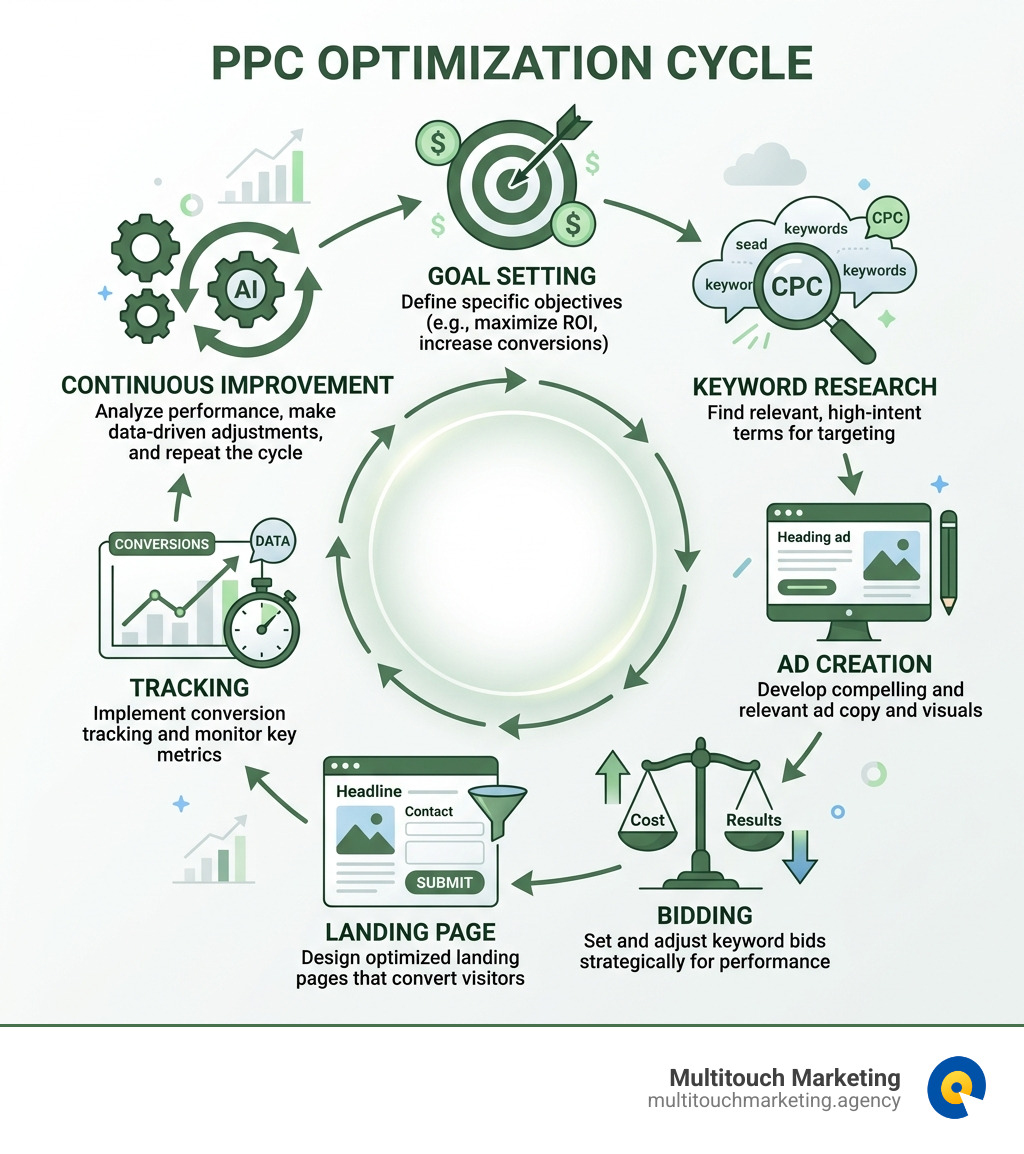
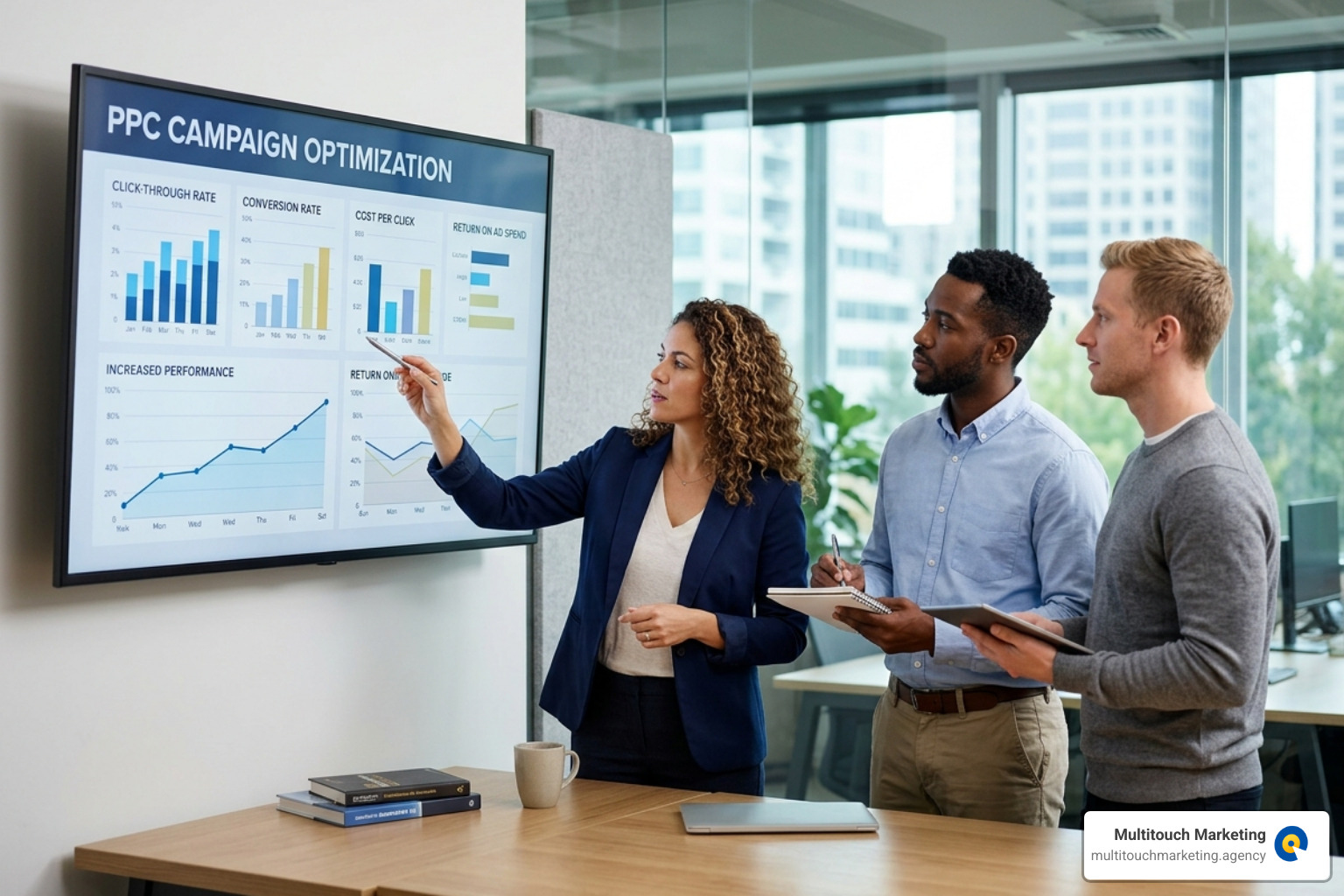
PPC campaign optimization is the ongoing process of improving your paid ads to get better results from every dollar you spend — covering keywords, bids, ad copy, landing pages, and targeting.
Here’s what effective PPC optimization delivers:
- Lower cost per click (CPC) by improving Quality Score and relevance
- Higher conversion rates by matching ads to landing pages and user intent
- Better ROI by cutting wasted spend on irrelevant clicks
- Stronger organic visibility (especially on Amazon) as paid sales build ranking signals
- Smarter budget allocation by focusing spend on what actually works
The stakes are real. CPC has grown 13% year over year. That means the same budget buys fewer clicks than it did last year. A “set it and forget it” approach is no longer viable — not when your competitors are actively tuning their campaigns every week.
Whether you’re running Google Ads or Amazon Sponsored Products, the core problem is the same: launching campaigns is easy, but making them profitable takes a system.
This guide walks you through six updated strategies to build that system — from keyword structure and bidding to AI automation and platform-specific tactics.
I’m Milton Brown, a paid media specialist who has been managing and optimizing PPC campaigns since 2008 across industries ranging from e-commerce to healthcare, with budgets from $20K to $5M. This guide reflects the hands-on frameworks I’ve refined over that time to help businesses like yours stop burning budget and start scaling profitably.
Quick ppc campaign optimization terms:
Defining Goals and Strategy for PPC Campaign Optimization
Before we touch a single bid or keyword, we have to talk about the “why.” At Multitouch Marketing, we often see businesses dive into the dashboard without a clear map. If you don’t know whether you are optimizing for raw revenue or net profit, you’re just throwing darts in the dark.
Revenue vs. Cost: The Great Balancing Act
Are you in a growth phase where you need to capture market share at any cost? Or are you in a maintenance phase where every penny of margin matters? Defining these business objectives is the first step in ppc-campaign-strategies.
For e-commerce and Amazon sellers, this often comes down to two acronyms: ACOS (Advertising Cost of Sales) and TACOS (Total Advertising Cost of Sales).
- ACOS measures your ad spend against the revenue generated directly from those ads. It’s a great metric for individual campaign health.
- TACOS measures your ad spend against your total revenue (including organic sales). This is the “North Star” for overall business health because it shows how your ads are fueling your organic growth.
| Metric | Focus | Best For |
|---|---|---|
| ACOS | Direct Ad Profitability | Managing individual keyword bids and ad groups. |
| TACOS | Total Business Health | Understanding long-term scaling and organic ranking impact. |
Strategic Budget Allocation
Effective ppc campaign optimization requires a disciplined approach to ppc-campaign-budgeting-for-small-businesses. We recommend the 80/20 rule: allocate 80% of your budget to “proven winners” (keywords and audiences that consistently convert) and 20% to testing new strategies, keywords, or creative formats. This ensures stability while allowing for the discovery of new profit centers.
Mastering Keywords and Bidding for Maximum ROI
Keywords are the foundation of search-based PPC. However, simply finding high-volume terms isn’t enough. You need to understand how different ppc-keyword-match-types behave in the current landscape.
The Shift in Match Types
Modern ppc campaign optimization has seen a shift. Phrase match is increasingly behaving like broad match, and “exact match” isn’t always exact anymore (thanks to close variants).
- Exact Match: Best for high-intent, high-converting terms where you want total control.
- Broad Match: Excellent for discovery and feeding the AI algorithm, but requires heavy negative keyword monitoring.
- ASIN/Product Targeting: On Amazon, targeting specific competitors’ products can often be more profitable than general keywords.
Choosing the Right Bidding Strategy
Bidding is no longer just about picking a number. You have several keyword-bid-strategies-ppc-campaign to choose from:
- Manual CPC: Gives you the most control. Great for new campaigns where you don’t have enough data for the machines to take over.
- Target ROAS (Return on Ad Spend): The machine adjusts bids to hit a specific profit target.
- Target CPA (Cost Per Acquisition): Ideal for lead generation where you have a fixed price you’re willing to pay for a customer.
- Impression Share: Best for brand awareness campaigns where you want to ensure you’re always seen for specific branded terms.
The Role of Negative Keywords in PPC Campaign Optimization
If keywords are how you find customers, negative keywords are how you stop losing money. We’ve seen accounts where 20-30% of the spend was wasted on searches for “free,” “jobs,” or “DIY.”
By implementing a robust ppc-negative-keyword-strategy, you filter out irrelevant traffic before the click happens. This isn’t a one-time task; you should review your search term reports weekly to harvest new negatives.
Pro tip: Use shared negative keyword lists across multiple campaigns to ensure that if a term is irrelevant for one product, it doesn’t pop up and waste money on another.
Creative Excellence and Landing Page Synergy
You can have the best keywords in the world, but if your ad copy is boring or your landing page is slow, your ROI will tank.
Crafting Compelling Ad Copy
Your ad needs to do three things: highlight a Unique Selling Proposition (USP), include the target keyword for relevance, and provide a clear Call to Action (CTA).
- Dynamic Keyword Insertion: This automatically swaps part of your ad text with the user’s search query, making the ad feel personalized.
- A/B Testing: Never assume you know which headline will work. Run 2-3 variations per ad group and let the data decide.
Leveraging Ad Extensions
Ad extensions are “free” real estate. Sitelinks, callouts, and location extensions make your ad larger and more informative. Statistics show that ads with extensions achieve 10-15% higher click-through rates than those without.
The Landing Page “Message Match”
Optimization doesn’t stop at the click. If your ad promises “50% off running shoes,” but the landing page shows “Hiking Boots – Full Price,” the user will bounce immediately. This is called “message match,” and it is critical for conversion.
Furthermore, technical performance matters. According to Google PageSpeed Insights, 53% of mobile visitors will abandon a page if it takes longer than 3 seconds to load. Always check your mobile optimization and page load speed during your adwords-campaign-setup-and-optimization phase.
Platform-Specific Optimization: Google vs. Amazon
While the principles of PPC are universal, the tactics vary significantly between platforms.
Google Ads: The Land of Quality Score
In Google Ads, your Quality Score is king. It’s a 1-10 rating of the relevance of your keywords, ads, and landing pages.
- The Impact: A keyword with a Quality Score of 8 might pay 30% less per click than a competitor with a Quality Score of 5 for the exact same ad position.
- Google Shopping: For retailers, optimizing Shopping campaigns involves cleaning up product feeds and using custom labels to bid more aggressively on high-margin items.
Before making major changes, we always recommend a thorough google-ads-account-audit-checklist.
Tailoring Tactics for Amazon PPC Campaign Optimization
Amazon is a different beast because it’s a closed-loop ecosystem. PPC sales directly influence your organic ranking.
- Sponsored Products: These are the bread and butter of Amazon, appearing in search results.
- Sponsored Brands: These appear at the top of the page and are vital for building brand awareness.
- Algorithm Patience: Amazon’s algorithm is like “training a robot.” If you change your bids every day, the robot gets confused. Give changes at least 7 days to settle before making another move.
When we provide tips-expert-ppc-management, we emphasize the “scaling vs. optimizing” cycles. Spend two weeks scaling (increasing budgets, testing keywords) and then two weeks optimizing (cutting losers, lowering bids on high-ACOS terms). Don’t try to do both at the same time!
Data-Driven Scaling and AI Automation
The future of ppc campaign optimization is not manual — it’s hybrid. We use advanced-ppc-techniques to layer human strategy over machine-learning efficiency.
Audience Segmentation and First-Party Data
With the decline of third-party cookies, your own data is your most valuable asset. By integrating your CRM with Google Ads, you can create “Customer Match” lists. This allows you to:
- Bid more for your existing high-value customers.
- Exclude recent buyers from seeing “New Customer” offers (saving you money!).
- Create “Lookalike” audiences that mimic your best clients.
Leveraging AI for Continuous PPC Campaign Optimization
AI isn’t here to replace us; it’s here to do the math we don’t have time for. Using ai-tools-for-ppc allows for real-time bid adjustments based on thousands of signals like time of day, user location, and device type.
Performance Max (P-Max) is Google’s premier AI-driven campaign type. It uses your assets (images, videos, headlines) to find customers across Search, YouTube, Display, and Gmail. The key to P-Max success is providing “Audience Signals” — telling the AI exactly who your ideal customer is so it doesn’t have to guess.
Frequently Asked Questions about PPC Optimization
How long should I wait before making changes to my PPC campaigns?
You should generally wait at least 7 days before making significant changes. Most platforms have a “learning period” where the algorithm tests your ads against different audiences. If you change a bid or a headline on day two, you reset that learning phase. For smaller accounts with lower traffic, you might even need 14 days to reach statistical significance.
What is a good TACOS for a growing Amazon brand?
For a brand in a growth phase, a TACOS of 15-20% is typical. If you are in a mature, “profit-harvesting” phase, you should aim for 10-15%. TACOS is about the big picture. If your ACOS is high but your TACOS is low, it means your ads are successfully driving organic sales, which is the ultimate goal of Amazon PPC.
Should I use manual or automated bidding for new campaigns?
We usually recommend starting with Manual CPC or Enhanced CPC for the first 30 days. Automated bidding strategies like Target ROAS or Target CPA generally require at least 30 conversions per month to have enough data to work effectively. Once you hit that threshold, switching to automation can often improve efficiency and save you hours of manual work.
Conclusion
At Multitouch Marketing, we believe that ppc campaign optimization is a marathon, not a sprint. Success comes from systematic testing, data-driven decisions, and the patience to let the algorithms work. Whether you are operating out of Raleigh, Durham, or Chapel Hill, the digital marketplace is more competitive than ever.
Don’t let your budget disappear into the “set and forget” trap. By focusing on your TACOS, refining your keyword match types, and leveraging the power of AI automation, you can transform your PPC account from a cost center into a profit-generating machine.
If you’re ready to stop guessing and start growing, Optimize your PPC performance today with our expert team. We’ll help you navigate the complexities of Google and Amazon so you can focus on what you do best: running your business.